
Google Commercial Reimagines Declaration of Independence with AI
Google's new commercial, marking the 250th anniversary of the Declaration of Independence, envisions the Founding Fathers using modern Google Workspace and AI to draft the historic document. The ad, which portrays a tongue-in-cheek collaboration, has garnered mixed reactions, praised on platforms like YouTube but criticized on Bluesky for its AI angle and perceived tone-deafness.

Google launched a new commercial on July 4, 2026, commemorating the 250th anniversary of the Declaration of Independence. The ad humorously portrays the Founding Fathers collaborating on the historic document using modern Google Workspace tools and integrated artificial intelligence, sparking varied reactions online.
With the tagline "Group project, but make it 1776," the advertisement envisions an 18th-century setting where the foundational text for American independence is drafted with contemporary technology. The narrative begins with an unseen Thomas Jefferson receiving a text message from Ben Franklin, initiating a digital collaboration process.
The commercial showcases the Founding Fathers leveraging various Google Workspace applications. Google Docs is utilized for collaborative editing, Google Calendar for scheduling important meetings, and Google Meet facilitates remote video conferencing, humorously depicting all attendees with their cameras off. The process culminates in the use of e-signatures to finalize the document, followed by celebratory fireworks.
Artificial intelligence features are integrated into this historical reimagining, albeit with a relatively discreet approach compared to other recent tech advertisements. Google's "help me visualize" AI tool assists in brainstorming different animals for the national seal, while the Gemini chatbot is shown taking meeting notes and providing advice. Notably, Gemini also helps the founders formulate their response when King George III requests access to their document, which they ultimately decline.
The commercial maintains a lighthearted, tongue-in-cheek tone throughout, with Sam Adams even suggesting they "settle this over beers." Unlike a previous Google commercial where Gemini was depicted writing a fan letter, this new ad carefully avoids suggesting that AI would directly improve the actual text of the Declaration of Independence. The visual style of the commercial itself also carries an "uncanny glow" that suggests AI-generated video.
Public reception to the advertisement has been notably mixed across different platforms. While comments on YouTube and Instagram appear to be largely positive, the response on Bluesky has been significantly more critical. Posters on Bluesky characterized the commercial as "cringey" and "stunningly tone deaf," with the integration of AI drawing particular scrutiny.
Historian Angus Johnston, commenting on Bluesky, expressed skepticism regarding the ad's portrayal of AI's utility. Johnston noted that despite the commercial's premise, "amazing how little of this is actually AI" within the fictionalized collaboration. He further challenged the underlying message by stating, "Even in a corny fantasy joke, it’s impossible to make the case that AI is a useful tool for political organizing, writing, or human collaboration," reflecting a broader critique of AI's perceived capabilities in complex human endeavors.
FAQ
Q: What Google tools are featured in the commercial?
A: The commercial features Google Workspace tools such as Google Docs for editing, Google Calendar for scheduling, Google Meet for remote conferences, and e-signatures for document finalization.
Q: How is AI specifically used by the Founding Fathers in the ad?
A: AI tools shown include Google's "help me visualize" for selecting national seal animals, and Gemini for taking meeting notes and providing advice on how to respond to King George III.
Q: What was the general public reaction to the commercial?
A: Reaction was mixed. YouTube and Instagram comments were mostly positive, while Bluesky users were largely critical, deeming the ad "cringey" and "stunningly tone deaf," particularly regarding the AI aspect.
Related articles

Apple Unveils iPhone Duo: Pricey Foldable Sees Soaring Demand
Apple has officially entered the foldable smartphone arena with the long-anticipated launch of the iPhone Duo. Priced starting at a hefty $1,999, the device features a 5.4-inch outer display and a larger 7.6-inch inner
Android 17 QPR2 Beta 7.1: The Performance Relief You've Been Waiting
Android 17 QPR2 Beta 7.1: Finally Fixing the QPR1 Performance Woes Verdict: Android 17 QPR2 Beta 7.1 is a crucial and highly anticipated software update for Google Pixel users, specifically targeting and resolving the

in-depth: Chicago-Area Cops Helped HSI Spy on Minnesota Anti-ICE
Chicago-area law enforcement, including local police and HSI agents, conducted undercover surveillance on Minnesota anti-ICE activists at an April 2, 2022, talk in Chicago. This operation was part of a federal conspiracy probe into 15 Minnesota activists facing felony charges related to immigration enforcement resistance. Civil liberties advocates have condemned the surveillance as a troubling intrusion into protected political activity.

TCG Pocket Responds: A Much-Needed Pace Shift for Pokémon Fans
Pokémon TCG Pocket is rolling out a major update for its second anniversary, primarily addressing player concerns about overwhelming content releases by shifting to a six-week set schedule. This aims to curb player decline and improve overall engagement by giving trainers more time to collect and strategize. The update also adds new collection methods, improved deck-building features, and enhanced trading functionality.

Mark Wahlberg on using AI in film ‘the right way’ and being open to
Actor Mark Wahlberg believes AI has a place in filmmaking if used responsibly for enhancement, not script generation or actor replacement. At TechCrunch Disrupt, he expressed openness to an AI likeness carrying on his legacy, managed by his family, and emphasized storytelling.
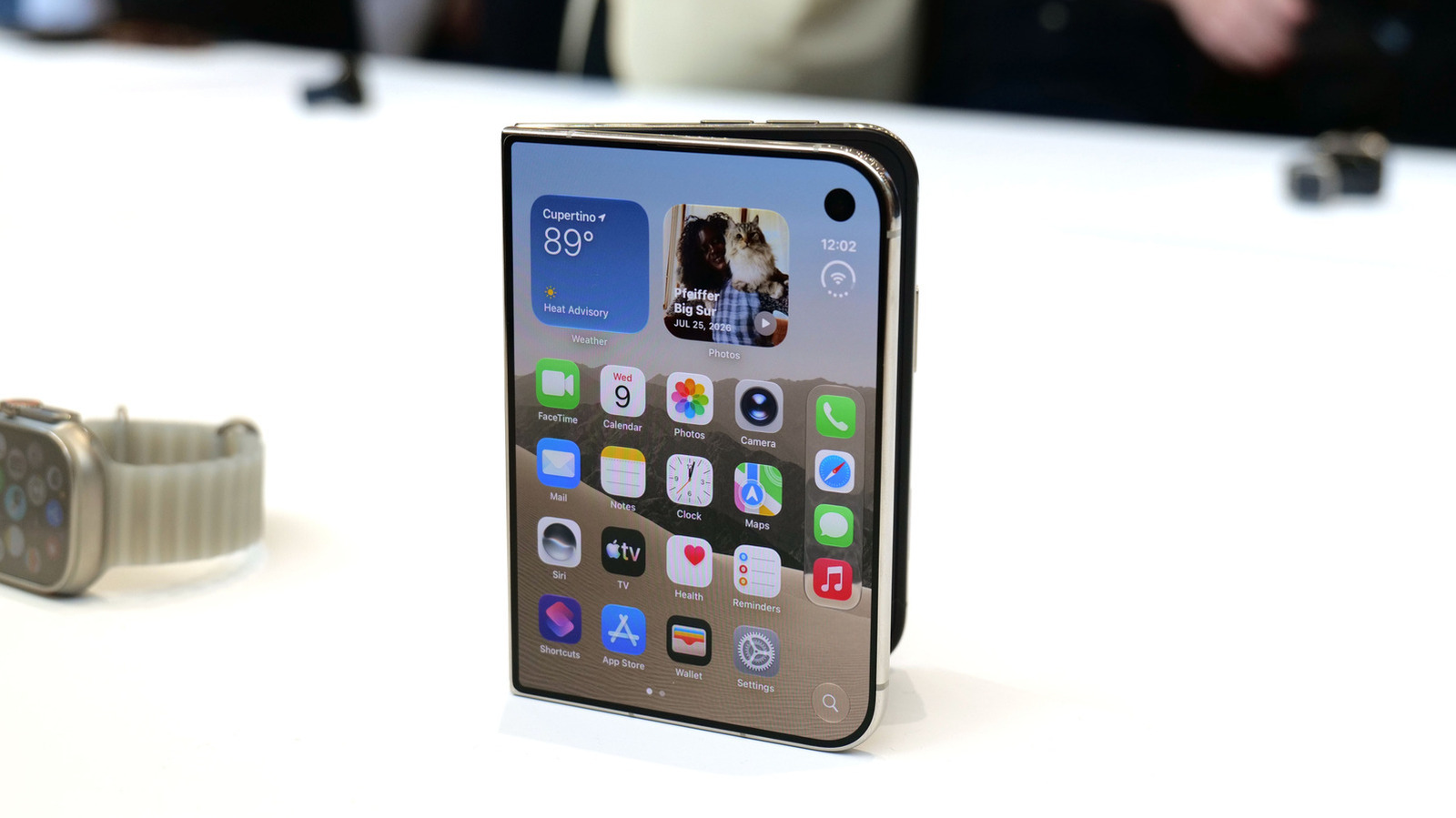
Apple iPhone Duo: A Daring Debut with Notable Compromises
Apple's highly anticipated iPhone Duo, priced at $2,000, has gone on pre-order. While hailed as "Apple's most exciting device in a decade" for its innovative foldable design and immersive display, it comes with significant drawbacks like the absence of FaceID and a premium camera.