
Geekom IT13 Max 2026: Solid Mini PC in a Tight Market
Quick Verdict In a market currently grappling with component shortages and rising prices, the Geekom IT13 Max 2026 emerges as a surprisingly compelling option. For $799, it delivers a capable Intel Core Ultra 9 185H
Quick Verdict
In a market currently grappling with component shortages and rising prices, the Geekom IT13 Max 2026 emerges as a surprisingly compelling option. For $799, it delivers a capable Intel Core Ultra 9 185H processor with integrated Arc Graphics, paired with a generous 24GB of soldered RAM and a 500GB SSD, all within a compact, robust design. While leveraging an older-generation chip, Geekom manages to hit a sweet spot for value and performance, making it a strong contender for those seeking an efficient mini PC without breaking the bank.
Introduction: Meteor Lake's Resurgence in a Mini Package
Geekom is making a bold statement in mid-2026 with its IT13 Max, suggesting that an "older-gen" Intel Core Ultra 9 185H can still offer excellent value, especially amidst what the industry terms a "RAMpocalypse" and a broader component crisis. At $799, this mini PC aims to provide a robust computing experience that balances budget and performance effectively. Our detailed analysis reveals whether this strategy pays off, offering a perspective on its design, features, and overall user experience.
Design and Build Quality
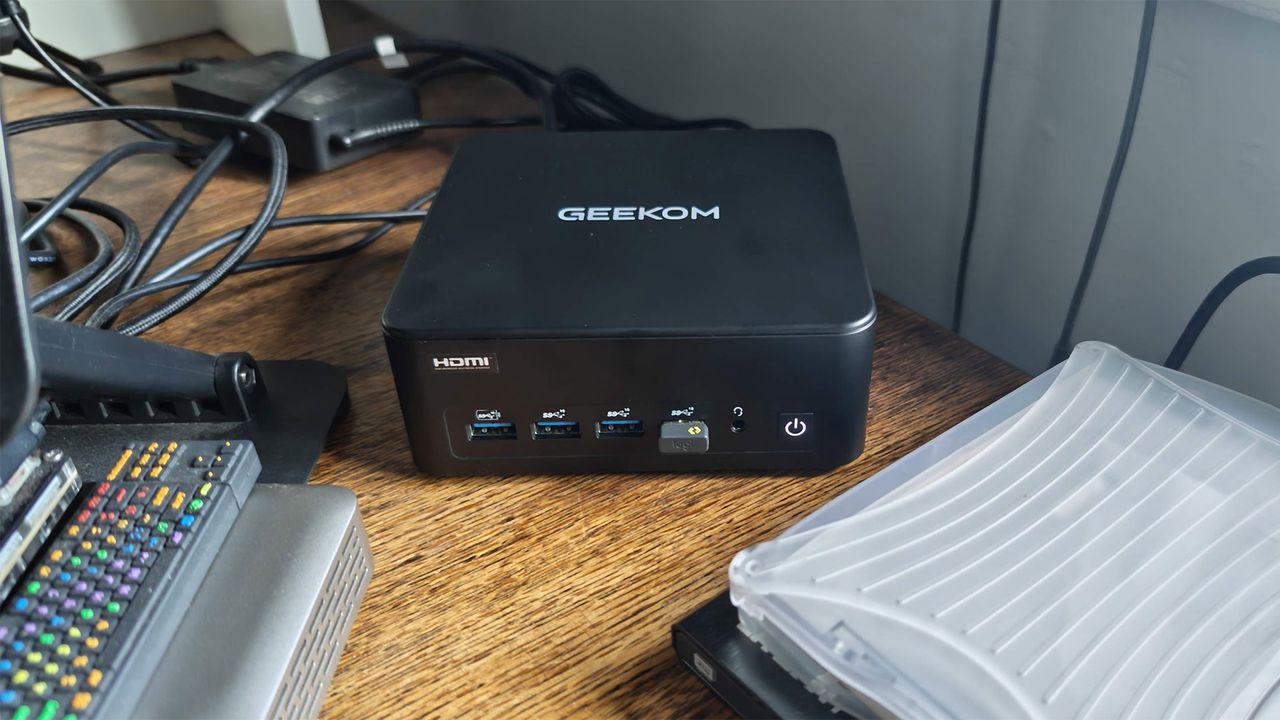
The Geekom IT13 Max 2026 adheres closely to the traditional Intel NUC aesthetic – a compact, understated black box. With a volume just under one liter (approximately 0.97L), it's marginally larger than some competitors like the MSI Cubi NUC AI+ 3MG, yet maintains a similarly business-like, unobtrusive profile. The external casing features a matte plastic finish, but Geekom has thoughtfully integrated metal into the perforated side vents and the removable bottom plate, as well as an internal chassis, enhancing its durability and structural integrity. This metal reinforcement contributes to a sturdy feel. Accessing the internals is straightforward, requiring the removal of just four screws typically hidden beneath the rubber feet. This design choice speaks to practical user experience, though it foregoes premium features like biometric authentication or a dedicated Copilot button.
Core Specifications
Underneath its modest exterior, the Geekom IT13 Max 2026 houses some respectable hardware. It's powered by an Intel Core Ultra 9 185H processor, featuring a 16-core, 22-thread configuration with clock speeds reaching up to 5.1 GHz and a 45W TDP. Graphics are handled by the integrated Intel Arc solution, boasting eight Xe cores, which offers a significant step up from older integrated solutions. Memory comes in the form of 24GB of LPDDR5 RAM, configured in a dual-channel setup, though it's important to note this RAM is soldered to the motherboard and thus not upgradeable. For storage, Geekom includes a 500GB Kingston NV3 PCIe 4.0 NVMe SSD. Wireless connectivity is cutting-edge, featuring Intel Wi-Fi 7 and Bluetooth 5.4. The system ships with Windows 11 Pro 25H2, ensuring a modern operating system experience out of the box.
Ports and Upgradeability
One of the standout features of the Geekom IT13 Max 2026 is its comprehensive port selection, largely negating the need for external docking solutions. The front panel is well-equipped with four USB 3.2 Gen 2 Type-A ports, one of which offers S5 Always On charging for smart devices, alongside a convenient 3.5mm audio jack and the power button (which lacks biometrics). On the sides, you'll find a full-size SD Card 4.0 reader and a Kensington Lock slot for security. The rear panel is even more robust, featuring an additional USB 3.2 Gen 2 Type-A port, a USB 2.0 Type-A port, two versatile USB4 ports (both supporting DisplayPort Alt Mode, with one also providing power input), two RJ-45 2.5 Gbps Ethernet ports for high-speed networking, and two HDMI 2.0 outputs, plus the DC power input.
Regarding upgradeability, the IT13 Max offers limited but crucial options. While the 24GB LPDDR5 RAM is soldered, users can easily access and swap the installed M.2 devices. The primary 500GB Kingston NV3 PCIe 4.0 NVMe SSD occupies an M.2 2280 slot and comes with a thermal pad. Below this, the M.2 2230 slot houses the wireless connectivity card. Crucially, there's a vacant M.2 2242 slot available for additional storage expansion. Although the spec sheet initially mentioned 2.5-inch SATA SSD/HDD options, the physical unit observed a vacant M.2 2242 slot, indicating a possible change in design or configuration. This flexibility for M.2 storage expansion is a significant plus.
Performance and Value Proposition
While specific benchmark figures aren't provided in the source, the review frames the Intel Core Ultra 9 185H as a "capable" chip. The integrated Intel Arc Graphics with eight Xe cores represents a modern and competent solution for integrated graphics, suitable for everyday tasks, media consumption, and even light gaming or content creation. The review points out that the IT13 Max 2026 shares "a lot in common when it comes to performance" with the MSI Cubi NUC AI+ 3MG, despite the latter featuring an Intel chip two generations newer and carrying a "huge price gap." This implies that the Geekom, at $799, delivers comparable real-world performance for many workloads, making it an excellent value proposition in the current market, especially considering the recent price hikes for components. The 24GB of RAM is ample for multitasking and demanding applications.
However, it's not without its drawbacks. The primary concern is noise: the system "can get noisy under load." This is a common trade-off for powerful components in compact chassis, but it's something to consider for noise-sensitive environments.
Pros and Cons
Pros:
- Compact Metal-Reinforced Design: A sturdy, unassuming aesthetic that fits well in various settings.
- Capable Processor and Graphics: The Intel Core Ultra 9 185H with integrated Arc Graphics offers strong performance for its class.
- Excellent Port Selection: A wide array of fast USB, networking, and display outputs reduces the need for external hubs.
- Easy M.2 Access and Expansion: Simple to open and swap/add M.2 storage.
- Strong Balance of Budget and Performance: At $799, it offers significant value, particularly given current component pricing.
Cons:
- Can Get Noisy Under Load: The cooling system may become audible during intensive tasks.
- No Front USB-C Port: A common omission in mini PCs that some users might miss for convenience.
- No Biometrics: Lacks a fingerprint reader or other biometric security features often found in modern devices.
- Soldered RAM: The 24GB LPDDR5 RAM is fixed and cannot be upgraded post-purchase.
Buying Recommendation
The Geekom IT13 Max 2026 is a strong recommendation for users seeking a powerful yet compact mini PC that delivers excellent value, especially given the challenging component market. Its Core Ultra 9 185H and Arc Graphics provide ample horsepower for productivity, multimedia, and even some lighter creative tasks. The robust build quality and extensive port selection are significant advantages. While the lack of a front USB-C port, biometrics, and potentially noisy operation under heavy load are minor gripes, they are overshadowed by the system's overall competence and competitive $799 price point. If you need a compact workhorse that won't strain your budget and can overlook its minor shortcomings, the IT13 Max 2026 is certainly worth considering as a primary desktop replacement or a versatile home office solution.
FAQ
Q: Is the 24GB of soldered RAM sufficient for most users?
A: Yes, for most common tasks, including office productivity, web browsing, multimedia consumption, and even moderate content creation or multitasking, 24GB of LPDDR5 RAM is ample and should provide a smooth experience. However, professional users with extremely demanding workloads requiring 32GB or more might find it a limiting factor due to its non-upgradeable nature.
Q: How does the "older-gen" Core Ultra 9 185H perform compared to newer chips?
A: The review indicates that the Core Ultra 9 185H in the Geekom IT13 Max 2026 offers performance characteristics comparable to units featuring chips that are two generations newer, but often come with a significantly higher price tag. This suggests it provides a very competitive level of performance for its cost, making it a smart choice for those prioritizing value.
Q: Is the noise under load a significant issue?
A: The review notes that the system "can get noisy under load." This is subjective and depends on your noise sensitivity and typical usage. For intensive tasks, you might notice the fan. For everyday light use, it's likely to remain quiet. If absolute silence under all conditions is paramount, you might consider fanless alternatives, but those typically come with performance compromises.
Related articles
Android 17 QPR2 Beta 7.1: The Performance Relief You've Been Waiting
Android 17 QPR2 Beta 7.1: Finally Fixing the QPR1 Performance Woes Verdict: Android 17 QPR2 Beta 7.1 is a crucial and highly anticipated software update for Google Pixel users, specifically targeting and resolving the

DJI Solo Video Setups: Smart Choices for Lone Creators
This review delves into DJI's recommended solo video setups, highlighting the Osmo Pocket 3 Creator Combo as a top pick for its integrated camera, gimbal, and mic. It also covers stabilizers like the Osmo Mobile 8 and RS 4, and the DJI Mic Mini series for enhanced audio, providing honest pros, cons, and clear buying advice.

Ars Technica's Rocket Report: Your Essential Space Industry Briefing
Quick Verdict Ars Technica's Rocket Report, presented by veteran space reporter Stephen Clark, offers an invaluable and meticulously organized weekly (or similar frequency, implied by "Edition 9.15") digest of the most

Apple iPhone Duo: A Daring Debut with Notable Compromises
Apple's highly anticipated iPhone Duo, priced at $2,000, has gone on pre-order. While hailed as "Apple's most exciting device in a decade" for its innovative foldable design and immersive display, it comes with significant drawbacks like the absence of FaceID and a premium camera.

KDE Plasma 6.8: A Future-Focused 30th Anniversary Update
Quick Verdict KDE Plasma 6.8, arriving as the "30th Anniversary Edition," is a pivotal release that decisively pushes the desktop environment into the future. With a definitive farewell to native X11 sessions and a

Kojima Compares Divisive New Film 'Digger' to MGS2's Prescient Vision
Gaming icon Hideo Kojima has praised the divisive 2026 film *Digger*, drawing intriguing parallels to his own prophetic game, *Metal Gear Solid 2*. Both works, he explains, uniquely explore the dangers of misinformation and a fragmented digital reality, anxieties he shares with *Digger*'s director, Alejandro González Iñárritu.