
gaming: Tim Schafer: "No one puts Double Fine out of business except
"No One Puts Double Fine Out of Business Except Me" Few names in gaming inspire such a passionate, knowing nod as Tim Schafer. The man behind classics like Grim Fandango, Psychonauts, and Brütal Legend has always been a
"No One Puts Double Fine Out of Business Except Me"
Few names in gaming inspire such a passionate, knowing nod as Tim Schafer. The man behind classics like Grim Fandango, Psychonauts, and Brütal Legend has always been a champion of quirky, character-driven narratives and innovative design. So when news broke about Double Fine Productions severing ties with Microsoft and Schafer’s defiant statement – "no one puts Double Fine out of business except me" – it sent ripples through the industry. For fans and fellow developers alike, it's a story of creative resilience, hard-won independence, and the ever-shifting sands of the modern games business.
Double Fine’s journey as an Xbox Game Studio was, by all accounts, meant to be a mutually beneficial affair. Acquired by Microsoft in 2019, the vision under then-Xbox head Phil Spencer was for Double Fine's unique titles to find a thriving home on Game Pass. However, as Schafer recently revealed in an interview, that mission started to change. Following Spencer's retirement in February 2026 and the subsequent shift in leadership under Asha Sharma, the studio's position within the Xbox ecosystem became increasingly precarious. Despite their creative efforts, games like Keeper and Kiln didn't achieve the financial breakout success Microsoft apparently needed. Schafer candidly shared, "I can't imagine any amount of profitability – unless we had a breakout, Minecraft hit that year – would've saved us."
The Great Escape: Reclaiming Creative Freedom
Facing an uncertain future under Microsoft's new direction, Tim Schafer wasn't about to let Double Fine fade away. He described the period as a "creative awakening" for many, albeit one born from immense pressure. Schafer took the initiative, embarking on a determined effort to secure Double Fine's intellectual property and the necessary funding to allow the studio to regain its independence. It was a battle, as he put it, that some couldn't stomach, leading to some team members deciding to move on. But for those who stayed, it was a renewed sense of purpose, a fight for the studio's very soul.
Regaining independence came with significant changes. Double Fine, which had expanded during its time with Microsoft, needed to right-size itself for its new chapter. This resulted in a difficult but necessary decision to cut 23 positions, bringing the team back to just under 70 people – a size Schafer refers to as their "previous, sustainable size as an independent studio." This leaner, more agile team is now fully focused on what Double Fine does best: making unique, imaginative games.
Back on the Pitching Circuit
Seven years is a long time in the fast-paced world of game development, and Double Fine's return to independence means re-entering a vastly changed industry landscape. Schafer openly admitted the challenge, stating, "After all these years, how little I understand about the business just shows how hard it is to know." The team is currently busy developing and presenting new game concepts to potential investors, a process he calls "really interesting" after such a long hiatus from pitching as an independent entity.
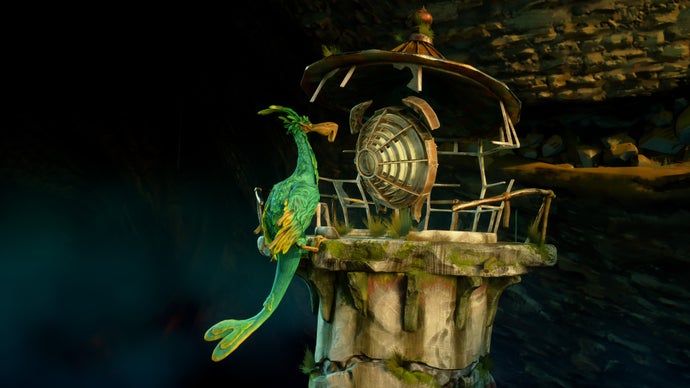
Schafer emphasized the tricky balance between artistic ambition and commercial viability. He noted that Double Fine's games, while creatively rewarding, often aren't lucrative enough to justify the immense effort involved unless they're also incredibly fun to make. Yet, he maintains that the studio has "never actively tried to make a game we thought was going to lose money." He strongly believes in the hidden potential of their titles, even those perceived as niche. For instance, he expressed conviction that Keeper, despite its unique art house aesthetic, possesses a "mass market appeal" that could spark a widespread "Lighthouse Fever" if it could just reach a broader audience.
Amnesia Fortnight: Rekindling the Spark
In a clear sign of Double Fine's renewed creative spirit, the studio recently announced its fifth Amnesia Fortnight event. For the uninitiated, Amnesia Fortnight is a beloved tradition where small teams within Double Fine quickly prototype new game ideas, often culminating in playable demos. This year's event is accompanied by a Kickstarter campaign and a documentary by 2 Player Productions, allowing fans to get an inside look at the creative process. It's a testament to the studio's core philosophy: fostering innovation and experimentation.
Schafer highlighted how crucial events like Amnesia Fortnight are, especially after the "soul-sucking stuff" the studio has endured this year – the inner conflicts, the threats of extermination, the long, arduous negotiations with lawyers, and the demoralizing trade-offs. These creative outlets, he explained, are what truly put "fire back into the bellies of the team and me."
The Soul-Enriching Struggle Ahead
Double Fine's path forward as an independent studio won't be without its challenges. Schafer readily admits it's "hard, and it is scary and it is stressful." However, his outlook remains defiantly positive. For him and his team, the current phase – brainstorming great game ideas within budget constraints, finding the right publishers – represents a "good fight." This kind of creative problem-solving, he asserted, is "soul-enriching" and is precisely what motivates them day in and day out.
In an industry increasingly defined by mergers, acquisitions, and economic pressures, Double Fine's story is a powerful reminder of the enduring spirit of independent game development. With Tim Schafer at the helm, charting their own course and focusing on what truly makes games special, the future, though uncertain, is undoubtedly full of potential for the studio that refuses to be put out of business by anyone else.
FAQ
Q: Why did Double Fine leave Microsoft?
A: Double Fine's mission under Microsoft shifted following a change in Xbox leadership. Their games, Keeper and Kiln, didn't achieve the financial success Microsoft was looking for, leading to an opportunity for Tim Schafer to secure the studio's IP and funding to regain independence.
Q: What is Amnesia Fortnight?
A: Amnesia Fortnight is an event where Double Fine developers form small teams to rapidly prototype new game ideas. It's a way for the studio to foster creativity and experimentation, often leading to unique concepts.
Q: What challenges does Double Fine face as an independent studio?
A: As an independent studio, Double Fine is now responsible for securing its own funding and publishing deals. Tim Schafer notes the challenge of pitching games in a changed industry landscape and balancing creative ambition with financial viability, all while striving to make games that are both fun and rewarding to create.
Related articles
The Party's Back! Tales from '85 Unleashes Season 2 on Netflix
Stranger Things: Tales from '85, the animated spin-off, returns to Netflix on September 17th with 10 new episodes. Set between seasons 2 and 3 of the original live-action series, Season 2 sees The Party facing ghostly apparitions and strange creatures around Valentine's Day. While it received mixed reactions initially, it retains the 80s vibe and core characters.

Blood of The Dawnwalker’s True Foes Lurk in the Wilds
_Blood of The Dawnwalker_ from Rebel Wolves is an RPG that unexpectedly challenges players with fierce wildlife, drawing comparisons to _Dragon Age: Inquisition_'s early zones. Its unique directional combat system, while engaging, can lead to players being overwhelmed by animal ambushes. Despite the high difficulty, these encounters add a fun, dynamic layer to the game.

Unions Level Up: How Collective Power is Reshaping Game Dev
The gaming industry is seeing a massive shift as unionization rises globally, securing vital worker protections, better pay, and AI safeguards. This collective movement is empowering developers and fundamentally changing workplace dynamics. It's a win for workers, and ultimately, for the games we play.
No More Robots Sails into New Territory with Cruise Control
After nine years of publishing success, indie studio No More Robots is launching its first self-developed IP, `Cruise Control`, a puzzle game born from a pivot away from a shelved online shooter. Founder Mike Rose reflects on the company's unconventional, lean approach, the accidental success of `Descenders`, and the massive potential of upcoming title `Another Door`, while also considering his own future in the demanding industry.
The One Zero Company Achievement That Got Away From Me
Star Wars Zero Company is a stellar turn-based tactics game, but the author is playfully irked by one missing achievement: a reward for completing the game without losing any squad members to its brutal permadeath system. Despite this minor gripe, the game is lauded as one of the year's best, showcasing deep strategic gameplay.

Ace Combat 8 Takes Flight with Star-Studded Prequel Series
Ace Combat 8: Wings of Theve is launching soon, but not before a live-action prequel miniseries, Hour Zero, drops exclusively on IGN. Starring Josh Holloway, Brandon Routh, and Tamlyn Tomita, this four-part show will build narrative context for the game's campaign, starting September 15. Holloway shared his renewed love for gaming and a desire to adapt games into movies.