
Galaxy S26 Ultra: The Only S26 Worth Its Price
After weeks with the Galaxy S26 and S26 Ultra, the Ultra stands out. Despite its premium price, its significant upgrades in display, cameras, charging, and connectivity make it the only S26 series phone truly justifying its cost.
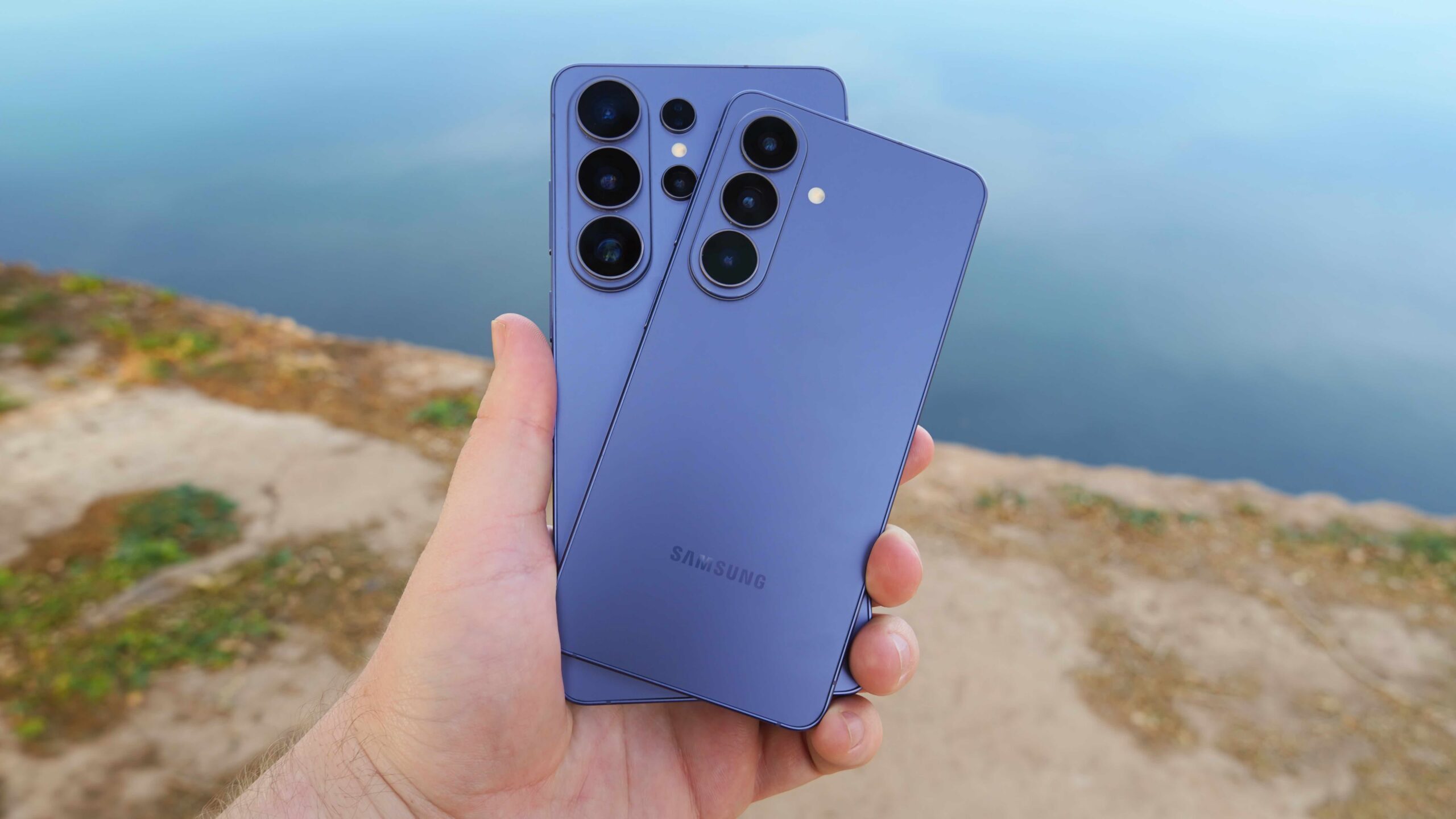
For years, I've gravitated towards compact, lighter smartphones, often choosing 'Edge' or 'Air' models over their larger, 'Ultra' or 'Pro Max' siblings. My daily drivers have been the likes of the Galaxy S25 Edge and iPhone Air, so when I approached the Galaxy S26 series, I wasn't the target audience for the massive 6.9-inch Galaxy S26 Ultra. Yet, after weeks of testing both the S26 and S26 Ultra side-by-side, I've been completely won over. For the first time, Samsung's high-end flagship offers enough substantial upgrades to truly justify its larger footprint and premium price tag.
While the base Galaxy S26 and the S26 Ultra share the powerful Snapdragon 8 Elite Gen 5 chipset and One UI 8.5, the similarities quickly diminish. The Ultra, priced at $1,300, is by no means cheap, but it stands out as the only Galaxy S26 series phone that genuinely delivers value for its cost. The base Galaxy S26, on the other hand, suffers from puzzling downgrades that make it a questionable investment for the long haul.
The S26 Ultra: Big on Features, Not Just Size
Historically, larger smartphones offered little beyond increased screen real estate, often becoming cumbersome to handle or pocket. The Galaxy S26 Ultra challenges this notion by packing significant innovations into its expansive 6.9-inch display, while surprisingly managing to be quite slender and light for its class. Measuring just 7.9mm thick and weighing 214 grams, it's notably thinner and lighter than competitors like the Pixel 10 Pro XL (8.5mm, 232g) and the iPhone 17 Pro Max (8.8mm, 233g). This makes the S26 Ultra surprisingly manageable despite its imposing size.
However, it's the display technology itself that truly impresses. The Ultra features the new Flex Magic Pixel OLED panel, which enables the groundbreaking Privacy Display feature. This isn't just marketing hype; it's an indispensable tool. Whether on public transit, flying, or at crowded events, being able to obscure your screen from prying eyes with a simple button press is incredibly freeing. It's a significant advantage over clumsy privacy screen protectors and, for me, a standout feature that strongly tips the scales in the Ultra's favor over the standard S26.
It’s important to acknowledge that the Flex Magic Pixel OLED isn't without its trade-offs. Off-angle brightness and overall sharpness are slightly inferior to traditional OLED screens, a difference I noted when comparing it directly with the S26. The regular S26 often appeared brighter, even with Privacy Display disabled on the Ultra. While this isn't a dealbreaker for me, as the innovation of Privacy Display outweighs a minor brightness difference, it's something potential buyers should be aware of.
Where the Base S26 Falls Short
While the Galaxy S26 series might seem consistent at first glance, a closer inspection reveals a series of compromises in the base Galaxy S26 model that are difficult to overlook, especially when considering its price increase this year.
Starting with the display, the base S26 lacks the QHD+ resolution found on the Ultra and Plus variants, sporting only an FHD+ panel. This omission also means it misses out on ProScaler, an AI feature designed to upscale visual content. For a flagship phone in 2026, this feels like a significant step backward.
Performance, while good in short bursts, isn't sustained. Although both the S26 and S26 Ultra use the same Snapdragon 8 Elite Gen 5 processor in North America, only the Ultra benefits from a redesigned, larger, and more efficient vapor chamber for cooling. This means the Ultra can sustain peak performance for longer periods, crucial for demanding tasks or extended gaming sessions.
However, the most concerning downgrades affect the S26's connectivity. The base Galaxy S26 has dropped mmWave 5G support, a feature present in last year’s S25. It also lacks an ultra-wideband (UWB) chip, essential for precision finding with accessories and trackers. Furthermore, it's the only S26 model still relying on Bluetooth 5.4, missing out on the newer Bluetooth 6 support offered by its siblings. These might not be immediate pain points, but for a phone marketed with seven years of software support, these omissions mean it lacks cutting-edge specs from day one, impacting its future-proofing.
Camera & Charging: Ultra's Clear Edge
The camera system on the Galaxy S26 Ultra received meaningful upgrades that might have flown under the radar. The new 200MP primary camera features a wider aperture, and the 50MP telephoto lens benefits from an All Lenses on Prism (ALoP) design. These enhancements, coupled with larger and brighter image sensors, result in superior shots with greater detail, keeping the Ultra's quadruple-camera setup firmly in contention for the title of best Android camera phone.
Unfortunately, the same cannot be said for the base Galaxy S26. It's another year without any camera hardware changes for the standard S series. This means the S26 shares the exact same rear camera system as the Galaxy S22: a 50MP main sensor, a 10MP telephoto lens, and a 12MP ultrawide lens. While computational photography improvements and a new 24MP camera mode do help the S26 produce better photos than older models despite the identical hardware, the absence of newer, larger sensors – like those in the Ultra – is glaring. The 10MP telephoto with 3x optical zoom, in particular, feels dated and falls short of the resolution and zoom capabilities expected from 2026's top-tier telephoto cameras. Like its outdated connectivity, the S26’s camera hardware raises questions about its longevity.
When it comes to charging, the Galaxy S26 Ultra makes a substantial leap forward. While its 5,000mAh battery capacity is not groundbreaking and the lack of built-in Qi2 magnets is disappointing, the 60W wired charging support is a true game-changer. Our tests show the Ultra charges to full in a mere 42 minutes. This rapid charging allows for quick top-ups throughout the day, transforming the user experience. The base Galaxy S26, by contrast, supports a paltry 25W wired charging. A 30-minute charge only gets it to 55% battery, and its smaller 4,300mAh battery also means more frequent charging cycles are necessary.
Value Proposition: Why the Ultra Justifies Its Price
I understand the $1,300 price tag of the Galaxy S26 Ultra is steep, and I'm not suggesting everyone needs to spend that much on a smartphone. However, it's undeniable that the Galaxy S26 Ultra is the only model in the 2026 lineup whose feature set truly justifies its cost. Remarkably, the Ultra saw no price hike this year, unlike the base Galaxy S26 and midsize Galaxy S26 Plus, both of which are $100 more expensive. Adding to its appeal, the Ultra also received the most significant upgrades, making it arguably the best value 'Ultra' phone in years.
With the base Galaxy S26 featuring outdated connectivity standards, older camera hardware, and slow charging speeds, I simply cannot envision it aging gracefully over its promised seven-year software support cycle. For those in the market for a new Samsung flagship, it’s the Galaxy S26 Ultra or nothing this year. If the Ultra's size or price is prohibitive, I strongly advise waiting for the Galaxy S27 or S27 Plus, hoping for more substantial and necessary changes to reach those models next year.
Comparison Table: Galaxy S26 Ultra vs. Competitors (Physical Dimensions)
| Feature | Galaxy S26 Ultra | Pixel 10 Pro XL | iPhone 17 Pro Max |
|---|---|---|---|
| Thickness | 7.9mm | 8.5mm | 8.8mm |
| Weight | 214g | 232g | 233g |
FAQ
Q: Is the Galaxy S26 Ultra really worth its high price?
A: Based on its significant upgrades in display technology (Privacy Display), camera hardware, faster charging, and modern connectivity, while the base S26 introduces several compromises and price hikes, the Ultra is presented as the only S26 series model that truly justifies its premium cost.
Q: What makes the S26 Ultra's display so special?
A: Beyond its 6.9-inch size, the Flex Magic Pixel OLED panel features the innovative Privacy Display. This allows users to obscure content from prying eyes with a simple button press, a feature the reviewer found indispensable in public settings.
Q: Why is the base Galaxy S26 not recommended for long-term use?
A: The base model includes several downgrades such as a lower FHD+ resolution screen, older connectivity standards (no mmWave 5G, UWB, or Bluetooth 6), and unchanged camera hardware. These omissions raise concerns about its ability to remain competitive and functional over its promised seven-year software support period.
Related articles

Apple Unveils iPhone Duo: Pricey Foldable Sees Soaring Demand
Apple has officially entered the foldable smartphone arena with the long-anticipated launch of the iPhone Duo. Priced starting at a hefty $1,999, the device features a 5.4-inch outer display and a larger 7.6-inch inner
Android 17 QPR2 Beta 7.1: The Performance Relief You've Been Waiting
Android 17 QPR2 Beta 7.1: Finally Fixing the QPR1 Performance Woes Verdict: Android 17 QPR2 Beta 7.1 is a crucial and highly anticipated software update for Google Pixel users, specifically targeting and resolving the

DJI Solo Video Setups: Smart Choices for Lone Creators
This review delves into DJI's recommended solo video setups, highlighting the Osmo Pocket 3 Creator Combo as a top pick for its integrated camera, gimbal, and mic. It also covers stabilizers like the Osmo Mobile 8 and RS 4, and the DJI Mic Mini series for enhanced audio, providing honest pros, cons, and clear buying advice.

Ars Technica's Rocket Report: Your Essential Space Industry Briefing
Quick Verdict Ars Technica's Rocket Report, presented by veteran space reporter Stephen Clark, offers an invaluable and meticulously organized weekly (or similar frequency, implied by "Edition 9.15") digest of the most

Apple iPhone Duo: A Daring Debut with Notable Compromises
Apple's highly anticipated iPhone Duo, priced at $2,000, has gone on pre-order. While hailed as "Apple's most exciting device in a decade" for its innovative foldable design and immersive display, it comes with significant drawbacks like the absence of FaceID and a premium camera.
KDE Plasma 6.8: A Future-Focused 30th Anniversary Update
Quick Verdict KDE Plasma 6.8, arriving as the "30th Anniversary Edition," is a pivotal release that decisively pushes the desktop environment into the future. With a definitive farewell to native X11 sessions and a