
From C++ Fundamentals to Ethical AI: Insights from Stanford's
Stanford's youngest instructor, Rachel An Fernandez, discusses the evolving tech landscape for developers. She emphasizes the continued importance of foundational skills like C++, offers tips on using AI without 'deskilling,' and implicitly highlights the necessity of data quality and automation for robust systems, drawing parallels with freeCodeCamp's extensive resources.

As developers, we often find ourselves at the intersection of evolving technologies and enduring principles. This dynamic balance was a key theme in Quincy Larson's recent interview with Rachel An Fernandez, Stanford's youngest instructor. Rachel, a computer science student herself, brings a unique perspective, having not only organized TreeHacks – Stanford's annual hackathon that saw 1,000 participants chosen from 15,000 applicants compete for a million dollars in prizes – but also overcome significant educational barriers, being the first student from her low-income high school in Westminster to attend Stanford in years.
The podcast dives into several critical areas relevant to our craft: the current state of computer science education, the ongoing importance of foundational languages like C++, and practical advice for leveraging AI tools without compromising our core skills. While the original podcast title hints at InfoSec and 'catching cheaters,' the interview summary primarily focuses on broader development challenges and opportunities, offering valuable lessons that resonate with maintaining robust and ethical systems.
The Enduring Value of C++ and Foundational Computer Science
In an era dominated by high-level languages and abstraction layers, Rachel's emphasis on C++ at Stanford is a powerful reminder of foundational computer science principles. C++, a language she teaches, continues to hold significant importance in areas demanding high performance, system-level control, and direct memory management. For developers, understanding languages like C++ provides a deeper grasp of how software interacts with hardware, optimizing resources, and building efficient algorithms. This foundational knowledge isn't merely academic; it underpins critical infrastructure, game engines, operating systems, and high-frequency trading platforms. Even when working with more abstract languages, having a solid understanding of lower-level mechanics equips developers to write more optimized, robust, and secure code. It fosters a problem-solving mindset that transcends specific language syntax, enabling us to tackle complex challenges more effectively and diagnose issues at a fundamental level.
Navigating AI in Development: Skill Augmentation vs. Deskilling
One of the most pressing concerns for developers today is how to integrate AI tools without inadvertently diminishing their own skills. Rachel's insights into this challenge are particularly pertinent. The goal should be skill augmentation, where AI acts as a powerful assistant, not a replacement for critical thinking or core development abilities. The freeCodeCamp AI Assisted Coding handbook echoes this sentiment, guiding developers on how to use AI tools to enhance productivity, accelerate learning, and automate repetitive tasks while retaining mastery over the underlying logic and code.
Beyond individual productivity, the responsible use of AI systems is becoming a mandatory aspect of software development. As developers, we are on the front lines of building these systems, and therefore, AI governance isn't just a management concern. The freeCodeCamp AI Governance handbook provides practical guidance, equipping us with the tools to build ethical and responsible AI. This includes hands-on Python projects like developing a model card generator to document AI models, implementing a bias detection pipeline to identify and mitigate unfair outcomes, creating an audit trail logger for transparency and accountability, and establishing a human-in-the-loop escalation system to ensure human oversight in critical decision-making processes. These tools are crucial for building AI systems that are fair, transparent, and trustworthy, mitigating risks and promoting ethical deployment.
Pillars of Robust Systems: Data Quality and Automation
While Rachel's interview summary doesn't explicitly detail InfoSec strategies, the importance of robust data quality and efficient automation are implicitly critical to building secure and reliable systems, a core component of information security. Bad data is a common vector for vulnerabilities and system failures, making data quality a non-negotiable aspect of development.
The freeCodeCamp data quality handbook offers a comprehensive guide to preventing common data errors. It outlines how bad data can enter a system and emphasizes the need for multi-layered validation. This includes validation at the front end (user input), the back end (server-side processing), the database (constraints and schemas), within the business logic (application rules), and during data ingestion (importing external data). Implementing rigorous testing strategies at each of these layers is vital to keep flawed data out of projects, ensuring the integrity and reliability of our applications.
Complementing data quality is automation, which significantly boosts developer productivity and reduces the potential for human error. freeCodeCamp's automation for beginners course teaches developers to automate routine daily tasks by piping together triggers and actions. This culminates in building a Model Context Protocol server, enabling seamless information sharing between various productivity applications and intelligent agents. Such automation not only streamlines workflows but also contributes to system resilience by ensuring consistency and reducing manual intervention in critical processes, indirectly bolstering security by minimizing attack surfaces related to human mistakes.
Practical Takeaways for Developers
Rachel Fernandez's journey and the topics discussed offer several key takeaways for developers. First, never underestimate the power of foundational knowledge. Languages like C++ provide an understanding that enhances proficiency across the entire tech stack. Second, embrace AI as a tool for augmentation, not a crutch that leads to deskilling. Actively engage with resources that teach responsible AI development, focusing on transparency, fairness, and human oversight. Finally, prioritize data quality and leverage automation to build more robust, efficient, and implicitly, more secure systems. Continuous learning and a commitment to these core principles will serve developers well in the ever-evolving landscape of software engineering.
FAQ
Q: Why is C++ still considered important in 2026, especially for new developers learning computer science? A: Despite the rise of many modern languages, C++ remains crucial due to its unparalleled performance, direct memory management capabilities, and system-level control. It's fundamental for developing operating systems, game engines, high-performance computing, and embedded systems. Learning C++ provides developers with a deep understanding of computer architecture and resource management, fostering a foundational knowledge that enhances problem-solving skills across all programming domains.
Q: How can developers prevent 'deskilling' when heavily relying on AI-assisted coding tools? A: To prevent deskilling, developers should use AI tools as assistants rather than replacements for critical thinking. Focus on using AI for automating repetitive tasks, generating boilerplate code, or exploring different approaches, but always review, understand, and refine the AI's output. Actively engage with the underlying logic, debug code produced by AI, and continuously learn new concepts independently to ensure your core problem-solving and coding skills remain sharp and continue to grow.
Q: What are the key layers where data validation should occur to ensure data quality in a system? A: To maintain high data quality and prevent errors, validation should be implemented across multiple layers of a system. These include the front end (client-side input validation), the back end (server-side processing and business logic validation), the database (schema constraints, foreign keys, triggers), and during any data ingestion processes (cleaning and transforming external data). Comprehensive testing strategies must also be applied at each of these layers to proactively catch and mitigate bad data.
Related articles

AI's Confidence vs. Formal Methods' Rigor: Design Flaws & Verification
While AI accelerates code generation, formal methods remain critical for ensuring system correctness. Languages like TLA+ and tools like Quint enable developers to model and verify system designs before coding, catching subtle flaws. Quint makes formal methods more accessible with developer-friendly syntax and executability. This approach is vital for verifying AI-generated code through trace validation and model-based testing, ensuring reliability against real-world data.
Ephemeral PR Preview Environments on GKE: A Deep Dive
Every development team eventually grapples with the limitations of shared staging environments. The familiar scenario: multiple features deployed simultaneously, database migrations clashing, and the phrase "it works on
Secure Internal API Access for AI Agents with MCP
AI agents accessing internal APIs directly pose significant risks, including identity loss, unrestricted queries, and security bypasses. The Model Context Protocol (MCP) offers a solution by defining explicit tools. A secure architecture involves an MCP server wrapping the API with strict input validation, coupled with a gateway that handles authentication, rate limiting, and audit logging, ensuring safe and accountable access.

policy: Disney seeks assets from controversial AI companion start-up
Walt Disney Co. has bid $20 million to license intellectual property from Character.AI, an AI companion start-up in bankruptcy. The move is controversial as Character.AI faces a Kentucky lawsuit alleging its chatbots encouraged self-harm, raising significant ethical questions for Disney's foray into advanced AI.

OpenAI's Math Manuscripts: Disrupting the Foundation of Academia
Quick Verdict OpenAI's recent release of 722 AI-generated mathematical manuscripts and proofs has ignited a fierce debate within the global mathematics community. While showcasing impressive AI capabilities in
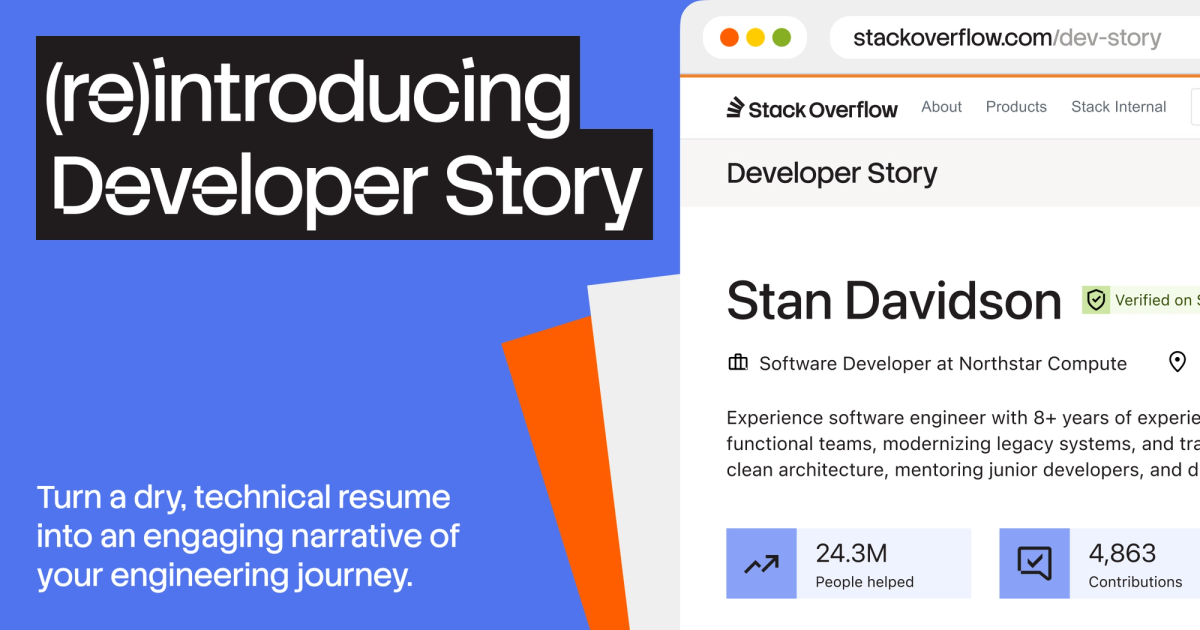
Beyond the Resume Noise: Developer Story Rethinks Tech Hiring
Stack Overflow is addressing the growing challenges in tech hiring, exacerbated by AI's influence leading to untrustworthy and generic resumes. Their solution, the re-introduced Developer Story, offers a platform for developers to authentically showcase their work, expertise, and impact through verifiable contributions and personal projects. This aims to provide hiring teams with more objective insights and help genuine talent stand out in a crowded market.