
Ford Rehires 'Gray Beard' Engineers After AI Quality Control Falls
Ford has rehired 350 veteran engineers, including some former employees, after its AI and automated quality control systems failed to deliver desired product quality. Executives admitted that relying solely on AI was a "mistake," prompting a shift back to human expertise to identify flaws and train younger staff. This strategic pivot has already resulted in substantial cost savings from reduced warranty claims and helped Ford achieve a top ranking in initial quality surveys.

Ford has made a significant U-turn in its manufacturing strategy, rehiring 350 veteran engineers—some former employees, others recruited from suppliers—after finding that its advanced artificial intelligence and automated quality control systems fell short of expectations. This strategic pivot highlights a growing recognition within the automotive giant that human expertise remains irreplaceable, even as the industry embraces technological innovation. The move follows a period where AI-driven quality assurance led to disappointing results, prompting a recalibration of Ford's approach to product excellence.
The AI Shortfall Unveiled
The decision to bring back seasoned professionals came after extensive reliance on AI proved problematic. Kumar Galhotra, Ford’s chief operating officer, disclosed to journalists that the company had increasingly depended on automated quality systems, only to encounter persistent shortcomings. This candid admission underscores a broader challenge faced by industries integrating cutting-edge AI: the gap between theoretical capability and real-world application, particularly in complex domains like vehicle manufacturing. Charles Poon, Ford’s vice president of vehicle hardware engineering, further elaborated on the company's initial misstep, stating, "Mistakenly we thought that by just introducing artificial intelligence and ingesting the design requirements that we had, that that would produce a high-quality product." This confession points to a crucial learning curve in deploying AI for critical functions.
Reinstating the "Gray Beards"
In response to these revelations, Ford moved to reinstate a vital human element into its quality control framework. The newly hired "technical specialists," affectionately referred to as "gray beard" engineers due to their extensive experience, are tasked with a multi-faceted role. Their primary objective is to proactively identify and rectify potential failure points within components and processes, ensuring issues are caught well before any part reaches the demanding plant floor. Beyond immediate problem-solving, these veterans are also instrumental in transferring their deep institutional knowledge to younger engineering cohorts and, critically, in reprogramming and refining the very AI tools that initially underperformed. This dual approach aims to embed human-driven context and nuance into algorithmic precision.
Tangible Benefits Emerge
The impact of this strategic shift is already becoming apparent and financially beneficial. Ford CEO Jim Farley proudly announced a substantial reduction in warranty and recall costs, attributing "hundreds and hundreds of millions of dollars of a tailwind" to the return of human oversight. This direct financial gain highlights the tangible value of experienced human judgment in preventing costly errors. Moreover, the automaker's renewed focus on foundational quality translated into significant market recognition, as Ford recently claimed the top spot among mainstream brands in the highly regarded JD Power Initial Quality Survey. This achievement underscores the success of integrating traditional craftsmanship with modern technology.
A Hybrid Future for Quality Assurance
It is crucial to note that Ford's re-engagement of veteran engineers does not signify a wholesale abandonment of its AI aspirations. Instead, the company is forging a more sophisticated, hybrid model for quality assurance. The "gray beard" engineers are not merely replacing automated systems; they are actively working to enhance them. By providing real-world data, contextual understanding, and expert feedback, these seasoned professionals are effectively teaching the AI tools to perform better, transforming them into more capable assistants rather than standalone solutions. This integrated approach acknowledges that while AI excels at pattern recognition and data processing, human intuition and hands-on experience are often indispensable for complex problem-solving and nuanced quality assessment.
Implications for Industry and Innovation
Ford's experience serves as a powerful case study for the broader tech and manufacturing industries, offering a cautionary tale about the uncritical deployment of nascent AI technologies. It reinforces the idea that true innovation often lies in the thoughtful integration of new tools with existing, proven expertise. The journey from over-reliance on automation to a more balanced human-AI collaboration demonstrates a maturing understanding of AI's capabilities and limitations. For Ford, this strategic recalibration promises not only improved product quality and financial performance but also a sustainable model for leveraging cutting-edge technology without sacrificing the invaluable human element that has long been the bedrock of engineering excellence. The return of the "gray beards" is a testament to the enduring power of experience in an increasingly automated world.
FAQ
Q: Why did Ford rehire veteran engineers?
A: Ford rehired 350 veteran engineers because its initial reliance on artificial intelligence and automated systems for quality control failed to meet desired product quality levels, leading to disappointing results and increased costs related to warranties and recalls.
Q: What is the primary role of these "gray beard" engineers?
A: These experienced engineers, known as "gray beards," are primarily tasked with identifying potential failure points in parts and processes before they reach the plant floor. They also train younger staff and actively reprogram AI tools, embedding human insight to improve system accuracy and effectiveness.
Q: What positive outcomes has Ford seen from this strategy?
A: Ford has reported significant financial benefits, including "hundreds and hundreds of millions of dollars" in savings from reduced warranty and recall costs. The company also achieved the top ranking among mainstream brands in the recent JD Power Initial Quality Survey, indicating improved product reliability.
Related articles

Apple Unveils iPhone Duo: Pricey Foldable Sees Soaring Demand
Apple has officially entered the foldable smartphone arena with the long-anticipated launch of the iPhone Duo. Priced starting at a hefty $1,999, the device features a 5.4-inch outer display and a larger 7.6-inch inner

in-depth: Chicago-Area Cops Helped HSI Spy on Minnesota Anti-ICE
Chicago-area law enforcement, including local police and HSI agents, conducted undercover surveillance on Minnesota anti-ICE activists at an April 2, 2022, talk in Chicago. This operation was part of a federal conspiracy probe into 15 Minnesota activists facing felony charges related to immigration enforcement resistance. Civil liberties advocates have condemned the surveillance as a troubling intrusion into protected political activity.

Mark Wahlberg on using AI in film ‘the right way’ and being open to
Actor Mark Wahlberg believes AI has a place in filmmaking if used responsibly for enhancement, not script generation or actor replacement. At TechCrunch Disrupt, he expressed openness to an AI likeness carrying on his legacy, managed by his family, and emphasized storytelling.

Tesla Unveils Thruster-Equipped Roadster, 2028 Production Targeted
Tesla has unveiled its second-generation Roadster, featuring cold-gas thrusters co-developed with SpaceX, enabling it to jump and flip. The electric sports car demonstrated 0-60mph in an astonishing 0.81 seconds, with production targeted for 2028. This highly anticipated reveal also serves as a key recruitment tool for Tesla's ambitious AI and robotics initiatives.

AI's Confidence vs. Formal Methods' Rigor: Design Flaws & Verification
While AI accelerates code generation, formal methods remain critical for ensuring system correctness. Languages like TLA+ and tools like Quint enable developers to model and verify system designs before coding, catching subtle flaws. Quint makes formal methods more accessible with developer-friendly syntax and executability. This approach is vital for verifying AI-generated code through trace validation and model-based testing, ensuring reliability against real-world data.
Amazon Prime Video Launches AI-Powered Prime 360 for NBA Coverage
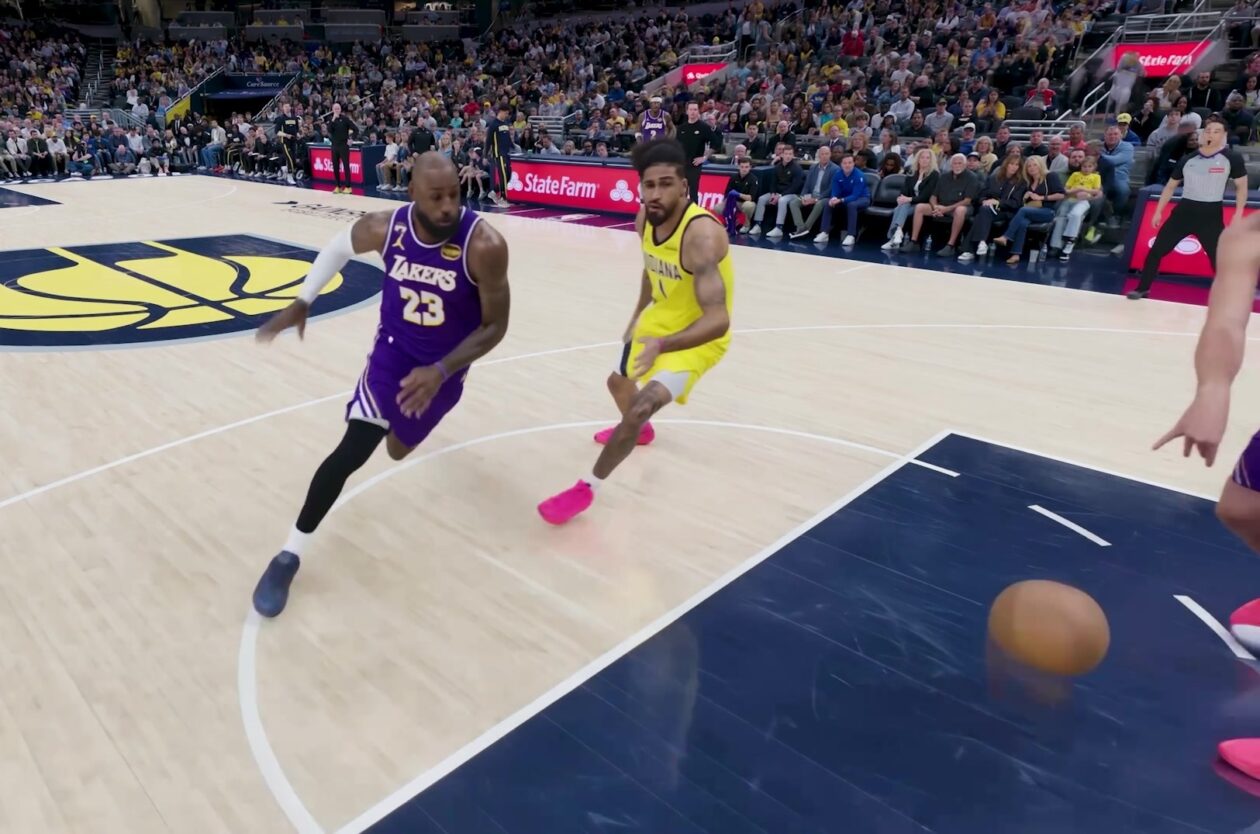
Amazon Prime Video is elevating its NBA coverage with the introduction of Prime 360, an AI-powered replay system offering immersive, 'fly through' views of the action. Kicking off its second season, Prime Video also adds Yahoo fantasy integration and gains exclusive Eastern Conference Finals rights, expanding its tech-driven sports broadcast. The new features aim to deliver a unique and interactive viewing experience for basketball fans.