
Enterprises Turn to TBM to Conquer AI Cost Spikes and Unlock Growth
Enterprises face unprecedented challenges tracking AI ROI amidst surging, unpredictable costs. A new report shows 90% of tech leaders are uncertain, prompting a shift to Technology Business Management (TBM) to strategically align investments and manage expenditures for tangible growth.

AI spending is rapidly escalating, but enterprise leaders are grappling with a significant challenge: proving its return on investment (ROI). With costs becoming increasingly unpredictable, a new framework is emerging to help organizations transform these expenditures from potential liabilities into strategic growth opportunities. Technology Business Management (TBM) is being championed as a vital approach to govern, measure, and align AI investments with concrete business outcomes.
This uncertainty isn't new to tech, yet AI introduces unprecedented complexities. According to Apptio's 2026 Technology Investment Management Report, 90% of technology leaders cite ROI uncertainty as a major factor in investment decisions, a 5-point increase from the previous year. AI's evolving pricing structures, unpredictable consumption patterns, and the intense pressure to adopt quickly mirror the early days of public cloud, making traditional ROI calculations insufficient.
Organizations are increasingly expecting AI initiatives to self-fund innovation, with 45% planning to reinvest savings generated by AI-driven efficiencies. Meanwhile, two-thirds of companies intend to reallocate existing budgets towards AI, necessitating clear insights into the trade-offs involved. Without robust measurement, leaders risk making significant investments without a clear understanding of their true impact or sustainability.
Rethinking AI ROI: From Measurement to Optimization
Given the multifaceted nature of AI investments, tech leaders are encouraged to view AI ROI as an optimization challenge. The goal is not merely to implement AI, but to achieve the highest possible financial and organizational returns. This begins by anchoring AI investment strategies to quantifiable business problems, ensuring initiatives are prioritized based on real-world outcomes such as improved decision-making speed or increased throughput, rather than novel but strategically irrelevant "edge cases."
Defining success requires articulating desired outcomes for new AI capabilities or establishing baseline performance for augmentations, complete with expected lifts. Companies must also set clear financial timeframes, determining thresholds for continuing, pausing, or accelerating investments based on cost and return curves. Identifying key performance indicators (KPIs) extends beyond simple usage or efficiency metrics to encompass financial impact, alignment with broader strategy, and the opportunity cost of alternative investments, reflecting AI's ripple effects across the entire technology environment.
TBM: A Framework for Sustainable AI Investment
To navigate these complexities, Apptio, an IBM company, advocates for Technology Business Management (TBM). This framework integrates IT Financial Management (ITFM), AI FinOps, and Strategic Portfolio Management (SPM) to create a unified view. TBM connects financial, operational, and business data across the enterprise, providing a trustworthy cost foundation that captures AI spend across all dimensions: labor, infrastructure, inference, storage, and applications.
TBM offers crucial visibility into how AI spend is distributed across on-premises systems and diverse cloud environments, each demanding distinct capacity planning and specialized skills. By aligning AI initiatives with strategic priorities and measurable results, TBM helps leaders proactively identify cost spikes and make rapid, informed decisions—whether to shift funding, scale successful initiatives, or reassess underperforming ones. This allows for consistent analytical application even as AI pricing, tooling, and workflows evolve.
The Strategic Imperative: Managing AI as an Investment
Ultimately, organizations are moving past experimental phases with AI; sustained investment cannot be based on optimism alone. Boards and finance departments are now demanding strategic answers and trustworthy data. Enterprise leaders who approach AI as a managed investment, rather than merely a technological bet, are better positioned to scale their initiatives successfully. A TBM-driven approach provides the essential data foundation, visibility, and accountability needed to make these critical decisions responsibly.
FAQ
Q: Why is measuring AI ROI particularly challenging for organizations?
A: AI introduces new, unpredictable costs, including varying provider pricing and fluctuating consumption, making traditional ROI calculations difficult. This is compounded by the intense pressure to adopt AI quickly and the need to justify significant investments with unclear returns.
Q: How does Technology Business Management (TBM) help manage AI costs and ROI?
A: TBM integrates IT Financial Management, AI FinOps, and Strategic Portfolio Management to provide a unified view of financial, operational, and business data. It helps build a trustworthy cost foundation for AI, offers visibility into spend distribution, connects investments to business outcomes, and enables rapid decision-making on cost spikes and scaling initiatives.
Q: What are the key steps for leaders to optimize AI investments?
A: Leaders should start by grounding AI investment strategies in quantifiable business problems. They need to clearly define what success looks like, establish financial timeframes and thresholds, and identify comprehensive KPIs that go beyond simple usage to include financial impact, strategic alignment, and opportunity costs.
Related articles

Apple Unveils iPhone Duo: Pricey Foldable Sees Soaring Demand
Apple has officially entered the foldable smartphone arena with the long-anticipated launch of the iPhone Duo. Priced starting at a hefty $1,999, the device features a 5.4-inch outer display and a larger 7.6-inch inner

in-depth: Chicago-Area Cops Helped HSI Spy on Minnesota Anti-ICE
Chicago-area law enforcement, including local police and HSI agents, conducted undercover surveillance on Minnesota anti-ICE activists at an April 2, 2022, talk in Chicago. This operation was part of a federal conspiracy probe into 15 Minnesota activists facing felony charges related to immigration enforcement resistance. Civil liberties advocates have condemned the surveillance as a troubling intrusion into protected political activity.

Mark Wahlberg on using AI in film ‘the right way’ and being open to
Actor Mark Wahlberg believes AI has a place in filmmaking if used responsibly for enhancement, not script generation or actor replacement. At TechCrunch Disrupt, he expressed openness to an AI likeness carrying on his legacy, managed by his family, and emphasized storytelling.

Tesla Unveils Thruster-Equipped Roadster, 2028 Production Targeted
Tesla has unveiled its second-generation Roadster, featuring cold-gas thrusters co-developed with SpaceX, enabling it to jump and flip. The electric sports car demonstrated 0-60mph in an astonishing 0.81 seconds, with production targeted for 2028. This highly anticipated reveal also serves as a key recruitment tool for Tesla's ambitious AI and robotics initiatives.

Amazon Prime Video Launches AI-Powered Prime 360 for NBA Coverage
Amazon Prime Video is elevating its NBA coverage with the introduction of Prime 360, an AI-powered replay system offering immersive, 'fly through' views of the action. Kicking off its second season, Prime Video also adds Yahoo fantasy integration and gains exclusive Eastern Conference Finals rights, expanding its tech-driven sports broadcast. The new features aim to deliver a unique and interactive viewing experience for basketball fans.
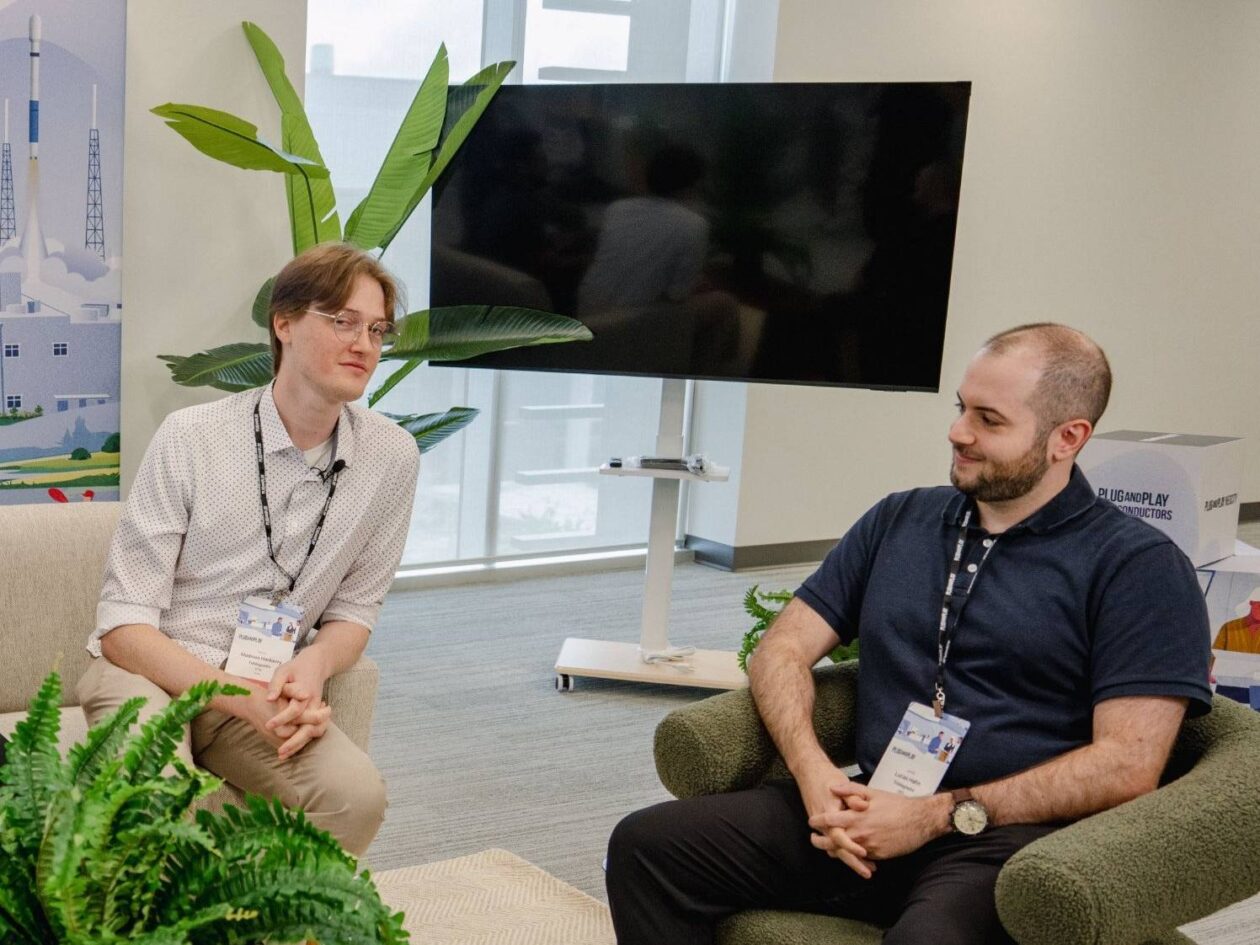
regional: A two-person Seattle startup lands $1M to reinvent
Seattle startup TriMagnetix has secured $1 million to develop semiconductor chips that consume 800 times less energy and are radiation-resistant. The two-person company, leveraging nanomagnetic technology, is targeting space applications and data centers. With new funding and key partnerships, TriMagnetix aims for commercial sales within a year.