
Email Hosting 2026: Google Workspace Excels, Proton Mail for Privacy
Google Workspace is the top email hosting pick for small businesses in 2026, offering a full productivity suite and familiar interface. Proton Mail excels for privacy-focused users, with strong encryption.

As an experienced tech reviewer, I've dived deep into the best email hosting solutions for small businesses and freelancers in 2026. For solopreneurs scaling up or remote teams needing seamless communication, moving beyond a free email address is a critical step towards professionalism and efficiency. I’ve put five leading platforms – Google Workspace, Proton Mail, Microsoft 365, Fastmail, and Spike – through their paces, evaluating everything from initial setup complexity and pricing transparency to how well they handle the demands of a distributed workforce. Here's my honest, detailed analysis.
The Quick Verdict: Google Workspace Takes the Lead
For most freelancers and small remote teams, Google Workspace remains the standout choice for 2026. Its integration of custom-domain email with a comprehensive productivity suite is unparalleled. While other specialized options excel in specific niches, Workspace delivers a robust, familiar, and feature-rich environment that’s hard to beat for overall value and ease of use. It's an all-in-one solution that truly feels like having a full office, without the physical footprint.
Google Workspace: The All-in-One Solution for Modern Teams
Google Workspace leverages the familiarity of Gmail, meaning there's virtually no learning curve for new users or your clients. From the moment you sign up, it bundles custom business email with the entire Google suite: Docs, Sheets, Slides, Drive, and Meet. This integration is a significant advantage, particularly for freelancers transitioning from a personal Gmail account or remote teams who need a consolidated platform for documents, video calls, and shared calendars without juggling multiple subscriptions.
During my testing, the setup process was remarkably swift, taking under 15 minutes from registration to sending a custom-domain email, guided by Google's intuitive DNS verification. This ease of deployment is a major plus for small businesses without dedicated IT support.
Pricing for Business Starter is around $7 per user per month when billed annually, offering 30GB of pooled storage and integrated Gemini AI features within Gmail. The Business Standard plan, at roughly $14 per user per month, steps up significantly with 2TB of pooled storage and Gemini AI extending across all Workspace applications, including Docs, Sheets, and Meet. I found that most small teams gravitate towards Standard, as the 30GB offered by Starter can quickly become insufficient when storing client files alongside email correspondence.
However, it's not without its drawbacks. Google Workspace has seen two price increases in the last two years, partly to incorporate AI features that not all users may fully utilize. Another point of frustration is the cost structure: every team member requires a full paid seat, with no discounted options for shared inboxes like info@ or support@. Despite these considerations, if your operations are already reliant on Google's ecosystem, or if you need your email hosting to seamlessly double as your primary document and video conferencing platform, Google Workspace offers unmatched breadth.
Pros:
- Extremely familiar Gmail interface minimizes learning curve
- Comprehensive AI features (Gemini) included across all tiers
- Deeply integrated app ecosystem (Docs, Drive, Meet) for an all-in-one office suite
- Quick and guided setup process
Cons:
- Storage is pooled across the team, not per-app or per-user individually
- Pricing has increased multiple times, potentially incorporating unused AI features
- No discounted options for shared mailboxes; every alias requires a full paid seat
Proton Mail: Prioritizing Privacy and Security
Proton Mail has carved out a strong reputation based on its privacy-first approach, and this commitment remains central to its 2026 business offerings. Headquartered in Switzerland, Proton Mail benefits from stringent data protection laws. This translates to end-to-end encryption for every email by default, and a strict policy against scanning your inbox for advertising purposes or training AI models. For freelancers and small businesses operating in sensitive sectors such as legal, healthcare, or finance, this robust privacy framework is a significant and genuine differentiator.
The Mail Essentials plan starts at approximately $7 per user per month on an annual subscription, providing custom domains, calendar sharing, and SMTP access for integrating with other tools. Upgrading to Workspace Standard, at about $13 per user per month, includes 1TB of storage and access to Proton's full productivity suite: Drive, Docs, Sheets, and video meetings for up to 50 participants. For those requiring even more, Workspace Premium, around $19 per user per month, unlocks 3TB of storage and the Lumo AI writing assistant.
One significant limitation I encountered during testing is Proton Mail's non-standard IMAP/SMTP support. To use Proton Mail within popular third-party clients like Microsoft Outlook or Apple Mail, you need to install Proton's dedicated Bridge application, which is only available with paid plans. This could be a dealbreaker for teams deeply embedded in a specific email client who prefer not to run additional background software. However, for a solo freelancer primarily using Proton's native web or mobile applications, the encryption and privacy tools deliver genuinely strong security. Migrating from services like Google Workspace is streamlined through Proton's own Easy Switch tool.
Important Note: The pricing pages for Proton Mail did not consistently display exact current figures during my research, so it is highly recommended to verify the latest business plan details directly on Proton's official website before making a commitment.
Pros:
- Industry-leading privacy and security with default end-to-end encryption
- Based in Switzerland, adhering to strong data protection laws
- No ad scanning or AI model training using user data
- Offers a full suite of productivity tools in higher tiers (Drive, Docs, Sheets, Meetings)
Cons:
- Requires a proprietary Bridge app for integration with external email clients (only on paid plans)
- Current pricing figures were not consistently available, requiring direct verification from the vendor
- May not integrate as seamlessly with all third-party business tools compared to more open platforms
Comparing the Top Contenders
| Feature | Google Workspace | Proton Mail |
|---|---|---|
| Best For | Freelancers/teams wanting full productivity suite | Privacy-focused users/regulated industries |
| Email Interface | Familiar Gmail | Custom (privacy-focused) |
| Bundled Apps | Docs, Sheets, Slides, Drive, Meet | Drive, Docs, Sheets, Video Meetings (in higher tiers) |
| AI Integration | Gemini AI across all apps | Lumo AI writing assistant (Workspace Premium) |
| Storage (Base) | 30GB (Starter, pooled) | Not specified for Mail Essentials; 1TB (Workspace Standard), 3TB (Premium) |
| Price (Base/User/Month) | ~$7 (Starter, annual) | ~$7 (Mail Essentials, annual) |
| Setup Ease | Under 15 minutes, guided DNS | Easy Switch tool for migration, setup for new users is straightforward |
| External Client Support | Standard IMAP/SMTP | Requires Proton Bridge app (paid plans only) |
| Pricing Transparency | Clear, but recent price increases | Requires direct verification for exact figures |
Other Email Hosting Services to Consider
While Google Workspace and Proton Mail stand out with detailed offerings, several other services cater to specific needs:
- Microsoft 365: This is the ideal choice for small teams and freelancers who are already deeply invested in Microsoft's ecosystem, utilizing applications like Word, Excel, and Outlook daily. Its strength lies in its native integration with these familiar tools.
- Fastmail: For those who prioritize speed and simplicity above all else, Fastmail is an excellent option. It's designed for freelancers who simply want fast, reliable, and no-frills email without the added complexity or features of a full productivity suite.
- Spike: If you prefer an email experience that feels more like a team chat application, Spike delivers. It transforms your inbox into a collaborative workspace, making it suitable for freelancers who want to streamline communication and reduce email overhead.
- Zoho Mail: Presented as the best budget alternative, Zoho Mail typically offers competitive pricing while providing a solid set of email hosting features. It's a strong contender for cost-conscious small businesses.
- IceWarp: This service is highlighted as a top alternative for collaboration. It aims to provide a comprehensive platform that supports team interaction and project management alongside email services.
Buying Recommendation
Choosing the right email hosting in 2026 depends heavily on your specific business needs. If you're a freelancer or a small team looking for an all-encompassing productivity suite that integrates email with documents, storage, and video conferencing, Google Workspace is my top recommendation due to its familiarity, extensive features, and ease of use. It's a complete office solution in a single subscription.
However, if data privacy and security are your paramount concerns, especially in regulated industries, then Proton Mail offers an uncompromised, end-to-end encrypted solution. Be prepared for the need for its Bridge app if you use third-party email clients.
For those already committed to Microsoft Office applications, Microsoft 365 will provide the most seamless experience. If you need lightning-fast, straightforward email without any bells and whistles, Fastmail is your best bet. And if you envision your email inbox more as a chat hub, Spike is worth exploring. Finally, for budget-conscious users, Zoho Mail provides a compelling alternative, while IceWarp is strong for collaborative environments.
FAQ
Q: Do I need business email hosting if I already have a free Gmail account?
A: Absolutely. While a free Gmail account is fine for personal use, a custom business email (e.g., yourname@yourbusiness.com) instantly elevates your professional image. It's crucial for establishing credibility when invoicing clients, securing partnerships, and projecting an established business presence rather than a one-person operation. It also provides more control over your email and brand identity.
Q: How hard is it to migrate my existing email to a new host?
A: Generally, migrating existing email to a new host is quite manageable, especially with modern services. Platforms like Google Workspace offer guided DNS verification processes that make setup straightforward, often taking less than 15 minutes. Proton Mail also provides an 'Easy Switch' tool designed to simplify migrations from other services. While the exact difficulty can vary based on your current provider and the volume of data, most reputable email hosts provide tools and support to make the transition as smooth as possible.
Q: What's the difference between email hosting and a full productivity suite?
A: Email hosting, in its most basic form, provides you with professional email addresses tied to your domain and the infrastructure to send, receive, and store those emails. A full productivity suite, like Google Workspace or Microsoft 365, goes far beyond just email. It bundles email hosting with a comprehensive set of applications, including word processors (Docs, Word), spreadsheets (Sheets, Excel), presentation tools (Slides, PowerPoint), cloud storage (Drive, OneDrive), and video conferencing (Meet, Teams). For small businesses, a productivity suite often offers better value by consolidating essential tools into a single subscription.
Related articles
Android 17 QPR2 Beta 7.1: The Performance Relief You've Been Waiting
Android 17 QPR2 Beta 7.1: Finally Fixing the QPR1 Performance Woes Verdict: Android 17 QPR2 Beta 7.1 is a crucial and highly anticipated software update for Google Pixel users, specifically targeting and resolving the

DJI Solo Video Setups: Smart Choices for Lone Creators
This review delves into DJI's recommended solo video setups, highlighting the Osmo Pocket 3 Creator Combo as a top pick for its integrated camera, gimbal, and mic. It also covers stabilizers like the Osmo Mobile 8 and RS 4, and the DJI Mic Mini series for enhanced audio, providing honest pros, cons, and clear buying advice.

Ars Technica's Rocket Report: Your Essential Space Industry Briefing
Quick Verdict Ars Technica's Rocket Report, presented by veteran space reporter Stephen Clark, offers an invaluable and meticulously organized weekly (or similar frequency, implied by "Edition 9.15") digest of the most

Apple iPhone Duo: A Daring Debut with Notable Compromises
Apple's highly anticipated iPhone Duo, priced at $2,000, has gone on pre-order. While hailed as "Apple's most exciting device in a decade" for its innovative foldable design and immersive display, it comes with significant drawbacks like the absence of FaceID and a premium camera.
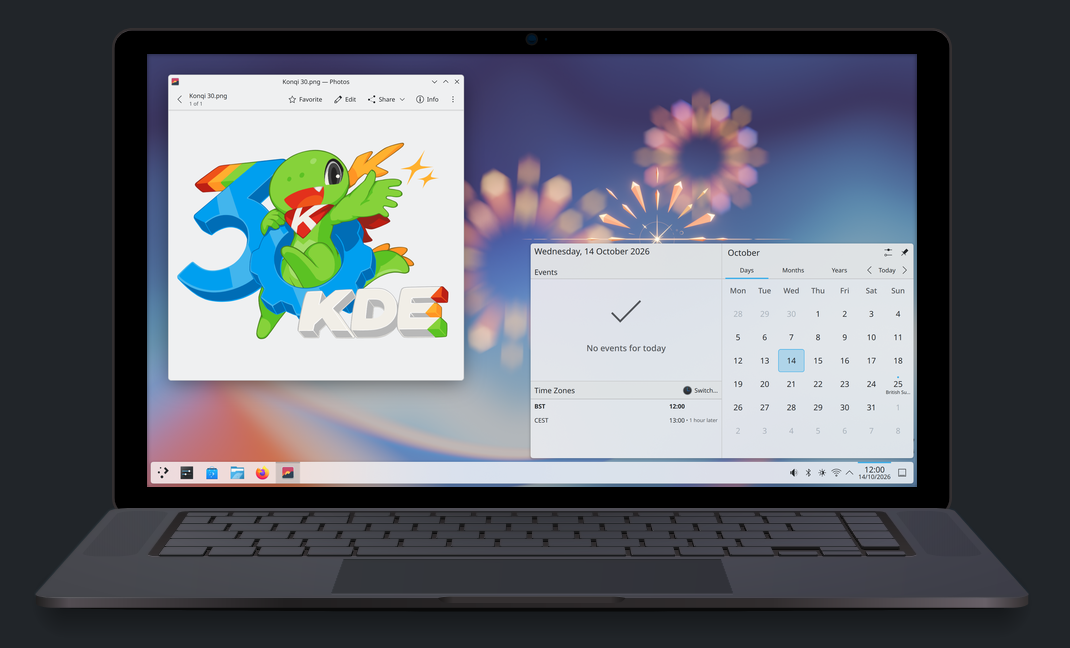
KDE Plasma 6.8: A Future-Focused 30th Anniversary Update
Quick Verdict KDE Plasma 6.8, arriving as the "30th Anniversary Edition," is a pivotal release that decisively pushes the desktop environment into the future. With a definitive farewell to native X11 sessions and a

Kojima Compares Divisive New Film 'Digger' to MGS2's Prescient Vision
Gaming icon Hideo Kojima has praised the divisive 2026 film *Digger*, drawing intriguing parallels to his own prophetic game, *Metal Gear Solid 2*. Both works, he explains, uniquely explore the dangers of misinformation and a fragmented digital reality, anxieties he shares with *Digger*'s director, Alejandro González Iñárritu.