
Deconstructing Assumptions: What a Pea Plant Taught Us About Problem
Three Irish schoolgirls challenged a long-held scientific assumption about agricultural nitrogen fixation. They discovered that rhizobium bacteria, typically associated with legumes, could significantly accelerate germination and growth in cereal crops like barley and oats, despite expert skepticism. Their rigorous, data-driven home experiment, involving 13,000 seeds and 120,000 measurements, provides valuable lessons in challenging established norms and the power of empirical validation for developers.

As software developers, we often encounter established paradigms, best practices, and even dogmas within our craft. The prevailing wisdom dictates certain approaches, and it's easy to fall into the trap of accepting them without question. But what happens when a fresh perspective, combined with tenacious experimentation, challenges these deeply ingrained assumptions?
Consider the agricultural world's long-standing challenge: nitrogen. It’s an essential nutrient for plant growth, but obtaining it efficiently and sustainably is complex. Plants cannot directly absorb atmospheric nitrogen (N₂). Instead, they rely on nitrogen fixation, a process primarily driven by certain bacteria converting N₂ into ammonia (NH₃), a usable form. For decades, the gold standard in natural nitrogen fixation has been the symbiotic relationship between legumes (like peas) and specific soil bacteria called rhizobia. These bacteria reside in distinctive root nodules, converting atmospheric nitrogen into a form the plant can use, in exchange for sugars. The challenge? Most staple cereal crops—wheat, barley, rice—cannot form this partnership, leading to a heavy reliance on energy-intensive synthetic fertilizers and their associated environmental costs.
The Unconventional Hypothesis
This established biological boundary was precisely what three schoolgirls in Kinsale, Ireland, unknowingly challenged. Émer Hickey, gardening with her mother, discovered a pea plant with what looked like diseased, wart-like lumps on its roots. Instead of discarding it, her curiosity led her to her science teacher. The revelation: these weren't warts, but beneficial nodules housing rhizobium bacteria.
Inspired by their geography class discussions on global food security, Émer, along with Ciara Judge and Sophie Healy-Thow, posed a seemingly simple yet profoundly disruptive question: if cereals can't host these bacteria in nodules, could the bacteria still benefit them in some other way? The scientific establishment's response was, predictably, dismissive. Many experts believed rhizobia's benefits were exclusively tied to the legume-nodule partnership, asserting they would have no impact on cereal crops. For a developer, this is akin to being told a new approach to state management won't work because "that's not how React/Vue/Angular does it."
Architecting a DIY Data-Driven Experiment
Undeterred, and demonstrating a remarkably rigorous, data-driven mindset, the then 14-year-olds decided to test this assumption themselves. They recognized that the expert objections lacked empirical backing at the scale they envisioned. Their "lab" was a spare bedroom in the Judge house, transformed into a makeshift research facility. They implemented a systematic approach:
- Controlled Environment: Setting up incubation racks and a regime of homemade controls to minimize variables.
- Methodical Application: Soaking cereal seeds (barley, oats, wheat) in rhizobium cultures.
- Extensive Data Collection: Over three years, they meticulously measured key performance indicators for tens of thousands of samples. This included:
- Time to germination
- Germination rate
- Seedling growth
- Dry mass
Their commitment was exceptional, involving the testing of some 13,000 seeds and logging an astonishing 120,000 individual measurements by hand into notebooks and spreadsheets. This wasn't just a casual experiment; it was a large-scale, iterated proof-of-concept, generating a significant dataset to validate their hypothesis.
Performance Metrics and Unexpected Gains
The data they collected contradicted the expert consensus. Their treated barley and oats germinated significantly faster and more reliably. Germination rates improved by up to 50%, a critical early-stage performance boost for any crop. This head start translated into substantial gains in growth trials, with treated cereals showing increases in dry mass as high as 74%. While the bacteria didn't induce nodule formation in cereals, something in the early association, delivered at the seed level, was effectively "waking the grain up early and sending it into the world stronger." It was a performance optimization at the cellular level, achieved through a natural, non-synthetic agent.
Their findings quickly garnered recognition, winning prestigious science fairs in Ireland and the EU, culminating in the Google Science Fair grand prize in 2014. These teenagers, starting with a plant most gardeners would discard, had demonstrated that questioning an established biological "API contract" could yield profound results.
Practical Takeaways for Developers
This story resonates strongly with the developer experience. Germination, in agriculture, is a silent tax; slow or inconsistent sprouting directly impacts yield. Similarly, in software, inefficient initialisation or slow startup times can significantly degrade user experience and resource utilization. A low-cost, naturally occurring seed treatment, needing no synthetic chemistry, offers a scalable solution, especially in resource-constrained environments – much like optimizing a core algorithm to be efficient on commodity hardware.
For us, the lessons are clear:
- Question Assumptions: Don't accept established norms or "that's how it's always been done" without critical examination. Explore edge cases and untested hypotheses.
- Validate with Data: Rigorous testing and meticulous data collection, even on a "small" scale, are crucial for validating new approaches. The 13,000 seeds and 120,000 measurements are a testament to empirical evidence.
- Persistence Against Skepticism: New ideas often face resistance. A fresh perspective, combined with robust data, can overcome initial doubt.
- Resourcefulness: A spare bedroom became a lab. We often have more tools and resources at our disposal than we realize for prototyping and testing novel concepts.
While a bedroom study isn't a large-scale commercial deployment, these findings inspired further research into engineering cereals and microbes for extended nitrogen-fixing partnerships, now a heavily funded area in agricultural research. The pea plant's "warts" were never diseased; the true "ailment" was the unchallenged assumption, and the "cure" was curiosity, data, and persistence.
FAQ
Q: What exactly were the "warts" on the pea plant, and what is their function?
A: The "warts" were actually root nodules. These are specialized structures formed by legume plants to house rhizobium bacteria (a type of diazotroph). The bacteria within these nodules perform nitrogen fixation, converting atmospheric nitrogen (N₂) into ammonia (NH₃), which the plant can use as fertilizer. In return, the plant provides the bacteria with sugars.
Q: How were the rhizobium bacteria able to benefit cereal crops like barley and oats, given that cereals don't form root nodules?
A: The specific mechanism through which the bacteria aided cereal crops without forming nodules is not fully detailed in the source. However, the study showed that soaking cereal seeds in rhizobium cultures led to significantly faster germination (up to 50% faster) and increased seedling growth and dry mass (up to 74%). It's hypothesized that the association, delivered at the seed stage, provided an early-stage performance boost, potentially by making nutrients more accessible or stimulating growth, rather than full nitrogen fixation via nodule formation.
Q: What are the key limitations or considerations when evaluating the practical impact of these findings?
A: The source notes that while the results were significant, a "bedroom study" is not equivalent to a peer-reviewed, large-scale field program. The "up to" percentages for improved germination and dry mass represent the ceiling of observed effects, not necessarily the average. Furthermore, no commercial product has yet directly emerged from the Kinsale data. However, the findings successfully demonstrated a proof-of-concept, challenged established scientific dogma, and inspired further, more extensive research into engineering nitrogen-fixing capabilities in non-legume crops.
Related articles
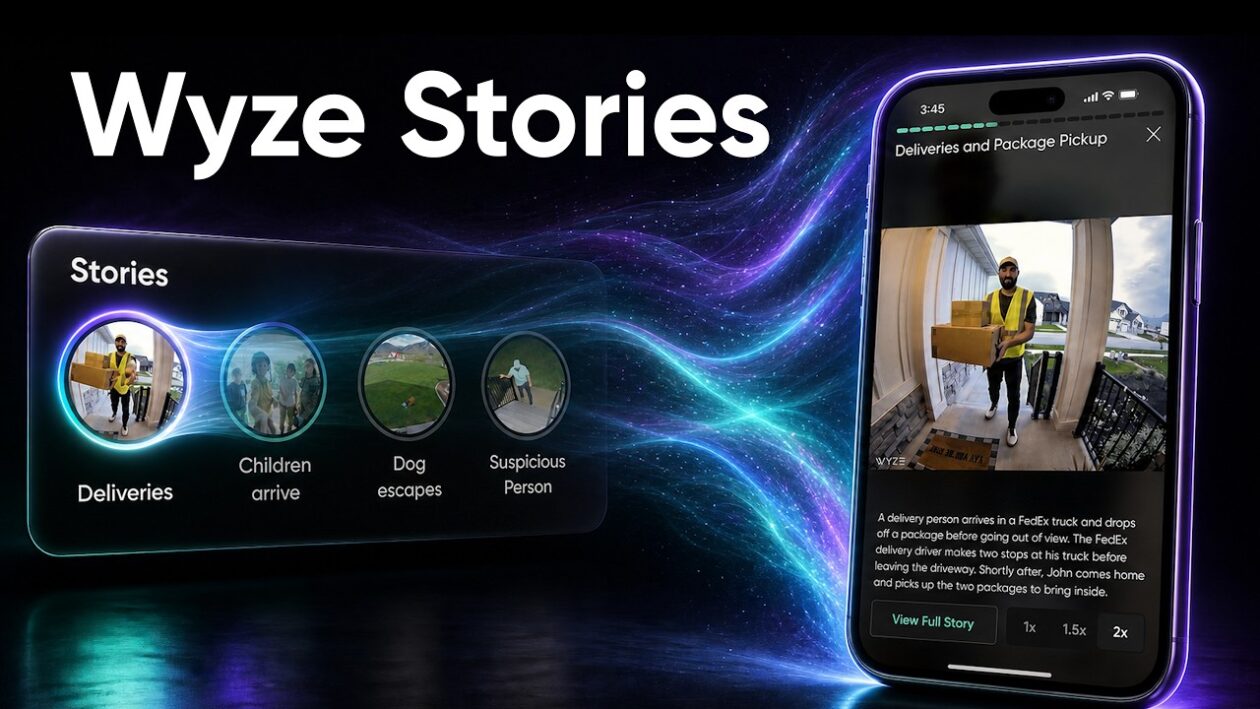
Wyze Transforms Home Security with AI-Powered 'Stories' Feature
Wyze has launched "Wyze Stories," an AI-powered feature for home security cameras designed to combat notification fatigue. It stitches together multi-camera footage into a chronological, social media-style feed, complete with AI-generated text summaries of important events. Available with the $19.99/month "Cam Unlimited Pro" subscription, this innovation aims to streamline how users monitor their homes.

Elevate Your Data Skills: Learning Excel Formulas the Developer Way
This article discusses freeCodeCamp's new course on Excel formulas and functions, tailored for developers. Taught by a former Amazon engineer, the course covers core mechanics, logic, aggregation, modern lookups like XLOOKUP, data manipulation, and dynamic arrays. It emphasizes a 'code-style' approach, enabling developers to master Excel as a powerful data analysis tool, bridging technical skills with business insights.

Shake-Up at the Top: CEO Steps Down from Saudi Arabia's Gaming Fund
Brian Ward, CEO of Saudi Arabia's $38 billion Savvy Games Group, is stepping down, with PIF Governor Turqi Alnowaiser taking over. Savvy owns major mobile companies like Niantic (*Pokémon Go*) and Scopely, and is acquiring Moonton Games. This shift highlights Saudi Arabia's deep dive into gaming, including the separate $55 billion EA acquisition, raising questions about strategy and the industry's future.
Google Play's New Stance on 501(c)(6) Donations: AnkiDroid's Challenge
For developers deeply embedded in the open-source ecosystem, the challenge of sustainable funding is ever-present. Many projects rely on community donations, often facilitated by fiscal hosts that simplify legal and

Cold Cases & Data Integrity: Lessons from a Decades-Old Verdict
As software developers, we often deal with complex systems, legacy codebases, and the relentless pursuit of bugs that have evaded detection for years. The recent conviction in the 1996 murder of rapper Tupac Shakur

Discover Krafton's New Games & Global Strategy from Gamescom 2026
Learn about Krafton's five new game announcements and their global franchise plans revealed at Gamescom 2026, covering diverse genres and innovative gameplay.