
Chuwi UniBox AI495 Pro Review: A Mini AI Powerhouse
Chuwi's UniBox AI495 Pro review: A powerful mini workstation with 192GB RAM and an AMD Ryzen AI chip for local LLM processing, packed into a compact, Mac Pro-esque design.

Quick Verdict
Chuwi's UniBox AI495 Pro makes a bold statement in the mini PC arena, delivering workstation-grade memory and serious AI processing capabilities in a strikingly compact form factor. Its ability to run large language models locally is a significant draw, setting it apart from many peers. While the final value will largely depend on its yet-to-be-disclosed price, this machine promises exceptional performance for AI development and memory-intensive professional tasks.
Introduction: Redefining the Mini Workstation
At IFA Berlin 2026, Chuwi unveiled the UniBox AI495 Pro, a mini desktop that aims to disrupt the compact workstation market. This device combines AMD's new Ryzen AI MAX+ PRO 495 chip with an astonishing 192GB of unified LPDDR5x memory. For context, this memory capacity matches the maximum offered by Apple's latest workstation, positioning the UniBox AI495 Pro as a serious contender for professionals seeking immense power in a small package. Its distinct 'X Frame' design also gives it an aesthetic that might evoke memories of Apple's older, cylindrical Mac Pro.
Design and Build Quality: Compact Form, Familiar Aesthetic
The UniBox AI495 Pro measures a mere 209.6 × 209.6 × 67 mm, giving it a compact volume of roughly 2.9 litres. This small footprint is impressive, especially considering the high-end hardware packed inside. The ‘X Frame’ design is a notable visual element, contributing to its compact and distinctive appearance. While some might appreciate its unique cylindrical resemblance, others might find it a somewhat familiar, perhaps even divisive, aesthetic choice. Regardless, the small size makes it an ideal fit for cluttered desks or situations where space is at a premium.
Performance and AI Capabilities: A Local LLM Powerhouse
At the heart of the UniBox AI495 Pro is the AMD Ryzen AI MAX+ PRO 495 processor. This chip boasts 16 cores and 32 threads, with boost speeds soaring up to 5.2 GHz, built on the advanced Zen 5 architecture. Graphics are handled by the integrated Radeon 8065S, which features 40 cores based on AMD’s RDNA 3.5 architecture, operating at up to 3,000 MHz. The unified memory architecture is a game-changer here, with the 192GB of LPDDR5x memory using a 256-bit interface that delivers an impressive 273 GB/s bandwidth. Crucially, up to 160GB of this memory can be dynamically assigned to graphics processing, giving the integrated GPU vastly more dedicated memory than typically found in desktop solutions.
This robust hardware enables the UniBox AI495 Pro to excel in AI workloads. Chuwi states the system can run large language models locally with as many as 300 billion parameters using 4-bit quantization. The complete AI platform delivers up to 131 TOPS (Tera Operations Per Second), with the XDNA 2 neural processor contributing a significant 55 TOPS. This makes it an incredibly capable machine for AI developers, researchers, and anyone needing to run complex AI models without relying on cloud services.
Memory, Storage, and Connectivity: Abundance and Speed
The standout feature, of course, is the up to 192GB of unified memory, offering unparalleled capacity for a machine of this size. For storage, the UniBox AI495 Pro doesn't disappoint, providing support for up to 2TB across three M.2 2280 PCIe ×4 slots, ensuring ample space and blistering-fast data access.
Connectivity options are equally robust. It includes Wi-Fi 7 for cutting-edge wireless networking, Bluetooth 5.4, and two 10Gbps Ethernet ports for high-speed wired connections. For external devices, there are two USB4 connections, each capable of 40Gbps, plus an OCuLink port, offering another high-bandwidth option for compatible external hardware. Power is supplied by a 240W adapter, and the system ships with Windows 11 Pro, rather than a specialized AI operating system.
Pros and Cons
Pros:
- Exceptional Memory Capacity: 192GB LPDDR5x unified memory matches high-end workstations.
- Potent AI Performance: Ryzen AI MAX+ PRO 495 with 131 TOPS and dedicated NPU for local LLMs (300B parameters).
- Generous Graphics Memory: Up to 160GB of system memory can be assigned to the integrated GPU.
- Compact Workstation Design: Small 2.9-litre volume with a unique aesthetic.
- Excellent Connectivity: Wi-Fi 7, dual 10Gbps Ethernet, two USB4, and OCuLink port.
- Ample Storage: Supports up to 2TB across three fast M.2 PCIe slots.
Cons:
- Undisclosed Price: Price is currently unknown, but similar systems suggest it will be over $2,000, making it a significant investment.
- Integrated Graphics Limitation: While powerful for an iGPU, it may not satisfy users requiring the absolute highest-end dedicated graphics performance of discrete GPUs for certain workflows.
- Windows 11 Pro: Ships with a general-purpose OS rather than an AI-specialized one, though this offers broad compatibility.
- Design Aesthetics: The 'X Frame' design might be subjective; some may find it appealing, others less so.
Comparing the UniBox Lineup
Chuwi is also preparing the UniBox AI395, a slightly less powerful but still capable alternative to the flagship AI495 Pro. Below is a comparison of key specifications:
| Feature | UniBox AI495 Pro | UniBox AI395 |
|---|---|---|
| Processor | Ryzen AI MAX+ PRO 495 (16C/32T, 5.2GHz boost) | Ryzen AI MAX+ 395 (16C/32T, 5.1GHz boost) |
| Graphics | Radeon 8065S (40 RDNA 3.5 cores, 3000MHz) | Radeon 8060S (40 RDNA 3.5 cores, 2900MHz) |
| Max Memory | 192GB LPDDR5x (273 GB/s) | 128GB LPDDR5x (256 GB/s) |
| Max GPU Memory | 160GB | 96GB |
| Platform TOPS | 131 TOPS (55 TOPS NPU) | 126 TOPS (50 TOPS NPU) |
| Max LLM Params | 300 Billion (4-bit quantization) | 235 Billion (low-bit model formats) |
| Shared Features | Compact chassis, 2TB storage, 240W PSU, Win 11 Pro, Dual 10Gbps Ethernet |
The AI495 Pro clearly offers superior memory capacity, higher peak clock speeds for both CPU and GPU, and greater AI processing power, particularly for larger language models. However, the AI395 still presents a very strong offering for those who might not need the absolute maximum specifications.
Buying Recommendation
The Chuwi UniBox AI495 Pro is a compelling machine for a very specific audience: AI developers, machine learning engineers, data scientists, and creative professionals who require immense memory capacity and powerful local AI processing in a highly compact form factor. Its ability to run 300-billion-parameter models locally is a significant differentiator. If your workflow involves large datasets, complex simulations, or heavy AI model training and inference, and you value a small footprint, the AI495 Pro deserves serious consideration.
However, potential buyers must weigh the unknown price point. With comparable systems expected to exceed $2,000, this will be a premium product. If your primary need is for top-tier discrete graphics performance in traditional rendering or gaming, rather than integrated AI acceleration and raw memory, a system with a dedicated high-end GPU might be a more suitable choice. For those focused on a cutting-edge, memory-rich AI mini workstation, Chuwi has delivered an exciting option, but waiting for official pricing is key to a final decision.
FAQ
Q: Can the UniBox AI495 Pro replace a traditional workstation?
A: For memory-intensive AI tasks, local LLM processing, and general high-performance compute, its 192GB RAM and powerful AI chip make it highly competitive with traditional workstations. However, for applications heavily reliant on high-end discrete graphics cards, it may not be a direct replacement due to its integrated GPU solution.
Q: Is it suitable for gaming?
A: While the integrated Radeon 8065S graphics are quite capable for an integrated solution, especially with up to 160GB of dedicated memory, the UniBox AI495 Pro is primarily designed as a workstation for AI and productivity tasks, not a primary gaming machine. It could handle lighter gaming, but shouldn't be purchased with gaming as its main purpose.
Q: How does its memory capacity compare to other mini PCs?
A: The UniBox AI495 Pro's 192GB of LPDDR5x unified memory is exceptionally high for a mini PC, matching the maximum offered by Apple's latest workstations and significantly exceeding what most other compact systems on the market provide. This makes it a leader in memory capacity for its form factor.
Related articles
Google's AI Branding Fix: A Clearer Vision for Gemini
This article critiques Google's fragmented AI branding, proposing a unified 'Gemini Intelligence' system to simplify user experience and strengthen Gemini's identity.
Pixel Connectivity: Battery Drain, Not Data Speed, Is the Real
Google's Pixel series has consistently offered a compelling Android experience, often earning a spot on recommendation lists for its clean software and camera prowess. However, a recurring shadow has loomed over the

CNET's NYT Connections: Sports Edition Hints & Answers - Daily Puzzle
CNET's daily guide for NYT Connections: Sports Edition offers clear, spoiler-protected hints and answers, making it an efficient and reliable resource for sports puzzle enthusiasts.
Unofficial Sony Headphone PC Apps: Ditch Your Phone, Take Control
Tired of Sony's mobile app? These unofficial, open-source PC tools like Sony Device Center and SonyBridge offer desktop control over your Sony headphones' ANC, EQ, and more. A convenient, albeit unofficial, solution for Windows, Linux, and Mac users looking to ditch their phone for audio adjustments.

Ace Combat 8 Takes Flight with Star-Studded Prequel Series
Ace Combat 8: Wings of Theve is launching soon, but not before a live-action prequel miniseries, Hour Zero, drops exclusively on IGN. Starring Josh Holloway, Brandon Routh, and Tamlyn Tomita, this four-part show will build narrative context for the game's campaign, starting September 15. Holloway shared his renewed love for gaming and a desire to adapt games into movies.
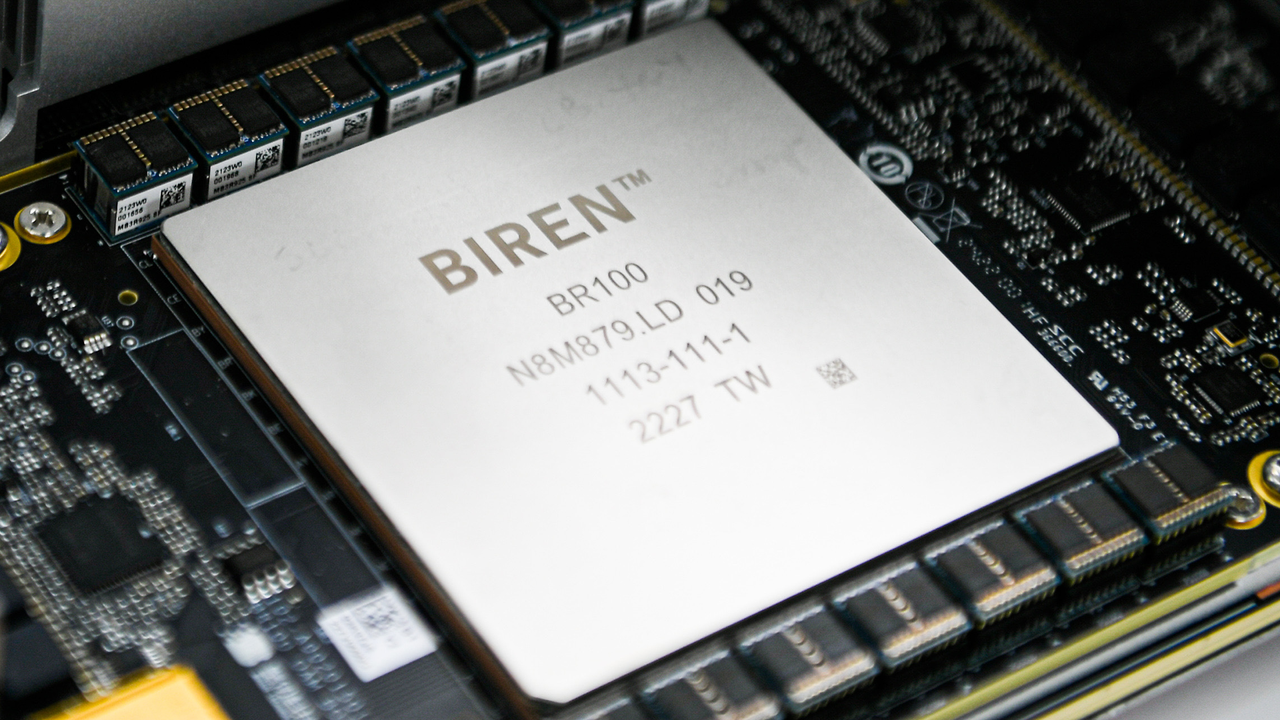
Biren AI Accelerators: Explosive Growth in a Restricted Market
Biren Technology shows explosive 2,000% revenue growth in China's AI accelerator market, benefiting from US export controls. Despite impressive gains from a small base, challenges in manufacturing and software remain.