
Building a Browser-Based PDF OCR to Text Converter with JS
This article guides developers through building a browser-based PDF OCR to Text converter using JavaScript. It explains the problem of unsearchable scanned PDFs, details how client-side OCR works with PDF.js and Tesseract.js, and covers implementation steps for document upload, page preview, configurable OCR settings, text extraction, and progress tracking. The solution emphasizes privacy and performance by processing documents locally in the browser.

Not all PDF documents are created equal. While many PDFs contain digital, searchable text, a significant portion comprises scanned images of physical documents like invoices, contracts, or handwritten notes. These image-based PDFs are easy to read but notoriously difficult to interact with – you can't search, copy, or edit their content. This is where Optical Character Recognition (OCR) becomes indispensable. OCR technology analyzes text within scanned images and transforms it into editable, searchable digital text.
In this article, we'll explore how to build a powerful browser-based PDF OCR to Text converter using JavaScript. This tool will allow users to upload PDF files, preview pages, configure OCR settings, extract text, monitor progress, review confidence scores, and export the results – all directly within their browser. The beauty of a client-side solution is that documents never leave the user's device, ensuring speed, privacy, and security.
The Need for PDF OCR
The inability to interact with text in scanned PDFs presents a major hurdle across various industries. Imagine manually retyping data from hundreds of invoices, searching through countless legal agreements without a keyword search, or digitizing historical records page by page. OCR eliminates these inefficiencies. Once text is extracted, it can be copied, translated, indexed, summarized, and integrated into other applications.
From businesses automating data entry for financial documents to legal professionals quickly sifting through court records, and healthcare organizations digitizing patient files, OCR streamlines workflows. Even e-commerce sellers managing numerous shipping labels and purchase orders can leverage OCR to extract critical customer and order details without manual input. For developers, integrating OCR into document management systems or AI assistants unlocks new possibilities for making scanned content truly digital and searchable.
How Browser-Based OCR Works
Our browser-based PDF OCR application combines PDF rendering with an OCR engine to convert scanned pages into editable text. The workflow typically involves several stages:
- Document Upload and Validation: The user uploads a PDF, which is then validated and loaded into the browser's memory.
- Page Rendering: Using a library like PDF.js, each PDF page is rendered as an image (e.g., onto an HTML canvas). OCR engines operate on images, so this is a crucial preparatory step.
- OCR Processing: The rendered page images are fed into the OCR engine (like Tesseract.js). It performs pixel-by-pixel analysis to identify characters, reconstruct words and sentences, and convert them into digital text. Language-specific models enhance accuracy.
- Image Enhancement (Optional): To improve accuracy, especially with low-quality scans, the application can apply preprocessing steps like converting to grayscale, increasing contrast, or sharpening the image before OCR.
- Progress Tracking: As each page is processed, a progress indicator updates in real-time, informing the user about the current status.
- Confidence Scores: The OCR engine provides a confidence score for each page, offering an estimate of recognition accuracy.
- Output Review and Export: The extracted text from all processed pages is combined, allowing users to review, copy, or export it (e.g., as TXT or JSON).
Critically, every step occurs locally within the user's browser, meaning sensitive documents never leave their device. This ensures a fast, private, and secure experience.
Essential JavaScript Libraries
To achieve this functionality, our project integrates three core JavaScript libraries:
- PDF.js: Developed by Mozilla, this library is responsible for loading PDF documents and rendering their pages as images within the browser. Since OCR works on visual input, PDF.js acts as the bridge between the PDF file and the OCR engine.
- Tesseract.js: This is the heart of our OCR solution. Tesseract.js is a port of the popular Tesseract OCR engine, allowing it to run entirely in the browser. It supports numerous languages and is adept at recognizing printed text from scanned documents without needing external APIs or cloud services.
- PDF-lib: While not strictly necessary for basic OCR, PDF-lib offers robust capabilities for managing and manipulating PDFs. It provides flexibility for future enhancements like adding annotations, modifying metadata, or altering document structure.
By combining these libraries, we create a comprehensive browser-based OCR system capable of handling document loading, page rendering, text recognition, progress monitoring, and result delivery.
Setting Up the Project
Let's start by structuring our project and including the necessary libraries. Create a simple pdf-ocr-tool directory with index.html, style.css, and script.js files.
text pdf-ocr-tool/ ├── index.html ├── style.css └── script.js
In your index.html, include the CDN links for the libraries:
html
<script src="https://cdnjs.cloudflare.com/ajax/libs/pdf.js/4.4.168/pdf.min.js"></script> <script src="https://cdn.jsdelivr.net/npm/tesseract.js@5/dist/tesseract.min.js"></script> <script src="https://unpkg.com/pdf-lib"></script>Building the Upload and Preview Interface
The user journey begins with uploading a PDF. A user-friendly interface should support both traditional file selection and drag-and-drop. We'll add an input element and a dropZone for this.
html
<div class="upload-container"> <div id="dropZone" class="drop-zone"> <div class="upload-icon"> ☁ </div> <h2>Drag & Drop PDF Here</h2> <p>Or click to browse file</p> <button id="selectPDF"> Select PDF </button> <input type="file" id="pdfInput" accept="application/pdf" hidden> </div> </div>Client-side validation is crucial. We'll listen for file changes and check the file.type.
javascript const pdfInput = document.getElementById("pdfInput"); pdfInput.addEventListener("change", async (event)=>{ const file = event.target.files[0]; if(!file) return; if(file.type !== "application/pdf"){ alert("Please upload a valid PDF file."); return; } loadPDF(file); });
Once a valid PDF is uploaded, the next step is to generate visual previews of its pages. This allows users to verify the document and identify any issues before commencing OCR. We'll use PDF.js to render each page onto a <canvas> element.
javascript const pdf = await pdfjsLib.getDocument({ data: await file.arrayBuffer() }).promise;
for(let pageNumber = 1; pageNumber <= pdf.numPages; pageNumber++){ const page = await pdf.getPage(pageNumber); const viewport = page.getViewport({ scale:0.35 }); const canvas = document.createElement("canvas"); const context = canvas.getContext("2d"); canvas.width = viewport.width; canvas.height = viewport.height; await page.render({ canvasContext:context, viewport }).promise; previewContainer.appendChild(canvas); }
Configuring OCR Settings for Optimal Accuracy
Different PDFs demand different OCR approaches. Before initiating text extraction, our application allows users to customize several key settings to optimize recognition accuracy and speed. These include:
-
Page Range Selection: Users can choose to process all pages or specify a custom range. This is invaluable for large documents where only specific sections require OCR. html <input type="radio" name="pages" value="all" checked> All Pages <input type="radio" name="pages" value="custom"> Specific Pages
-
Language Selection: Tesseract.js supports numerous languages. Selecting the correct language model significantly boosts accuracy as the engine uses language-specific dictionaries and character patterns. html <select id="language">
<option>English</option> <option>Hindi</option> <option>Gujarati</option> <option>Spanish</option> <option>French</option> <option>German</option> <option>Chinese (Simplified)</option> </select> -
Accuracy Mode: Options like 'Fast' mode prioritize speed with good results, while 'High Accuracy' mode performs additional processing for superior quality on challenging documents, albeit taking longer. javascript const mode = document.querySelector( 'input[name="accuracy"]:checked' ).value; console.log(mode);
-
Image Enhancement: Preprocessing steps such as grayscale conversion, contrast adjustment, or sharpening can dramatically improve OCR results, particularly for low-quality scans, faded text, or blurred images. javascript const grayscale = grayscaleCheckbox.checked; const contrast = contrastCheckbox.checked; const sharpen = sharpenCheckbox.checked; console.log( grayscale, contrast, sharpen );
These configurable options empower users to tailor the OCR process to their specific document types, balancing speed with recognition quality.
Extracting Text and Tracking Progress
Once the settings are configured, the application proceeds to extract text. It iterates through the selected PDF pages, renders each as an image, and passes it to a Tesseract.js worker for recognition. Processing pages one at a time helps manage memory and provides continuous feedback.
javascript const worker = await Tesseract.createWorker( selectedLanguage );
for(let page = startPage; page <= endPage; page++){ // Render page to canvas (details omitted for brevity, see preview section) // ... const result = await worker.recognize( canvas ); const extractedText = result.data.text;
finalText += ----- Page ${page} ----- ;
finalText += extractedText;
finalText += " ";
}
await worker.terminate();
OCR can be computationally intensive, so real-time progress indicators are vital for a good user experience. Tesseract.js workers report their progress, allowing us to update a progress bar and status messages.
javascript
// Inside Tesseract.createWorker or worker.recognize configuration
logger: info => {
console.log(info);
// Use info.progress and info.status to update UI
const percentage = Math.round(info.progress * 100);
progressBar.style.width = ${percentage}%;
progressLabel.innerText = ${percentage}%;
if (info.status === 'recognizing text') {
status.innerText = Processing Page ${currentPage} of ${totalPages};
}
}
Understanding and Leveraging OCR Confidence Scores
Tesseract.js provides a confidence score for each processed page, indicating the estimated accuracy of the recognition. Scores closer to 100% suggest clean, highly accurate text, while lower scores might point to pages with faded text, poor resolution, or complex layouts that could benefit from manual review or re-processing with different settings.
javascript // After worker.recognize(canvas) returns result const confidence = result.data.confidence; confidenceScores.push({ page: currentPage, confidence });
// To display all scores after processing: confidenceScores.forEach(score=>{ console.log( score.page, score.confidence ); });
Displaying these scores allows users to quickly assess the reliability of the extracted text and prioritize pages for review.
Performance and Accuracy Optimization
The quality of the original document is the primary determinant of OCR accuracy. While our tool runs entirely in the browser, several factors can be controlled to optimize performance and results:
- Image Quality: High-resolution, sharp scans yield the best results. Blurry, skewed, or low-contrast images will inherently be challenging.
- Image Enhancements: Applying grayscale conversion, contrast adjustment, or sharpening through client-side image manipulation can significantly improve recognition accuracy for suboptimal scans.
- Correct Language Model: Always select the language matching the document content. Using the wrong language model is a common cause of poor results.
- Accuracy Mode Selection: For critical documents, opting for 'High Accuracy' mode, despite its longer processing time, can dramatically reduce errors compared to 'Fast' mode.
By carefully configuring these settings and considering the input document's characteristics, developers can build robust OCR solutions that provide excellent results directly in the browser.
FAQ
Q: Why choose a browser-based OCR solution over a server-side API?
A: Browser-based OCR offers superior privacy and security because documents never leave the user's device. This is crucial for handling sensitive information like legal, medical, or financial records. It also provides immediate feedback and can reduce server costs, as the processing load is shifted to the client.
Q: What is the typical performance impact of using 'High Accuracy' mode versus 'Fast' mode?
A: 'High Accuracy' mode typically involves more intensive image preprocessing and a more thorough analysis by the OCR engine, leading to significantly longer processing times. While 'Fast' mode might complete recognition in seconds for a simple page, 'High Accuracy' could take several times longer, especially for complex or low-quality documents. The trade-off is between speed and the quality (fewer errors) of the extracted text.
Q: If a PDF contains both machine-printed text and handwritten notes, how well does Tesseract.js handle it?
A: Tesseract.js is primarily optimized for machine-printed text. While newer versions have some capabilities for recognizing neatly printed handwritten text, its accuracy for general handwriting is significantly lower than for printed text. For documents with mixed content, you might get good results for the printed portions, but the handwritten parts would likely require specialized handwriting recognition (HWR) engines or manual intervention.
Related articles

TCG Pocket Responds: A Much-Needed Pace Shift for Pokémon Fans
Pokémon TCG Pocket is rolling out a major update for its second anniversary, primarily addressing player concerns about overwhelming content releases by shifting to a six-week set schedule. This aims to curb player decline and improve overall engagement by giving trainers more time to collect and strategize. The update also adds new collection methods, improved deck-building features, and enhanced trading functionality.
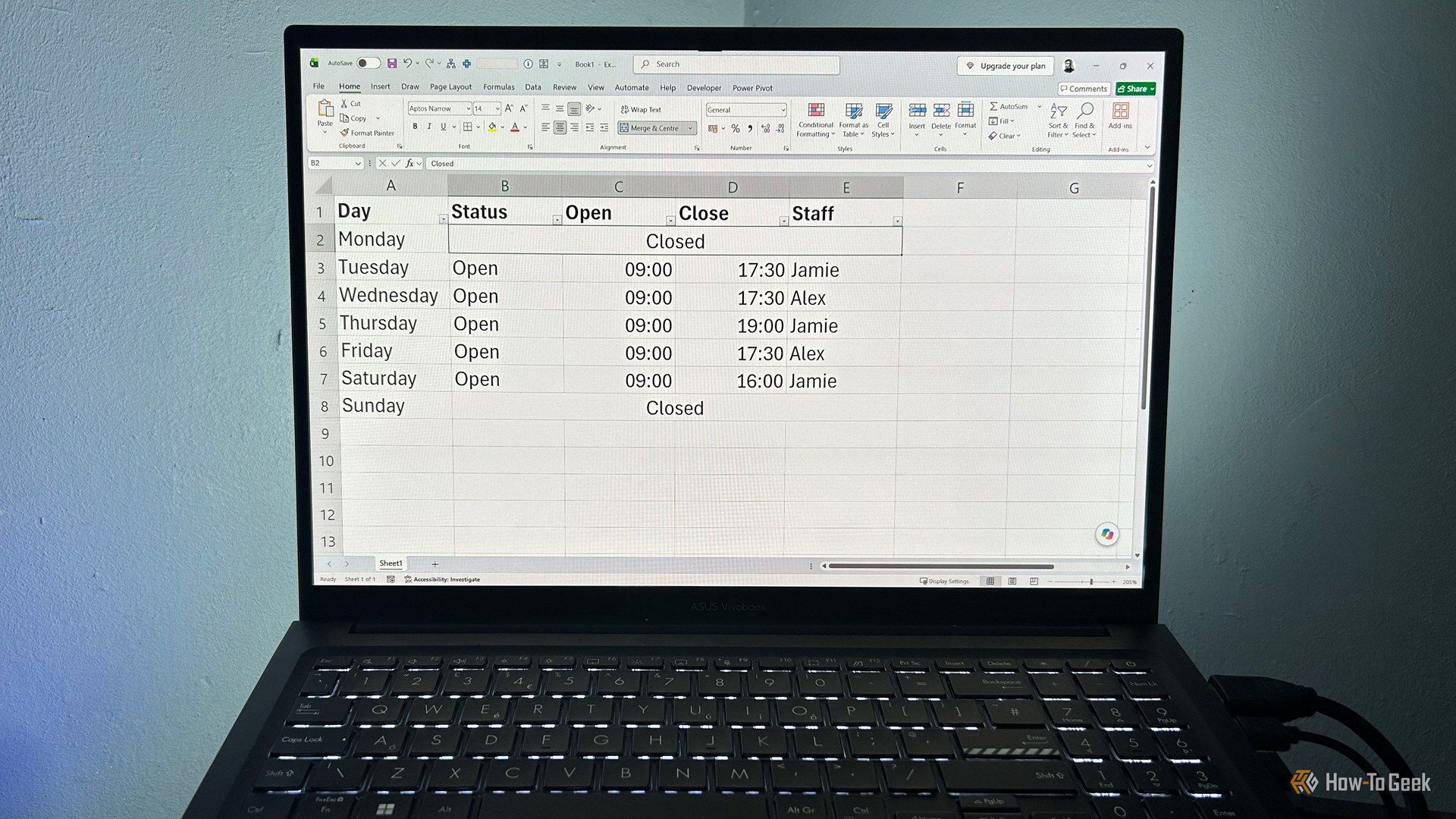
Ditch Merge & Center: The Better Way to Align Text in Excel
Learn to use Excel's "Center Across Selection" to align text across cells without merging, avoiding common data manipulation issues. This guide provides steps to utilize this newly accessible feature and add it to your Quick Access Toolbar.

AI's Confidence vs. Formal Methods' Rigor: Design Flaws & Verification
While AI accelerates code generation, formal methods remain critical for ensuring system correctness. Languages like TLA+ and tools like Quint enable developers to model and verify system designs before coding, catching subtle flaws. Quint makes formal methods more accessible with developer-friendly syntax and executability. This approach is vital for verifying AI-generated code through trace validation and model-based testing, ensuring reliability against real-world data.
Ephemeral PR Preview Environments on GKE: A Deep Dive
Every development team eventually grapples with the limitations of shared staging environments. The familiar scenario: multiple features deployed simultaneously, database migrations clashing, and the phrase "it works on
Secure Internal API Access for AI Agents with MCP
AI agents accessing internal APIs directly pose significant risks, including identity loss, unrestricted queries, and security bypasses. The Model Context Protocol (MCP) offers a solution by defining explicit tools. A secure architecture involves an MCP server wrapping the API with strict input validation, coupled with a gateway that handles authentication, rate limiting, and audit logging, ensuring safe and accountable access.
Beyond the Resume Noise: Developer Story Rethinks Tech Hiring
Stack Overflow is addressing the growing challenges in tech hiring, exacerbated by AI's influence leading to untrustworthy and generic resumes. Their solution, the re-introduced Developer Story, offers a platform for developers to authentically showcase their work, expertise, and impact through verifiable contributions and personal projects. This aims to provide hiring teams with more objective insights and help genuine talent stand out in a crowded market.