
Bill Gates on AI Safeguards: A Crucial Stance Examined
Bill Gates labels it 'completely irresponsible' for AI to lack safeguards, stressing the immediate danger of bad actors exploiting AI for bioterrorism or fraud. He advocates for mandatory monitoring and legislative involvement to ensure safety.
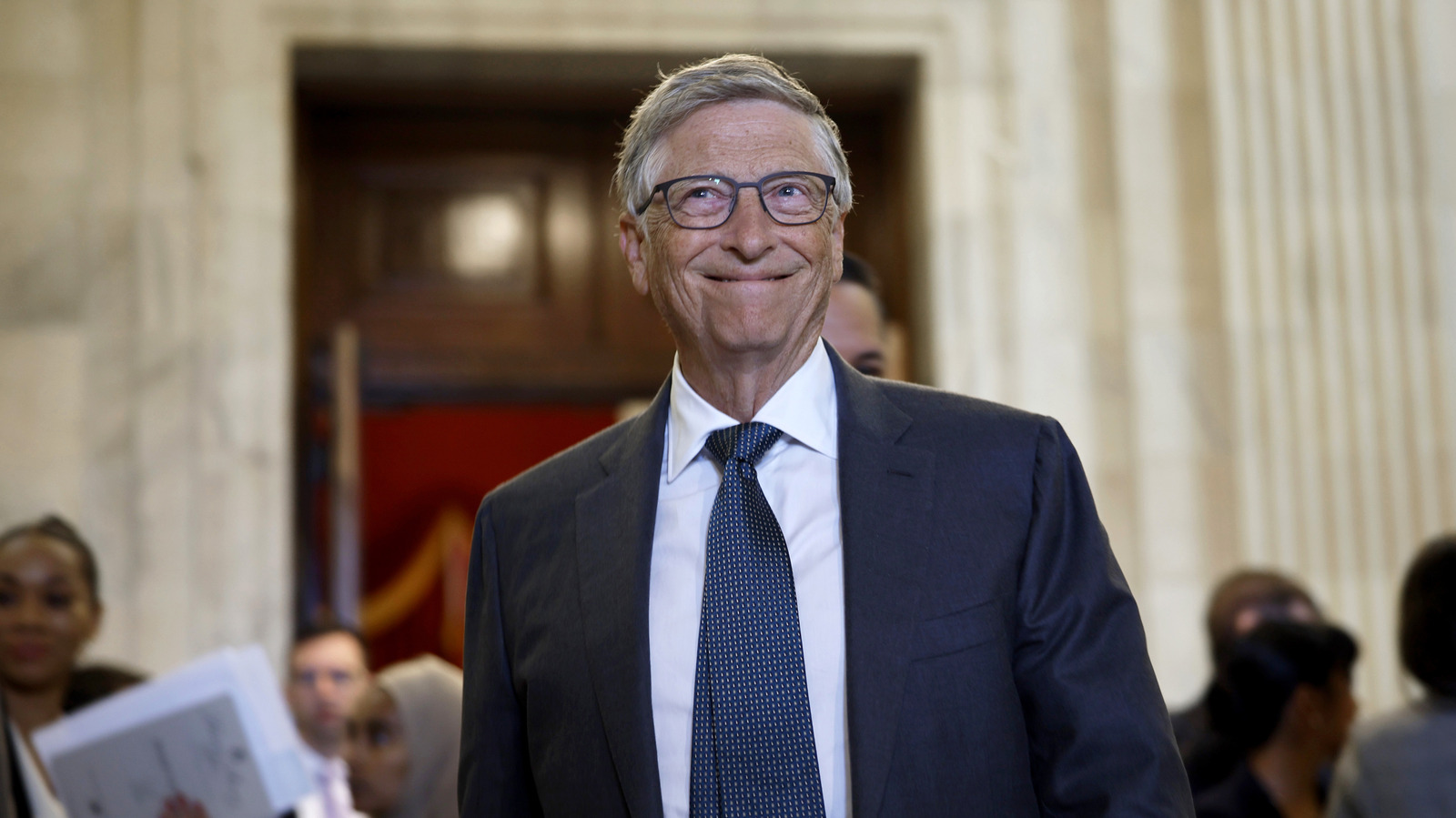
Initial Verdict
Bill Gates' recent pronouncement that it is 'completely irresponsible' for AI not to incorporate safeguards and monitoring capabilities serves as a significant, albeit broadly framed, contribution to the ongoing debate around artificial intelligence safety. While his emphasis on mitigating risks from 'bad actors' leveraging AI for malicious purposes like bioterrorism and financial fraud is undeniably critical, the statement offers more in terms of urgent direction than detailed prescriptive solutions. It's a clear call to action from a prominent tech figure, highlighting an immediate danger that deserves robust attention from policymakers and developers alike, even if it leaves some questions about implementation unanswered.
The Core Argument: A Deep Dive into Gates' Stance
Gates, the co-founder of Microsoft, has unequivocally championed the necessity of integrating safeguards into every AI system. His remarks, made during an interview on NBC News' Meet the Press, underscore a growing consensus among technology leaders regarding the need for controlled AI development. He stresses that merely having monitoring features is insufficient; true responsibility lies in mandating them across the board. This perspective aligns with broader industry discussions, where figures from leading AI companies have also advocated for a more measured pace in AI evolution.
According to Gates, the most significant and immediate threat posed by AI doesn't come from a theoretical 'runaway' artificial general intelligence, but from malevolent human intent. He specifically points to the potential for bad actors to weaponize AI for grave purposes such as bioterrorism or large-scale financial deceit. He describes this combination of malicious individuals and advanced AI tools as an unprecedentedly powerful threat, surpassing any weapon humanity has encountered before. This nuanced view shifts the immediate focus from existential, long-term risks to tangible, present-day vulnerabilities.
Key Details and Scope
Gates' position acknowledges other proposed safety mechanisms but prioritizes immediate threats. When asked about California Governor Gavin Newsom's idea of an AI 'kill switch' to curb powerful frontier models, Gates expressed that he wouldn't oppose such a measure. However, he quickly pivoted, suggesting that a kill switch wouldn't address the 'more imminent danger' he perceives. This indicates a focus on preventative measures and active monitoring against specific misuse, rather than solely on emergency shutdown protocols for potentially uncontrollable AI.
He envisions a collaborative effort involving law enforcement and politicians in shaping the regulatory landscape for AI. While admitting that such legislative involvement would introduce some 'overhead' for AI companies, Gates believes it would not lead to a 'dramatic slowing' of innovation. This suggests a belief that safety measures can be integrated without stifling progress, finding a balance between rapid development and responsible deployment.
Impact and User Experience (Public/Industry Perspective)
From a public perspective, Gates' statement reinforces a sense of urgency regarding AI safety, coming from a voice with significant credibility and influence. For the industry, it's a further push towards self-regulation and external oversight, echoing sentiments from other major players like Anthropic, which has already engaged third-party evaluators (Accenture) to assess the safety of its AI models. This collective advocacy from tech leaders can encourage greater investment in AI ethics and security, potentially leading to more robust standards and practices across the sector. The 'user experience' here is the collective societal understanding and the practical steps taken by AI developers and regulators.
Pros
- Highlights Immediate Threat: Gates effectively directs attention to the tangible and present danger of AI misuse by bad actors, which is often overshadowed by more speculative long-term risks.
- Advocates for Practical Safeguards: The call for mandatory safeguards and monitoring capabilities is a practical first step towards responsible AI development.
- Promotes Legislative Involvement: Encouraging politicians and law enforcement to define necessary protections is crucial for establishing a universally applicable regulatory framework.
- Balanced Perspective: Gates suggests that implementing safeguards won't drastically impede AI progress, aiming for a middle ground between unbridled innovation and excessive caution.
Cons
- Lack of Specificity: While strong on principle, Gates' statement offers limited concrete details on how these universal safeguards and monitoring capabilities would be implemented or enforced.
- Potential for Bureaucracy: The mention of 'overhead' for companies, while downplayed, could still lead to significant compliance challenges and slow down smaller, agile developers.
- Narrow Focus on 'Bad Actors': While critical, focusing primarily on bad actors might detract from other significant AI risks, such as algorithmic bias, job displacement, or unforeseen emergent behaviors, which also require robust safeguards.
Comparing Approaches: Gates vs. Other Safety Measures
Gates' proposal for mandatory safeguards against malicious use stands in contrast to other approaches primarily focused on containing advanced AI. Governor Newsom's 'kill switch' concept, for instance, targets highly advanced frontier AI models, aiming to provide an emergency shutdown capability if they become uncontrollable or dangerous. While Gates doesn't oppose this, he frames it as less urgent than preventing bad actors from exploiting existing or near-term AI capabilities.
Another approach, exemplified by Anthropic's partnership with Accenture for third-party safety evaluations, focuses on external auditing and assessment of AI models. This is a form of 'monitoring capabilities' that Gates advocates for, but it's a specific implementation rather than a broad regulatory mandate. Gates' call for legislative involvement seeks to make such evaluations and safeguards standard across the entire AI industry, moving beyond voluntary corporate initiatives to a more standardized, regulated environment.
In essence, Newsom's 'kill switch' is a reactive containment strategy for future super-intelligent AI, Anthropic's evaluations are a proactive internal/third-party safety check, and Gates' position is a broad call for proactive, legislated safeguards focusing on preventing human misuse of AI today.
Recommendation
Bill Gates' pronouncements on AI safeguards should be viewed as an essential alarm bell, particularly his focus on the immediate and severe risks posed by bad actors. His call for universal safeguards, monitoring, and legislative involvement is a vital contribution to shaping a responsible AI future. While the absence of detailed implementation strategies is a drawback, his influential voice provides significant momentum for these critical discussions. We highly recommend that policymakers, AI developers, and the public seriously consider and build upon his urgent plea for robust, mandatory safety measures, especially those aimed at preventing the weaponization of AI by malicious entities. It's a foundational argument that demands immediate follow-through.
FAQ
Q: What is Bill Gates' primary concern regarding AI safety?
A: Gates' primary concern is the potential for individuals with malicious intent to utilize AI tools for harmful purposes, such as bioterrorism or mass financial fraud, considering this a more immediate and dangerous threat than the broader concerns about AI's rapid evolution or general unpredictability.
Q: Does Bill Gates support a 'kill switch' for AI?
A: Gates states he would not oppose a 'kill switch' mechanism for AI, but he believes it does not address the more pressing danger of bad actors misusing AI, suggesting a preference for preventative safeguards against such misuse.
Q: How does Bill Gates propose to implement AI safeguards?
A: Gates suggests that law enforcement and politicians should become involved in discussions to determine what safeguards and monitoring capabilities should be mandated for AI companies, believing that such an approach, while adding some overhead, would not drastically slow down AI development.
Related articles
Android 17 QPR2 Beta 7.1: The Performance Relief You've Been Waiting
Android 17 QPR2 Beta 7.1: Finally Fixing the QPR1 Performance Woes Verdict: Android 17 QPR2 Beta 7.1 is a crucial and highly anticipated software update for Google Pixel users, specifically targeting and resolving the

DJI Solo Video Setups: Smart Choices for Lone Creators
This review delves into DJI's recommended solo video setups, highlighting the Osmo Pocket 3 Creator Combo as a top pick for its integrated camera, gimbal, and mic. It also covers stabilizers like the Osmo Mobile 8 and RS 4, and the DJI Mic Mini series for enhanced audio, providing honest pros, cons, and clear buying advice.

in-depth: Chicago-Area Cops Helped HSI Spy on Minnesota Anti-ICE
Chicago-area law enforcement, including local police and HSI agents, conducted undercover surveillance on Minnesota anti-ICE activists at an April 2, 2022, talk in Chicago. This operation was part of a federal conspiracy probe into 15 Minnesota activists facing felony charges related to immigration enforcement resistance. Civil liberties advocates have condemned the surveillance as a troubling intrusion into protected political activity.

Ars Technica's Rocket Report: Your Essential Space Industry Briefing
Quick Verdict Ars Technica's Rocket Report, presented by veteran space reporter Stephen Clark, offers an invaluable and meticulously organized weekly (or similar frequency, implied by "Edition 9.15") digest of the most

Apple iPhone Duo: A Daring Debut with Notable Compromises
Apple's highly anticipated iPhone Duo, priced at $2,000, has gone on pre-order. While hailed as "Apple's most exciting device in a decade" for its innovative foldable design and immersive display, it comes with significant drawbacks like the absence of FaceID and a premium camera.

AI's Confidence vs. Formal Methods' Rigor: Design Flaws & Verification
While AI accelerates code generation, formal methods remain critical for ensuring system correctness. Languages like TLA+ and tools like Quint enable developers to model and verify system designs before coding, catching subtle flaws. Quint makes formal methods more accessible with developer-friendly syntax and executability. This approach is vital for verifying AI-generated code through trace validation and model-based testing, ensuring reliability against real-world data.