
Arm Servers Surge Past 45% of Data Center Revenue: A Tectonic Shift
Quick Verdict: The Data Center's New Powerhouses The server market is undergoing a seismic transformation, with Arm-based processors and GPU-accelerated systems rapidly rewriting the rules. Our latest analysis from
Quick Verdict: The Data Center's New Powerhouses
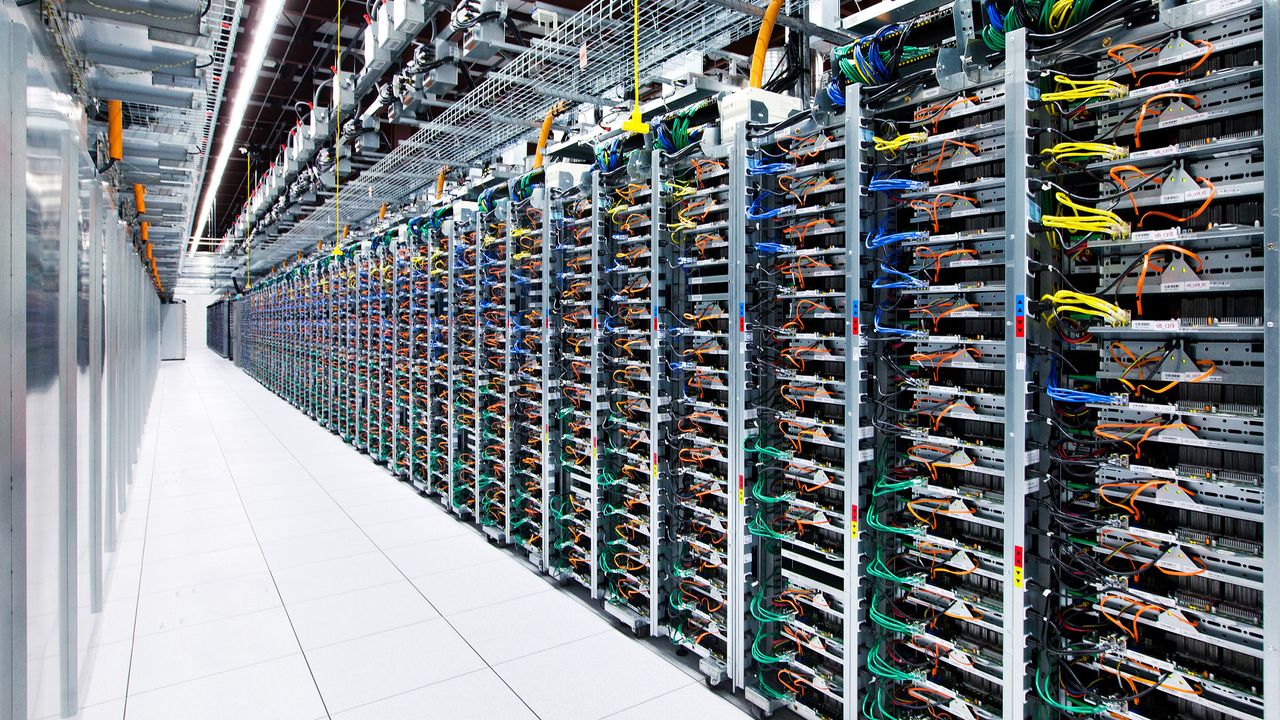
The server market is undergoing a seismic transformation, with Arm-based processors and GPU-accelerated systems rapidly rewriting the rules. Our latest analysis from Tom's Hardware reveals that Arm servers now command over 45% of data center market revenue, propelled by the insatiable demand for high-end AI infrastructure. While x86 still holds a slim lead in overall revenue and unit shipments, the real story is the undeniable dominance of accelerated computing, which accounts for over 70% of global server revenue. This isn't just a shift; it's a tectonic plate movement, signaling a future where efficiency and specialized processing take center stage, potentially reshaping hyperscale and enterprise strategies for years to come.
Unpacking the Market's Meteoric Rise
The first quarter of 2026 saw the global server market reach an unprecedented $122.6 billion in revenue, marking a staggering 30.4% year-over-year increase. This remarkable growth is almost entirely attributed to the booming investment in AI infrastructure. While custom-built ODM Direct servers, often favored by hyperscalers, still represent a significant portion at 50.2% of revenue ($61.53 billion), their year-over-year growth was a modest 2.1%. In stark contrast, sales from established branded vendors like Dell, Supermicro, and HPE soared. This suggests a growing trend where both enterprises and hyperscalers are increasingly relying on known suppliers for their complex and critical AI hardware deployments, including sovereign AI initiatives.
Dell Technologies emerged as the undisputed leader in Q1 2026, capturing 16.5% of the market share with a revenue of $20.3 billion – an astounding 244.1% increase year-over-year, clearly driven by its strong position in AI servers. Supermicro wasn't far behind, securing second place with $9.3 billion in revenue and a 128.9% growth rate. Lenovo rounded out the top three, reaching $5.6 billion with 36.5% growth. Notably, IEIT Systems (part of Inspur Group) saw a 7.0% decline, while HPE showed solid growth at 17.2%, achieving $3.7 billion in revenue. The 'Rest of Market,' encompassing a wide array of vendors from Asus to Gigabyte, also demonstrated robust growth, increasing its share to 14.8% and revenue to $18.11 billion.
Arm's Ascendancy: More Than Just a Niche Player
The rise of Arm-based machines is, without exaggeration, a monumental development. Non-x86 platforms, predominantly Arm, generated $58.7 billion in revenue, an incredible 107.6% increase year-over-year, boosting their market share to 47.9%. This surge isn't just about general-purpose computing; it's heavily intertwined with AI. These non-x86 systems largely comprise Arm-based AI machines, such as Nvidia's NVL72, and custom Arm CPUs developed by tech giants like AWS, Google, and Microsoft. Even considering niche players like IBM Z mainframes and Power Systems, Arm-based machines are responsible for over 95% of non-x86 revenue, firmly placing their overall server market revenue share at well over 45%.
What's driving this? The economics of high-end AI infrastructure. A single Nvidia NVL72 'Blackwell' rack-scale solution, housing 36 Blackwell GPUs and 36 Grace CPUs (an Arm-based processor), can fetch up to $6.5 million. While the unit count of CPUs might seem modest compared to x86, their astronomical per-unit revenue contributions dramatically skew the market share by dollar value. With Nvidia planning to integrate its Arm-based Vera CPUs into upcoming NVL72 'Vera Rubin' machines, which are expected to be even pricier, and eventually offering standalone Vera CPU server racks for agentic AI, it's highly plausible that Arm-based machines will exceed 50% of server market revenue by late 2026 or 2027.
Accelerated Computing: The True Market Mover
While Arm's growth is significant, the overarching trend is the dominance of accelerated servers. Systems equipped with GPUs alone raked in $68.9 billion in Q1 2026, accounting for 56.2% of all server sales and growing by 24.8% year-over-year. When factoring in other accelerator types, such as custom ASICs and FPGAs, which grew a staggering 122.1% year-over-year to $17.7 billion, the picture becomes clear: accelerated servers, in total, generated $86.6 billion, or roughly 70.6% of all server revenue. This makes them the undeniable real winner, signifying that specialized hardware for AI, supercomputing, simulations, and other intensive workloads is where the majority of spending is directed.
X86's Enduring Role and Emerging Challenges
Amidst Arm's ascent and the dominance of accelerators, x86 servers saw a 2.9% decline in revenue, settling at $63.9 billion. However, this isn't necessarily a sign of waning demand. IDC attributes this dip primarily to supply limitations affecting critical components like CPUs, DRAM, NAND memory, and hard drives. X86 servers, powered by AMD EPYC and Intel Xeon processors, remain the workhorses of the industry, supporting a vast array of general-purpose workloads, many of which also integrate accelerators. In 2025, AMD and Intel shipped nearly 20 million server CPUs, far outstripping the estimated 4 million Grace and Vera CPUs Nvidia is expected to ship in 2026. While custom Arm CPU deployments by hyperscalers are likely in the millions, x86 still leads significantly in unit volume for general-purpose servers. The challenge for x86 vendors is navigating supply chain constraints while simultaneously innovating to compete with Arm's growing efficiency and the specialized capabilities of accelerated solutions.
The Strategic Outlook: Embracing the Shift
The data clearly paints a picture of a data center landscape in flux. The traditional dominance of x86 in revenue is being eroded by the high-value, high-performance needs of AI and accelerated computing, where Arm-based solutions are proving incredibly effective. While x86 will continue to be critical for general-purpose workloads, particularly where established software ecosystems and broad compatibility are paramount, strategic investments will increasingly lean towards Arm for new, AI-centric deployments. The sheer cost-effectiveness per operation for AI workloads, coupled with customizability, gives Arm a significant edge in this high-growth sector.
For businesses and data center operators, the recommendation is clear: future-proofing strategies must account for the accelerated shift towards Arm and specialized hardware. Evaluating workloads to identify where Arm's efficiency and accelerator integration offer superior performance per dollar is no longer optional. Partners like Dell and Supermicro, who are rapidly adapting their portfolios to meet AI server demand, are likely to be key players in this transition. This isn't just about choosing a chip; it's about optimizing an entire infrastructure for the demands of tomorrow's computing.
FAQ
Q: Is x86 becoming irrelevant in the data center market?
A: Not at all. While Arm is rapidly gaining revenue share due to high-value AI server deployments, x86 servers remain the volume champions and critical for a wide range of general-purpose workloads. Their current revenue dip is attributed more to supply constraints than a fundamental lack of demand. However, their strategic importance is evolving, with more focus on integration with accelerators and optimizing for specific tasks where their robust ecosystem excels.
Q: Why are Arm servers capturing so much revenue despite lower unit shipments?
A: The primary reason is the high cost of the specialized, high-end AI infrastructure that often incorporates Arm-based CPUs. Solutions like Nvidia's NVL72, which bundles multiple Arm-based Grace CPUs with powerful Blackwell GPUs, can cost millions of dollars per unit. Even with relatively fewer CPU units, their immense price tag drives up Arm's revenue share dramatically, reflecting the premium placed on these AI-optimized systems.
Q: What does this shift mean for data center operators and IT professionals?
A: This shift necessitates a re-evaluation of data center strategies. Operators will increasingly need to consider hybrid environments, integrating Arm-based and accelerated servers for AI and specialized workloads alongside traditional x86 for general computing. The focus will be on optimizing total cost of ownership (TCO) through energy efficiency, performance per watt, and the ability to leverage specialized hardware for demanding tasks. Understanding software compatibility and developer ecosystems for Arm will also become crucial for long-term planning.
Related articles
Android 17 QPR2 Beta 7.1: The Performance Relief You've Been Waiting
Android 17 QPR2 Beta 7.1: Finally Fixing the QPR1 Performance Woes Verdict: Android 17 QPR2 Beta 7.1 is a crucial and highly anticipated software update for Google Pixel users, specifically targeting and resolving the

DJI Solo Video Setups: Smart Choices for Lone Creators
This review delves into DJI's recommended solo video setups, highlighting the Osmo Pocket 3 Creator Combo as a top pick for its integrated camera, gimbal, and mic. It also covers stabilizers like the Osmo Mobile 8 and RS 4, and the DJI Mic Mini series for enhanced audio, providing honest pros, cons, and clear buying advice.
Ditch Merge & Center: The Better Way to Align Text in Excel
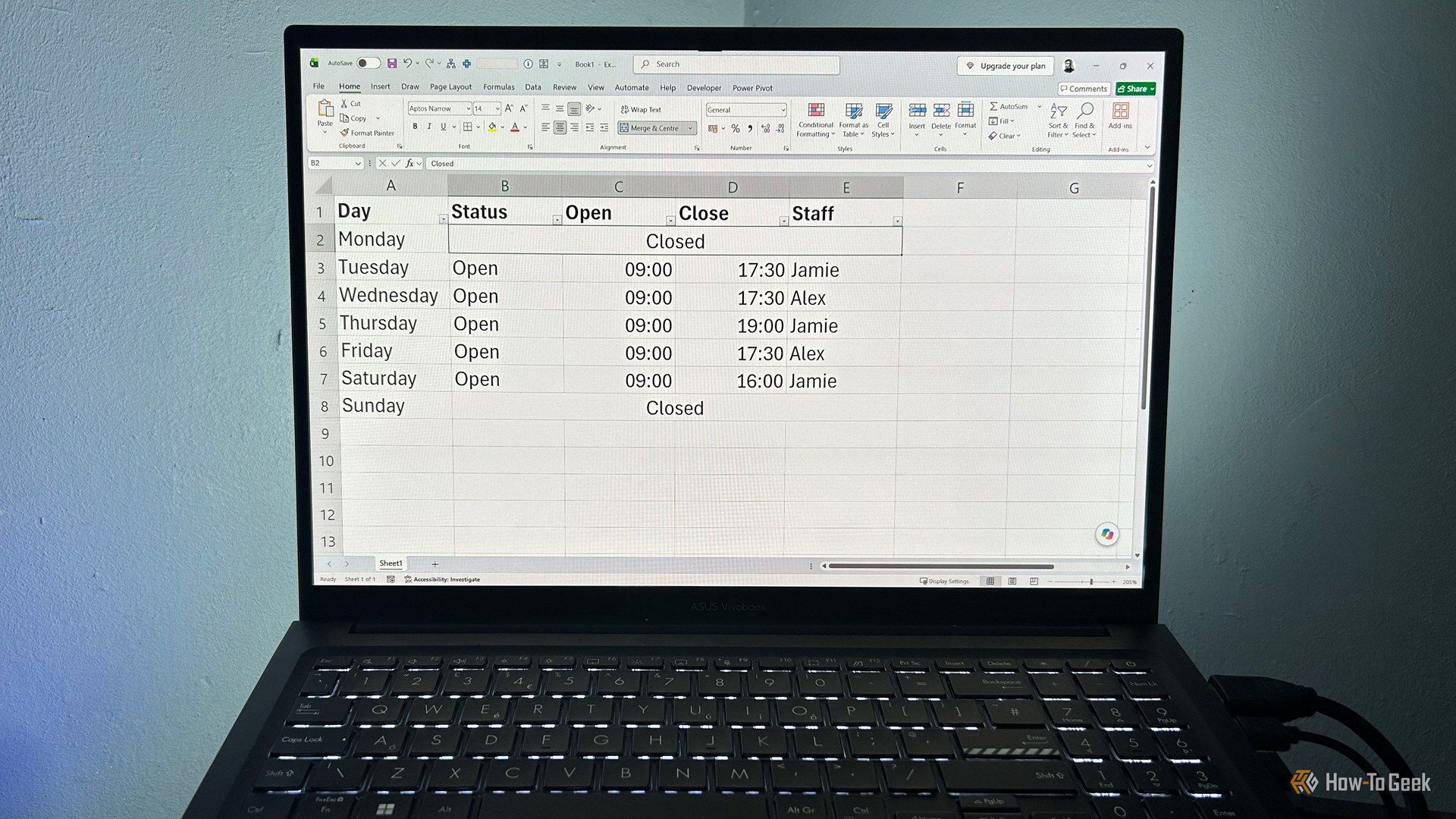
Learn to use Excel's "Center Across Selection" to align text across cells without merging, avoiding common data manipulation issues. This guide provides steps to utilize this newly accessible feature and add it to your Quick Access Toolbar.

Ars Technica's Rocket Report: Your Essential Space Industry Briefing
Quick Verdict Ars Technica's Rocket Report, presented by veteran space reporter Stephen Clark, offers an invaluable and meticulously organized weekly (or similar frequency, implied by "Edition 9.15") digest of the most
Apple iPhone Duo: A Daring Debut with Notable Compromises
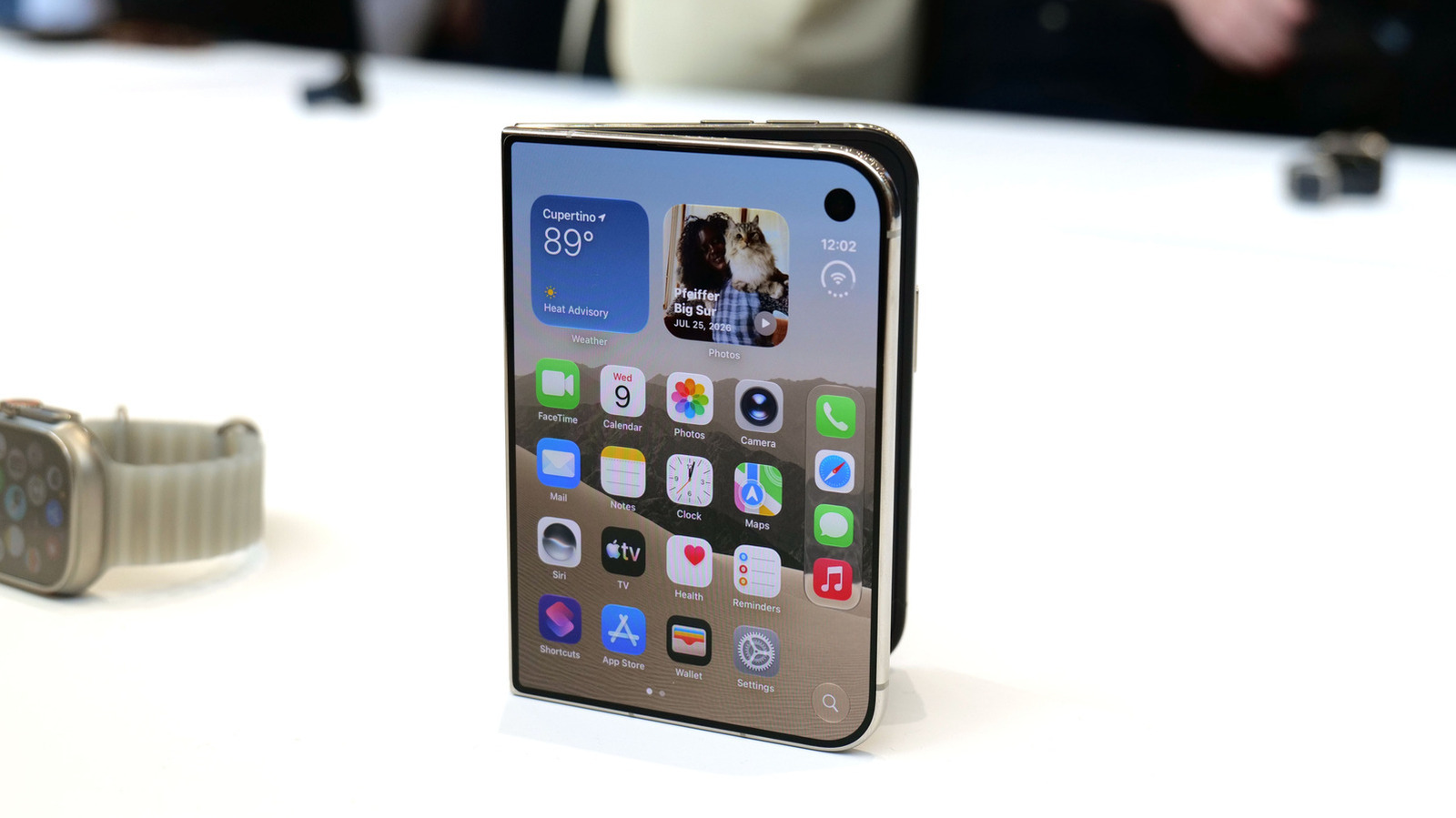
Apple's highly anticipated iPhone Duo, priced at $2,000, has gone on pre-order. While hailed as "Apple's most exciting device in a decade" for its innovative foldable design and immersive display, it comes with significant drawbacks like the absence of FaceID and a premium camera.

AI's Confidence vs. Formal Methods' Rigor: Design Flaws & Verification
While AI accelerates code generation, formal methods remain critical for ensuring system correctness. Languages like TLA+ and tools like Quint enable developers to model and verify system designs before coding, catching subtle flaws. Quint makes formal methods more accessible with developer-friendly syntax and executability. This approach is vital for verifying AI-generated code through trace validation and model-based testing, ensuring reliability against real-world data.