
Antares Microreactors: Half a Billion for Military Nuclear Power
Antares secured $470M to build microreactors for the US military, achieving Mark-0 criticality. While a major technical step, high costs and supply chain immaturity pose challenges for its 2028 deployment target.
Verdict
Antares' monumental $470 million Series C funding underscores a bold, high-stakes gamble on microreactor technology. While achieving Mark-0 criticality is a significant technical milestone, the path to commercially viable, widespread deployment for the US military by the 2028 deadline is fraught with significant cost, supply chain, and developmental hurdles. This is a critical national security project, not a consumer product, where strategic necessity might outweigh immediate economic efficiency.
Antares Microreactors: A Deep Dive
Antares, a Torrance, California-based startup, has recently made headlines by securing a staggering $470 million in Series C funding, comprising $370 million in equity and $100 million in debt. Co-led by Paradigm and Caffeinated Capital, with participation from firms like Point72 Ventures, Shine Capital, and Industrious Ventures, this capital injection is earmarked for an ambitious goal: supplying compact nuclear reactors to the US military.
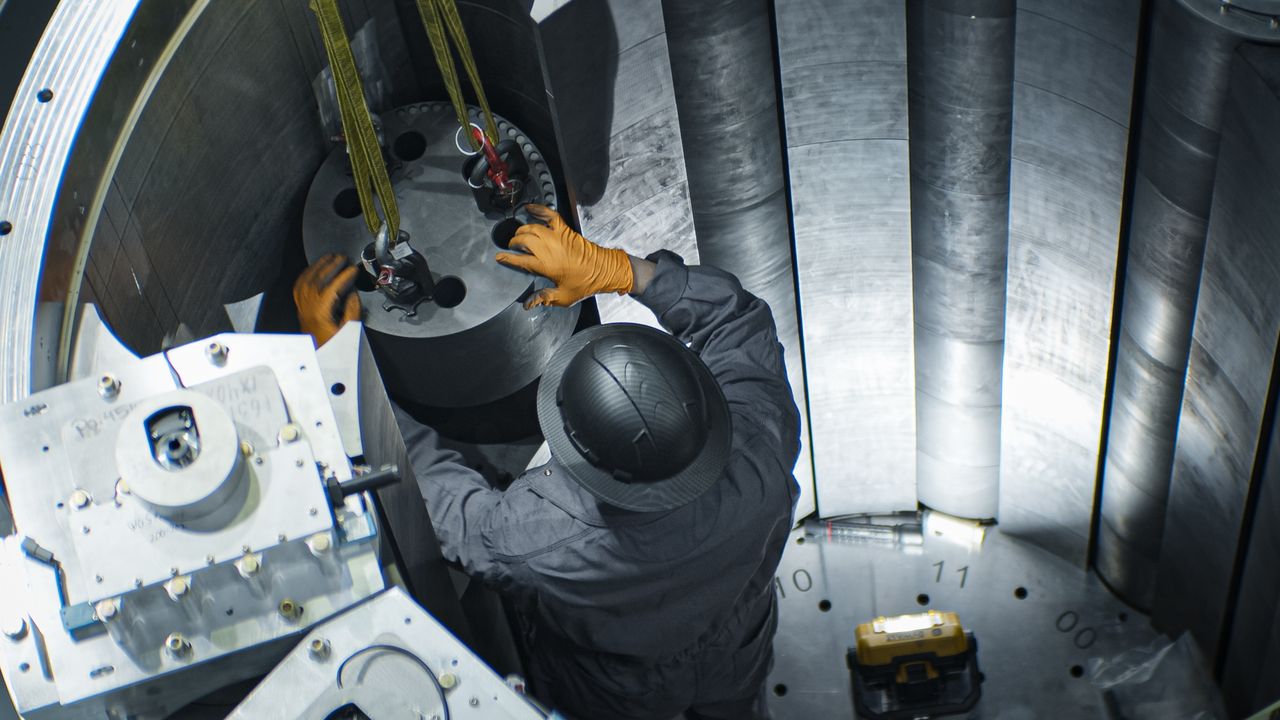
The timing of this substantial raise is strategic, coming hot on the heels of a critical achievement. Antares' Mark-0 microreactor successfully reached criticality at Idaho National Laboratory. This demonstration, conducted under the authorization of the Department of Energy (DOE) and observed by the US Army, involved collaboration with BWX Technologies. Notably, Antares claims the Mark-0 is the "first privately developed non-light-water reactor to achieve criticality in the United States in more than four decades," highlighting the historical significance of this technical feat.
Key Specifications and Details
Antares is focusing on small modular reactors (SMRs), specifically its Mark-0 and upcoming Mark-1 models. The Mark-0 served as a zero-power test bed, proving the core technology's ability to sustain a nuclear chain reaction. The Mark-1, intended to be an electricity-producing reactor, is planned for deployment in 2027, with military applications slated for 2028.
A key design feature of the Mark-1 is its use of the same full-scale core, facility, and TRISO fuel as its Mark-0 predecessor. This commonality is presented by Antares as evidence of the Mark-1's credible development timeline. Antares CEO Jordan Bramble states that the reactor is engineered for reliability, aiming for six-plus years of operation without the need for refueling. The company also asserts that the capital raised and firm contracts will enable them to build "the first microreactor producing useful electricity in a truly commercially viable design."
Strategic Imperative and Target Audience
The primary driver for Antares' rapid development and substantial funding is a clear mandate from the White House. An executive order, "Deploying Advanced Nuclear Reactor Technologies for National Security," signed by former President Donald Trump, requires an operating Army-regulated nuclear reactor on a domestic military site by September 30, 2028. This executive order has created a unique and highly motivated customer in the US military.
Antares is one of three finalists in the Pentagon’s Advanced Nuclear Power for Installations program, which seeks to test-deploy SMRs at two different air force bases. This "military-first strategy" targets a customer that, due to national security imperatives, may be less price-sensitive than commercial entities. The immediate goal is to meet this looming deadline, providing reliable, long-duration power generation capabilities that could reduce the military's reliance on vulnerable fuel supply lines.
Practical Considerations and Challenges
While the technical progress is commendable, a deeper look reveals significant challenges on the path to widespread deployment and commercial viability beyond the military's specific needs.
Economic Hurdles: Insights from financial advisory firm Lazard suggest that, for now, Antares' approach remains more expensive than renewable energy sources and all but the most costly gas turbines. While military applications prioritize resilience and strategic independence, making cost a secondary concern, this economic reality is a substantial barrier for broader civilian or commercial adoption.
Supply Chain Maturity: The US supply chain for advanced nuclear reactors is described as immature. Microreactors, being a nascent technology, lack established manufacturing infrastructure and economies of scale. No company has yet to mass-produce microreactors, meaning Antares faces the complex task of not only perfecting its design but also building a robust and scalable production ecosystem.
First-of-a-Kind Risks: The Mark-0's criticality achievement is vital, but it was a zero-power test. The Mark-1, as an electricity-producing reactor, introduces new engineering complexities and operational challenges. A first-of-a-kind electricity-generating reactor may well uncover problems that were not apparent in the non-power-generating core. These unforeseen issues could significantly impact development timelines and costs.
Deadline Pressure: Despite the $470 million capital infusion, meeting the September 30, 2028, executive order deadline remains a formidable task. Nuclear projects are notorious for delays and cost overruns, and bringing a novel reactor type from prototype to operational deployment within four years is ambitious, to say the least.
Recommendations
For the US military, Antares represents a promising, albeit expensive, solution to a critical strategic need. The executive order provides a clear imperative, making Antares' microreactors a necessity rather than a pure economic choice. The achieved criticality of Mark-0 is a strong indicator of technical capability, and the planned 6+ year refueling cycle is highly attractive for military applications.
For investors outside of the national security sphere or for those considering broader commercial applications, caution is warranted. While the technology is exciting, the current economic landscape, immature supply chain, and inherent risks of first-of-a-kind deployments present significant hurdles to achieving widespread commercial viability in the near term. The $470 million buys Antares a serious shot at fulfilling its military contract, but its long-term market position will depend on its ability to drive down costs and scale production efficiently.
FAQ
Q: What is Antares building and for whom? A: Antares is developing microreactors, specifically the Mark-0 (already achieved criticality) and the Mark-1 (electricity-producing model). Their primary client is the US military, driven by an executive order to deploy an operating Army-regulated nuclear reactor by September 30, 2028.
Q: Has Antares proven its technology yet? A: Antares successfully achieved criticality with its Mark-0 microreactor at Idaho National Laboratory, demonstrating the core nuclear fission technology. This was a significant technical milestone, being the first privately developed non-light-water reactor to do so in the US in over four decades. However, the Mark-1, which will actually produce electricity, is still under development.
Q: What are the main challenges facing Antares? A: Key challenges include the high cost of microreactors compared to renewables, the immaturity of the US supply chain for advanced reactors, the fact that no company has manufactured microreactors at production scale, and the inherent risks that a first-of-a-kind electricity-producing reactor (Mark-1) may reveal unforeseen problems before its targeted 2028 military deployment.
Related articles
Android 17 QPR2 Beta 7.1: The Performance Relief You've Been Waiting
Android 17 QPR2 Beta 7.1: Finally Fixing the QPR1 Performance Woes Verdict: Android 17 QPR2 Beta 7.1 is a crucial and highly anticipated software update for Google Pixel users, specifically targeting and resolving the

DJI Solo Video Setups: Smart Choices for Lone Creators
This review delves into DJI's recommended solo video setups, highlighting the Osmo Pocket 3 Creator Combo as a top pick for its integrated camera, gimbal, and mic. It also covers stabilizers like the Osmo Mobile 8 and RS 4, and the DJI Mic Mini series for enhanced audio, providing honest pros, cons, and clear buying advice.

Ars Technica's Rocket Report: Your Essential Space Industry Briefing
Quick Verdict Ars Technica's Rocket Report, presented by veteran space reporter Stephen Clark, offers an invaluable and meticulously organized weekly (or similar frequency, implied by "Edition 9.15") digest of the most

Apple iPhone Duo: A Daring Debut with Notable Compromises
Apple's highly anticipated iPhone Duo, priced at $2,000, has gone on pre-order. While hailed as "Apple's most exciting device in a decade" for its innovative foldable design and immersive display, it comes with significant drawbacks like the absence of FaceID and a premium camera.
KDE Plasma 6.8: A Future-Focused 30th Anniversary Update
Quick Verdict KDE Plasma 6.8, arriving as the "30th Anniversary Edition," is a pivotal release that decisively pushes the desktop environment into the future. With a definitive farewell to native X11 sessions and a
Galaxy Watch One UI 9 Beta: Promising Progress, But Patience Needed
Galaxy Watch 8, Watch Ultra, and Watch 7 are receiving a new One UI 9 Watch beta build with bug fixes and a security patch. Active development signals progress, but a stable release date remains elusive.