
Airplane Mode Charging: Minimal Gains, Major Inconvenience
This review finds that while airplane mode technically speeds up phone charging by 4-11 minutes, the minimal gain isn't worth rendering your device unusable. Better alternatives include fast chargers, quality cables, and power banks.
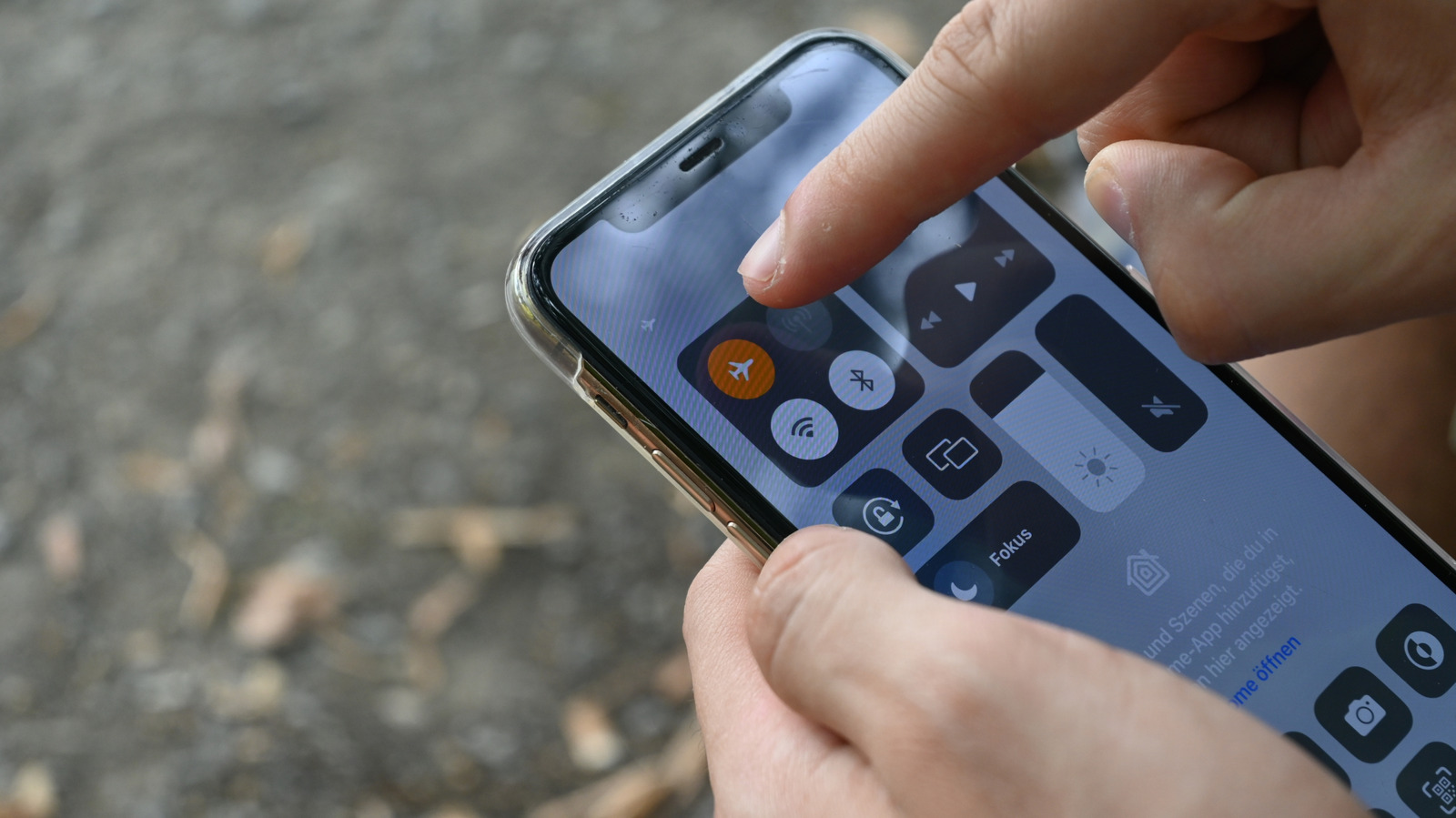
Quick Verdict: A Charging Myth Best Ignored
Many of us have tried it: flipping the switch to airplane mode hoping for a lightning-fast charge. The popular belief is that by disabling all wireless communications, your phone will divert all its energy to charging, significantly reducing the time it takes to power up. Our comprehensive look at this common practice, drawing on recent findings, confirms that while there is a grain of truth to the claim, the practical benefits are so minuscule that this strategy is largely unwarranted. For anyone seeking genuinely faster charging, there are far more effective and less disruptive methods available that won't turn your smartphone into a dumb brick.
The "Feature" Under Scrutiny: How Airplane Mode Impacts Charging
Airplane mode, as its name suggests, was primarily designed to adhere to aviation regulations by temporarily shutting down all wireless transmissions from your device. This includes your cellular connection, Wi-Fi, and Bluetooth, along with suppressing notifications and other online content. The underlying principle for its supposed charging benefit is simple: if the phone isn't actively searching for networks, receiving data, or processing background tasks, it consumes less power. This reduced power consumption, in theory, allows a greater proportion of the incoming charge to be stored in the battery, thereby speeding up the overall charging process.
Indeed, the scientific premise holds. By cutting off these power-hungry radios and background processes, a phone in airplane mode does draw less power. This means that the battery can accumulate charge slightly faster compared to a phone that's fully active and engaged in network communication. The phone effectively has fewer demands on its internal power supply, allowing the charging current to be more efficiently directed towards the battery itself.
Performance Analysis: The Negligible Advantage
Despite the logical reasoning behind it, real-world tests consistently show that the tangible benefit of charging in airplane mode is remarkably small. While your phone will charge faster, the time saved is typically in the range of just 4 to 11 minutes. This minor acceleration applies across the board, from older smartphone models to the latest, more power-efficient devices. For context, if your phone usually takes an hour to charge fully, enabling airplane mode might shave off a few minutes, bringing the total time down to 50-55 minutes. This marginal improvement simply isn't significant enough to warrant the substantial trade-offs involved.
Consider the impact of modern fast charging technologies. Many contemporary smartphones, when paired with the right adapter and cable, can go from near-empty to a significant charge (e.g., 50-70%) in just 30 minutes or less. In such scenarios, saving 4 to 11 minutes by using airplane mode becomes an even more inconsequential gain, barely noticeable in the grand scheme of things. The strategy was perhaps more relevant in an era of slower charging, but with today's advancements, its utility has diminished almost to zero.
User Experience: The Unacceptable Trade-Off
The most significant downside to relying on airplane mode for charging speed is the immediate impact on your phone's functionality. By disabling all wireless communications, your device becomes essentially disconnected. You won't receive calls, text messages, emails, or any app notifications. Your internet access, whether via Wi-Fi or cellular data, is cut off, rendering countless apps and services unusable. For most users, a smartphone is a critical tool for communication, information, and entertainment, and voluntarily turning it into a disconnected brick for a negligible charging benefit is simply not practical.
Imagine needing to stay connected for work, family, or emergencies, only to find your phone isolated. Missing an urgent call or message for a mere few minutes of charging time is a trade-off few would willingly make. While airplane mode can serve as a personal 'do not disturb' function, dedicated focus modes or 'do not disturb' settings are far superior for this purpose. These modes allow for exceptions (like emergency contacts) and don't completely sever your device's connectivity, offering a more balanced approach to managing interruptions without sacrificing essential communication capabilities.
Moreover, the source material notes an additional, indirect benefit: airplane mode discourages users from frequently interacting with their phones. Every time you light up the screen, check a notification, or scroll through content, your phone consumes power, thereby slowing down the charging process. If you can simply refrain from using your phone while it's plugged in, you'll naturally achieve faster charging without the need to activate airplane mode. The discipline of not constantly checking your device is far more impactful than the mode itself in this regard.
Superior Alternatives for Faster Charging
Instead of resorting to airplane mode, which provides minimal gains and significant inconvenience, focus your efforts on genuine charging enhancements. The most impactful upgrades come from your charging hardware:
- Upgrade Your Power Block: Many smartphones support much faster charging speeds than the basic power adapters that often come bundled, or even no adapter at all (e.g., Samsung Galaxy S26 Ultra, iPhone 17 series). Invest in a power block that matches or exceeds your phone's maximum supported charging wattage. For example, some iPhone models support up to 40W charging, while the iPhone Air supports 20W. Using a 5W or 10W adapter with a phone capable of 40W will severely limit its charging potential. Always check your device's specifications for its maximum charging input.
- Invest in Quality Cables: The cable you use is just as crucial as the power block. Swapping an older USB-A-to-USB-C cable for a modern, high-quality USB-C-to-USB-C cable can dramatically increase charging speeds, provided your phone and power block support it. Cheap or worn-out cables can restrict power flow, acting as a bottleneck. Opt for reputable brands known for durable and efficient cables.
- Embrace Advanced Wireless Charging: If your phone supports newer wireless charging standards like Qi2, consider upgrading your wireless charger. Qi2-certified chargers can deliver significantly faster wireless charging speeds, offering a convenient and powerful alternative to wired charging without the need to connect physical cables every time.
- Carry a Portable Power Bank: For quick boosts on the go, a portable power bank is an indispensable accessory. Modern power banks often support fast charging protocols, allowing you to top up your device rapidly whenever an outlet isn't available. This is a far more efficient and flexible solution for urgent power needs than forcing your phone into airplane mode.
Pros and Cons
Pros:
- Marginally Faster Charging: Does indeed reduce charging time, albeit minimally (4-11 minutes).
- Reduces Phone Distraction: By disabling notifications, it can help users avoid checking their phone while charging, which itself can speed up the process.
Cons:
- Phone Becomes Unusable: Disables all wireless communication (cellular, Wi-Fi, Bluetooth), making the phone a temporary brick.
- Negligible Time Savings: The few minutes saved are not worth the sacrifice of connectivity.
- Missed Important Communications: Risk of missing urgent calls or messages.
- Inferior to Dedicated Solutions: Far less effective than using a powerful charger, quality cable, or power bank.
Buying Recommendation: Don't Bother with Airplane Mode
In conclusion, while the idea of using airplane mode to accelerate your phone's charging seems intuitively appealing, the real-world benefits are simply not worth the accompanying sacrifice in functionality. Saving a mere 4 to 11 minutes on a full charge cycle means turning your essential communication device into a glorified paperweight for an extended period. This strategy offers an incredibly poor trade-off for most users.
Instead of wasting time and sacrificing connectivity for such meager gains, invest your resources wisely. Upgrade to a high-wattage power block that matches your phone's fast-charging capabilities, acquire a quality USB-C-to-USB-C cable, or embrace advanced wireless charging standards like Qi2 if your device supports them. For emergencies or on-the-go power, a portable power bank is a far more practical and efficient solution. These dedicated hardware upgrades offer substantial, noticeable improvements in charging speed and convenience, making airplane mode charging an outdated and largely ineffective hack.
FAQ
Q: How much faster does my phone charge in airplane mode? A: Tests indicate a marginal improvement, typically saving between 4 to 11 minutes on a full charge. This small gain usually doesn't justify the loss of phone functionality.
Q: What are the main downsides of charging in airplane mode? A: The primary downside is that your phone becomes completely disconnected. You won't receive calls, texts, emails, or app notifications, essentially rendering your device unusable for communication during the charging period.
Q: What's the best way to genuinely speed up my phone's charging? A: The most effective ways include using a power adapter that supports your phone's maximum fast-charging wattage, pairing it with a high-quality USB-C-to-USB-C cable, investing in a fast Qi2 wireless charger if your phone supports it, or carrying a portable power bank for quick boosts on the go. These hardware solutions offer significant and noticeable improvements over airplane mode.
Related articles

Crystal Lake Series on Peacock: A Deep Dive into Horror's Past
Crystal Lake Series Review: A Deep Dive into Horror's Past Verdict: Is Crystal Lake Worth the Dive? The long-awaited Friday the 13th prequel, Crystal Lake, is finally arriving on Peacock, promising a fresh, in-depth

Xi pitches open-source AI to BRICS amid domestic curb debates
Chinese President Xi Jinping proposed a China-led open-source AI community and invited BRICS nations to join the World AI Cooperation Organization (WAICO) at the recent BRICS summit. This push for global collaboration contrasts sharply with Beijing's ongoing internal debates about restricting its own advanced AI models. Meanwhile, the EU's comprehensive AI Act, with its clear, enforceable rules for open-source AI, highlights a significant divergence in global AI governance approaches.
Google's AI Branding Fix: A Clearer Vision for Gemini
This article critiques Google's fragmented AI branding, proposing a unified 'Gemini Intelligence' system to simplify user experience and strengthen Gemini's identity.

in-depth: The Best 3-in-1 Apple Charging Stations After Testing 30
Wired has released its top picks for 3-in-1 Apple charging stations, extensively tested for iPhone, Apple Watch, and AirPods. The guide highlights six leading models, from premium speedy options to budget-friendly and compact designs, all focused on decluttering and optimizing charging for Apple users.

Chuwi UniBox AI495 Pro Review: A Mini AI Powerhouse
Chuwi's UniBox AI495 Pro review: A powerful mini workstation with 192GB RAM and an AMD Ryzen AI chip for local LLM processing, packed into a compact, Mac Pro-esque design.

Nscale Adds Former OpenAI Exec Fidji Simo to Board Ahead of IPO
Nscale, the U.K.-based AI data center startup, has appointed former OpenAI, Meta, and Instacart executive Fidji Simo to its board of directors. This high-profile addition comes as Nscale prepares for a potential IPO this fall, leveraging Simo's extensive experience in scaling major tech platforms and guiding a company through a successful public offering.