
AI Data Center Optics: A $144 Billion Leap by 2030 – Our Analysis
New projections reveal the AI data center optical interconnect market is set for explosive growth, soaring to $144 billion by 2030. Silicon photonics and co-packaged optics are poised to dominate this critical shift, replacing copper for next-gen AI workloads.
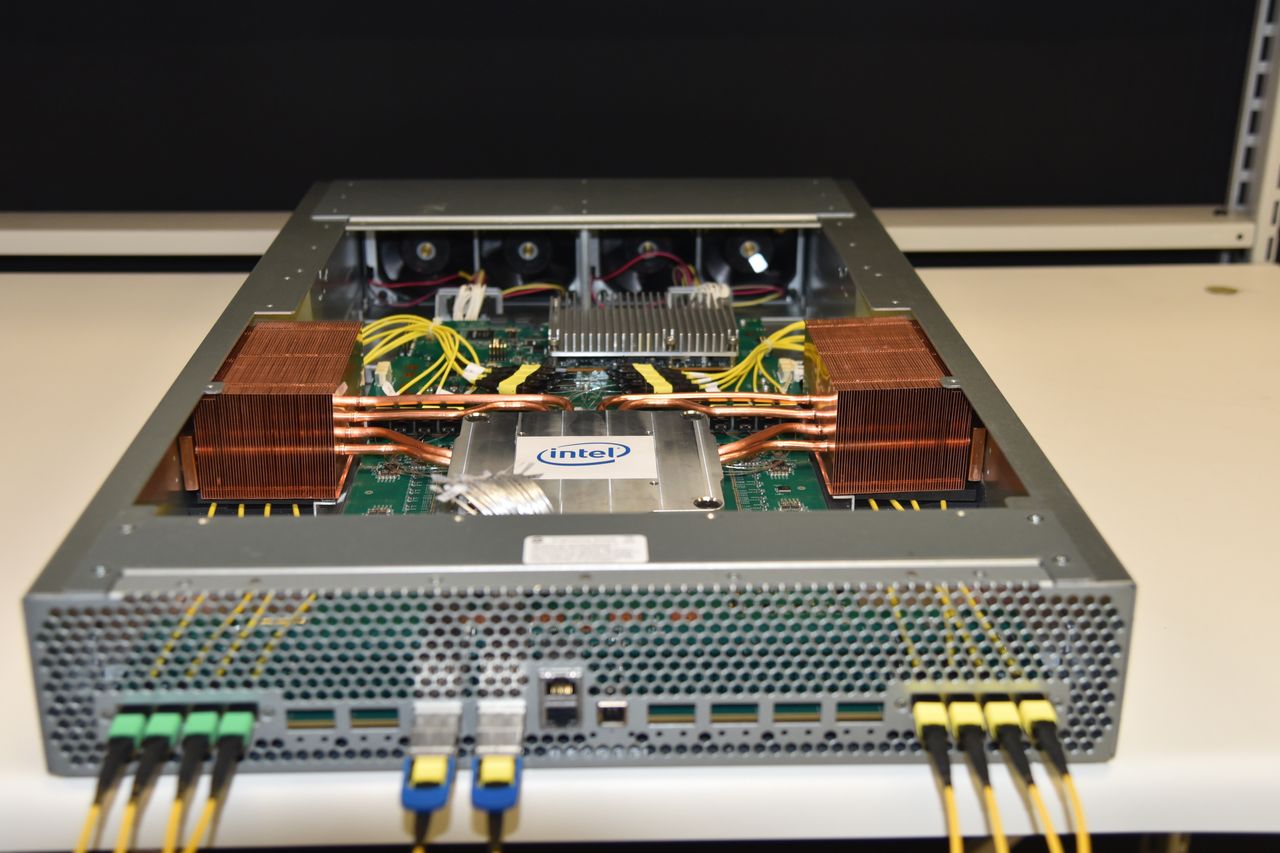
The AI data center optical interconnect market is on the cusp of a transformative boom, projected to expand over tenfold from $13.7 billion in 2024 to a staggering $144.4 billion by 2030. This seismic shift is driven by the insatiable demands of artificial intelligence workloads, which are pushing traditional copper-based interconnects to their absolute limits. The future, clearly, is light-based, with silicon photonics and co-packaged optics emerging as the leading technologies to fuel this exponential growth, promising unprecedented bandwidth, efficiency, and scalability for the data centers of tomorrow. This isn't just a prediction; it's a necessary evolution backed by significant industry investment and technological advancements.
The Unavoidable Shift: From Copper to Light
For decades, the backbone of data centers has been copper. It's cheap, reliable, and straightforward to implement for moving data across circuit boards, within racks, and between clusters. However, as the computational power of AI accelerators like GPUs skyrockets and the sheer volume of data they process grows exponentially, copper has hit a fundamental wall. Its limitations in terms of power consumption and signal degradation become critical past a few hundred gigabits per second, drastically reducing usable distances to mere meters. This bottleneck directly impedes the scaling of AI infrastructure.
The solution is a transition to photonics, where data is transmitted as light signals rather than electrical ones. Optical transceivers, a crucial component, convert electrical signals into laser light, send it along fiber optic cables, and then convert it back at the destination. This approach allows for significantly higher bandwidth, longer transmission distances, and vastly improved speeds, making it indispensable for modern, high-performance AI data centers.
Engineering for Tomorrow: Silicon Photonics and Co-Packaged Optics
The core of this revolution lies in two intertwined technologies: Silicon Photonics (SiPh) and Co-Packaged Optics (CPO).
Silicon Photonics (SiPh) involves manufacturing photonic chips using the same mature silicon material and CMOS foundry processes employed for conventional semiconductors. Historically, photonic chips relied on expensive III-V materials and specialized fabrication. SiPh democratizes this, making Photonic Integrated Circuits (PICs) mass-producible and more cost-effective. While silicon itself cannot generate light, the optical circuitry can be precisely patterned onto it, enabling complex optical functions.
Co-Packaged Optics (CPO) represents the next logical step in optical integration. In traditional setups, optical transceivers are pluggable modules located inches away from the processing units. While a vast improvement over copper, at extreme data rates, even this short electrical trace introduces power consumption and latency. CPO addresses this by moving the optical engine, the PIC, directly onto the same package as the switch or accelerator chip. This reduces the electrical signal path to mere millimeters, dramatically cutting power draw and enhancing signal integrity. A critical nuance is that the laser chip, being highly sensitive to heat, typically remains a separate component, even within a CPO setup. Companies like OpenLight and Tower Semiconductor are actively working to overcome this, aiming to integrate III-V laser materials directly with silicon photonics at the wafer level for even greater efficiency.
These technological advancements are not theoretical; they are rapidly being deployed and refined to meet the urgent needs of the AI industry.
The Financial Forecast: A Market Exploding
A recent report by China Insights Consultancy (CIC) paints a vivid picture of the market's future.
Overall Growth: The global data center optical interconnect market is projected to skyrocket from $13.7 billion in 2024 to $144.4 billion by 2030, demonstrating an astonishing 48.1% compound annual growth rate (CAGR). The report indicates growth will accelerate significantly after 2027.
Technology Dominance: Silicon photonics is set to become the dominant technology, capturing 63.7% of the total revenue by 2030, equating to $91.9 billion. This is a substantial leap from its 16.6% share in 2020, with SiPh revenue compounding at an impressive 68.5% annually, compared to 32.6% for other optical technologies. This clearly shows silicon-based optics are becoming the industry standard.
Use Case Dynamics: The demand for optical interconnects is strongest in specific data center applications:
- Scale-up: Short-reach links from servers and chips to top-of-rack switches are showing a massive 561.5% CAGR, albeit from a very small 2024 base. By 2030, this segment is projected to reach $32.1 billion. This highlights the critical need for high-speed, low-latency communication within the compute cluster.
- Scale-out: Interconnects across a data center remain the largest segment in absolute revenue, reaching $64.5 billion by 2030 with a 42.7% CAGR.
- Non-AI: Traditional data center workloads (telecom, enterprise servers) will still account for a significant $40.2 billion by 2030, growing at 37.5% CAGR, but are clearly overshadowed by AI-driven expansion.
- Scale-across: Links between data centers will hit $7.6 billion, with a 108.5% CAGR.
Data Rate Evolution: The shift to higher speeds is equally dramatic:
- Present (2024): The market is primarily driven by 400G ($5.9 billion) and 800G ($4.5 billion) links, with legacy 200G and below contributing $3.3 billion.
- Future (2030): The landscape will be completely inverted. 1.6T links, commercially deploying in 2026, are projected to be the largest segment at $65.6 billion, growing at an astounding 867.3% CAGR. The even faster 3.2T links, appearing from 2027, will reach $44.5 billion. Together, these next-generation speeds will comprise roughly $110 billion of the total market. 800G will remain robust at $26.7 billion (34.8% CAGR), while 400G will flatline with only 1.0% annual growth, and 200G-and-below links will actively contract by 15.4% annually.
Industry Titans Are Already Moving
These projections are not mere speculation; they are reinforced by aggressive investments and strategic alliances across the tech industry. Over the past year alone, more than $15 billion has been poured into silicon photonics and related technologies.
- Nvidia's Big Bets: Nvidia, a key player in AI, has invested heavily, committing $2 billion each into Coherent and Lumentum (manufacturers of lasers and optical components), $2 billion into Marvell, and a $500 million warrant deal with fiber producer Corning. These investments are coupled with multi-year purchase commitments, securing supply chains for crucial optical components.
- Collaborative Innovation: Major tech firms including Microsoft, Meta, and OpenAI have joined forces with hardware giants Broadcom, AMD, and Nvidia to form the Optical Compute Interconnect (OCI) Multi-Source Agreement (MSA) group. Their goal is to develop protocol-agnostic, scale-up interconnection technology to tackle the formidable data bottlenecks within AI clusters.
- Strategic Acquisitions: Marvell's $3.25 billion acquisition of Celestial AI, a photonic interconnect startup, highlights the value placed on proprietary photonic fabric platforms for optical chip-to-chip linking within a rack.
- Funding Breakthroughs: Ayar Labs, a company developing optical I/O chiplets for direct data movement off compute packages, successfully raised a $500 million funding round.
These actions underscore a clear industry consensus: optical interconnects are not just an improvement; they are a fundamental necessity for the future of AI.
Pros and Cons of the Optical Shift
Pros:
- Massive Bandwidth & Speed: Optical interconnects offer exponentially higher data rates (up to 3.2T and beyond), crucial for bandwidth-hungry AI workloads.
- Reduced Power Consumption: Especially with Co-Packaged Optics, moving the optical engine closer to the chip significantly cuts down the power required for data transmission over short distances, leading to more energy-efficient data centers.
- Greater Reach: Light signals can travel much farther with minimal loss compared to electrical signals, enabling larger and more flexible data center architectures.
- Improved Density & Scalability: Smaller, more efficient optical components allow for denser packing of compute resources, facilitating larger AI clusters. Silicon photonics also offers scalable manufacturing.
- Future-Proofing: The shift away from copper's inherent limitations positions data centers for future generations of AI hardware and even more demanding computational tasks.
Cons:
- Thermal Management Challenges: Integrating optical components, especially lasers, directly onto high-power chips (as in CPO) introduces complex heat dissipation issues that require sophisticated engineering.
- Material Constraints: While silicon photonics handles much of the PIC, laser components still often rely on specialized III-V materials (like indium phosphide) which can face supply chain pressures.
- Integration Complexity: Moving optics closer to the chip demands advanced packaging techniques and seamless integration, which can be challenging to achieve at scale and may introduce new points of failure.
- Initial Investment & R&D: The transition requires significant capital expenditure and ongoing research and development from chipmakers and data center operators.
Copper vs. Optical: The Battle for Bandwidth
| Feature | Copper Interconnects | Optical Interconnects |
|---|---|---|
| Medium | Electrical signals over metal wires | Light signals over fiber optic cables |
| Bandwidth/Speed | Limited, bottlenecks at high speeds (e.g., >400 Gbps) | Extremely high (800G, 1.6T, 3.2T and beyond) |
| Signal Loss | High, increases sharply with speed and distance | Very low, allows for longer distances without re-amplification |
| Power Consumption | High, especially at higher speeds and longer distances | Significantly lower, particularly with co-packaged optics |
| Distance | Very limited (meters at high speeds) | Long reach (hundreds of meters to kilometers) |
| Integration Cost | Generally lower, mature technology | Higher initial cost, but improving with silicon photonics |
| Latency | Can be higher due to electrical signal integrity issues | Lower, especially with co-packaged optics (shorter electrical paths) |
| Scalability | Challenging to scale effectively for future AI needs | Highly scalable, essential for next-gen AI data centers |
Recommendations for the Road Ahead
For data center operators, cloud service providers, and anyone involved in building or investing in AI infrastructure, the message is clear: the transition to optical interconnects, particularly silicon photonics and co-packaged optics, is not optional but imperative. Ignoring this shift means risking severe performance bottlenecks, unsustainable power consumption, and a loss of competitive edge.
Key takeaways for stakeholders:
- Embrace Photonics: Prioritize investments in optical networking infrastructure.
- Watch CPO: Co-packaged optics will be a game-changer for scale-up connectivity and chip-level performance.
- Monitor Supply Chains: Keep an eye on the supply of III-V materials and advanced packaging capabilities, which are crucial for the lasers within these systems.
- Collaborate and Standardize: Participation in groups like OCI MSA is vital for ensuring interoperability and accelerating adoption.
For tech enthusiasts and investors, this market segment represents a significant growth opportunity. Companies at the forefront of silicon photonics, co-packaged optics, and high-speed optical component manufacturing are positioned for substantial returns. The demand generated by AI is creating a new foundational layer for computing, and optics is at its heart.
FAQ
Q: Is the projected growth for optical interconnects primarily driven by AI, or is it a broader trend? A: While optical interconnects are a growing trend across various data center applications, the overwhelming ten-fold increase in market size to $144 billion by 2030 is explicitly attributed to the explosive demands of AI workloads. The report highlights that AI-driven "scale-up" and "scale-out" use cases will see the most significant growth.
Q: What is the main advantage of silicon photonics over older optical technologies? A: The primary advantage of silicon photonics (SiPh) is its ability to leverage mature, high-volume CMOS manufacturing processes used for conventional semiconductors. This makes photonic integrated circuits (PICs) more cost-effective and mass-producible compared to older methods that relied on more expensive III-V materials and specialized fabs, thereby accelerating adoption and scaling.
Q: Will co-packaged optics (CPO) completely replace traditional pluggable transceivers? A: Not entirely. While CPO offers significant advantages in power efficiency and density by integrating optical engines directly onto chips for very short-reach connections, traditional pluggable transceivers will likely remain relevant for longer-reach "scale-out" and "scale-across" connections within and between data centers, though their form factor and capabilities will also evolve to higher speeds like 1.6T and 3.2T.
Related articles
Android 17 QPR2 Beta 7.1: The Performance Relief You've Been Waiting
Android 17 QPR2 Beta 7.1: Finally Fixing the QPR1 Performance Woes Verdict: Android 17 QPR2 Beta 7.1 is a crucial and highly anticipated software update for Google Pixel users, specifically targeting and resolving the

DJI Solo Video Setups: Smart Choices for Lone Creators
This review delves into DJI's recommended solo video setups, highlighting the Osmo Pocket 3 Creator Combo as a top pick for its integrated camera, gimbal, and mic. It also covers stabilizers like the Osmo Mobile 8 and RS 4, and the DJI Mic Mini series for enhanced audio, providing honest pros, cons, and clear buying advice.

TCG Pocket Responds: A Much-Needed Pace Shift for Pokémon Fans
Pokémon TCG Pocket is rolling out a major update for its second anniversary, primarily addressing player concerns about overwhelming content releases by shifting to a six-week set schedule. This aims to curb player decline and improve overall engagement by giving trainers more time to collect and strategize. The update also adds new collection methods, improved deck-building features, and enhanced trading functionality.

Ditch Merge & Center: The Better Way to Align Text in Excel
Learn to use Excel's "Center Across Selection" to align text across cells without merging, avoiding common data manipulation issues. This guide provides steps to utilize this newly accessible feature and add it to your Quick Access Toolbar.

Mark Wahlberg on using AI in film ‘the right way’ and being open to
Actor Mark Wahlberg believes AI has a place in filmmaking if used responsibly for enhancement, not script generation or actor replacement. At TechCrunch Disrupt, he expressed openness to an AI likeness carrying on his legacy, managed by his family, and emphasized storytelling.

Ars Technica's Rocket Report: Your Essential Space Industry Briefing
Quick Verdict Ars Technica's Rocket Report, presented by veteran space reporter Stephen Clark, offers an invaluable and meticulously organized weekly (or similar frequency, implied by "Edition 9.15") digest of the most