
Agentic AI: Monitored, Single-Agent Workflows Dominate Development
AI agent usage has nearly doubled, yet developers maintain a strong preference for human oversight. A recent survey reveals single-agent workflows are dominant, driven by concerns for accuracy and security, even as work quality improves. Fintech and media lead adoption, leveraging tools like GitHub Copilot and LangChain under careful monitoring.
The landscape of software development is in constant flux, and few forces are shaping it as rapidly as Artificial Intelligence. Over the past year, we’ve seen a significant shift, with AI’s influence extending deeper into our daily work, particularly through agentic AI. Far from being a niche experiment, AI agent usage has nearly doubled in just the last year, jumping from 31% to a striking 59% of developers and professionals incorporating them into their workflows.
However, if you're envisioning fully autonomous AI entities taking over your codebase, the reality on the ground tells a different story. Our latest pulse survey, conducted in late April 2026 with over 1,100 respondents, reveals that while agents are widely adopted, they are decidedly "on a leash." The prevailing sentiment among technologists is a strong preference for human oversight, with 63% rarely or never allowing agents to operate entirely on autopilot. This reflects a pragmatic approach, where human review remains the gold standard, ensuring control over accuracy and security—concerns that developers still prioritize despite positive trends in work quality.
The Practicalities of Agentic Workflows
When it comes to integrating AI agents, the industry is largely settling into predictable, single-agent setups. A significant 68% of respondents favor these over more complex, multi-agent configurations. The primary reason is clear: full autonomy is a risk most users are currently unwilling to take. A solid 60% of survey participants actively prevent agents from making unapproved system changes, highlighting a foundational need for developers to maintain ultimate control over their projects.
This preference for single-agent systems is evident in the popularity of tools like GitHub Copilot and Claude Code, which are widely used by full-stack developers (65% and 50% respectively, among single-agent users). These tools augment developer productivity by assisting with coding tasks, suggesting completions, and generating code snippets, but they do so under the direct supervision of the human developer, who reviews and approves every output before integration.
While multi-agent orchestration is less common, it's worth noting that those who do engage with multiple specialized or coordinated agents tend to use them daily more frequently than single-agent users. This segment often leverages more advanced approaches, utilizing tools like Claude Code (70%) alongside DIY solutions built with frameworks such as the OpenAI SDK (18%) and integrating with vector databases like ElasticSearch (17%) for enhanced knowledge retrieval and context management across agents. This suggests that while complex, multi-agent systems can offer significant benefits for dedicated users willing to invest in their setup and monitoring.
Driving Adoption: Who's Using Agents and Why
The surge in agent usage isn't confined to a single role. While 40% of full-stack developers report daily use, software architects (52%) and senior executives (50%) are actually leading the charge in daily adoption. This executive sponsorship underscores a broader enterprise push for operational efficiency and technological advancement, recognizing the value agents bring beyond just coding tasks. Interestingly, students and academic researchers show lower daily usage, possibly due to a continued emphasis on accuracy and a different set of productivity goals.
Despite the rapid adoption, traditional AI concerns persist, albeit with some moderation. Accuracy and security remain the top two barriers for agent use, cited by 47% and 44% of respondents respectively. However, these figures represent a decrease from previous years, indicating growing confidence as tools mature and best practices evolve. Cost, which was a significant barrier for 53% of users last year, has seen the most dramatic shift, now only concerning 38% of respondents. This reflects a growing understanding of ROI and potentially more accessible pricing models, though recent updates from providers like Anthropic and GitHub Copilot (moving to usage-based billing) suggest costs will remain a dynamic factor. On the positive side, a strong 63% of respondents agree that integrating AI agents has improved the quality of their work, highlighting tangible benefits.
Leading Industries and Essential Tools
Agentic AI adoption isn't uniform across all sectors. Fintech and Media & Advertising Services are at the forefront, reporting 55% and 50% daily agent usage respectively, even outpacing the core software development industry (44%). In Fintech, agents are instrumental in powering data-intensive, real-time features for prediction markets, cryptocurrency applications, and sports gambling apps. For Media & Advertising, no-code/vibe coding agents, exemplified by tools like Lovable (28% used) and v0 (20% used), are transforming content creation and asset generation, enabling non-native tech users to participate in the development process. Replit (27% used) also stands out as a popular no-code builder.
For developers building and integrating agents, a robust ecosystem of tools is emerging:
- Code Assistants: GitHub Copilot (61%) and Claude Code (51%) remain dominant. OpenAI Codex and Cursor also see significant use.
- Agent Observability: Monitoring agent behavior is crucial for maintaining the "leash." Sentry (29% used) is the leader, with strong interest in Datadog LLM, Langfuse, and Weights & Biases for tracking performance and debugging.
- Agent Frameworks: For those rolling their own agentic solutions, LangChain (22%) and LangGraph (14%) are well-established choices. Newer frameworks like OpenClaw (17% used, 32% want to use) and OpenAI Agents SDK (14% used, 19% want to use) are gaining traction, indicating a vibrant, evolving landscape for agent development.
Practical Takeaways for Developers
The current state of agentic AI suggests a powerful augmentation, not an automation takeover. Developers are at the helm, directing, reviewing, and refining agent outputs. The focus remains on leveraging agents for productivity gains while mitigating risks associated with accuracy, security, and unintended side effects. For those looking to integrate agents, consider starting with single-agent workflows and established code assistants, then explore frameworks and observability tools as your needs grow. Always prioritize human-in-the-loop validation, especially for critical tasks. As the technology evolves and costs fluctuate, staying informed about billing models and tool capabilities will be key to successful adoption.
FAQ
Q: Why are developers still hesitant to grant AI agents full autonomy, despite their increasing capabilities?
A: Developers predominantly prefer to keep AI agents "on a leash" due to ongoing concerns about accuracy and security. A significant 63% rarely or never allow full autonomy, and 60% block unapproved system changes. This cautious approach ensures human review of all agent outputs, maintaining control over code quality, preventing unexpected side effects, and safeguarding data integrity, particularly in critical production environments.
Q: What distinguishes the usage patterns of single-agent setups from multi-agent orchestrations in current workflows?
A: Single-agent setups are preferred by the majority (68%) for their predictability and ease of integration, often leveraging tools like GitHub Copilot or Claude Code for focused tasks under direct human supervision. In contrast, while less common (16-17%), users of multi-agent orchestrations tend to engage with them daily more frequently. These advanced users often "DIY" their setups using frameworks like the OpenAI SDK and integrate vector databases (e.g., ElasticSearch) to manage complex interactions and knowledge bases across multiple specialized agents, indicating a greater investment in custom, integrated solutions for specific, recurring tasks.
Q: How have concerns about the cost of AI agents evolved, and what are the current implications for developers?
A: Cost concerns have notably diminished, with only 38% of respondents now citing it as a barrier, down from 53% last year. This suggests a clearer understanding of ROI and potentially more accessible initial pricing. However, the landscape is evolving, with major providers like Anthropic and GitHub Copilot transitioning to usage-based billing models. This means developers and organizations need to carefully monitor agent inference costs and resource consumption to prevent unexpected expenses, making cost management an ongoing, dynamic consideration rather than an initial blocker.
Related articles

AI's Confidence vs. Formal Methods' Rigor: Design Flaws & Verification
While AI accelerates code generation, formal methods remain critical for ensuring system correctness. Languages like TLA+ and tools like Quint enable developers to model and verify system designs before coding, catching subtle flaws. Quint makes formal methods more accessible with developer-friendly syntax and executability. This approach is vital for verifying AI-generated code through trace validation and model-based testing, ensuring reliability against real-world data.

Ephemeral PR Preview Environments on GKE: A Deep Dive
Every development team eventually grapples with the limitations of shared staging environments. The familiar scenario: multiple features deployed simultaneously, database migrations clashing, and the phrase "it works on
Galaxy Watch One UI 9 Beta: Promising Progress, But Patience Needed
Galaxy Watch 8, Watch Ultra, and Watch 7 are receiving a new One UI 9 Watch beta build with bug fixes and a security patch. Active development signals progress, but a stable release date remains elusive.
Secure Internal API Access for AI Agents with MCP
AI agents accessing internal APIs directly pose significant risks, including identity loss, unrestricted queries, and security bypasses. The Model Context Protocol (MCP) offers a solution by defining explicit tools. A secure architecture involves an MCP server wrapping the API with strict input validation, coupled with a gateway that handles authentication, rate limiting, and audit logging, ensuring safe and accountable access.

Beyond the Bugs: Conquering Studio Headaches in Indie Dev
This guide, part three in a series on running an indie studio, tackles the crucial but often overlooked aspect of dealing with non-development related issues. It introduces creating a shared 'studio backlog' for collective problems and using the IDS (Identify, Discuss, Solve) framework to address them constructively. The core message is to build powerful habits that keep studios from getting quietly derailed by lingering challenges.
Beyond the Resume Noise: Developer Story Rethinks Tech Hiring
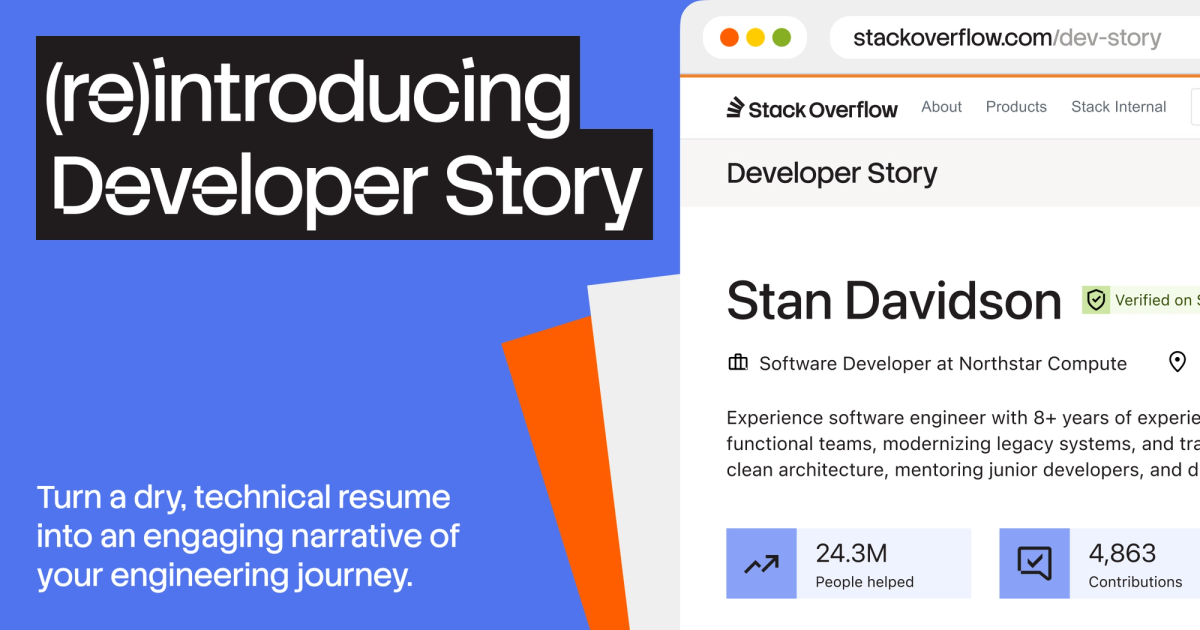
Stack Overflow is addressing the growing challenges in tech hiring, exacerbated by AI's influence leading to untrustworthy and generic resumes. Their solution, the re-introduced Developer Story, offers a platform for developers to authentically showcase their work, expertise, and impact through verifiable contributions and personal projects. This aims to provide hiring teams with more objective insights and help genuine talent stand out in a crowded market.