
8 Best Travel Adapters (2026): Your Essential Guide to Staying Charged
For globetrotters and business travelers alike, ensuring your devices remain powered is paramount. As of July 2026, technology journalist Simon Hill has unveiled his updated recommendations for the top travel adapters,

For globetrotters and business travelers alike, ensuring your devices remain powered is paramount. As of July 2026, technology journalist Simon Hill has unveiled his updated recommendations for the top travel adapters, providing a crucial guide to keeping your gadgets charged efficiently and safely, no matter where your journey takes you.
With rapid advancements in charging technology and the increasing reliance on portable electronics, choosing the right travel adapter has become more complex than simply matching a plug shape. The latest recommendations emphasize high-wattage GaN chargers, versatile USB-C and USB-A port configurations, and essential safety features designed for over 200 countries worldwide. This comprehensive update from June 2026 ensures travelers have access to the most reliable and effective options available.
Top Picks for Global Connectivity
Leading the charge is the Ceptics GAN 100W Universal Travel Adapter, hailed as the best overall. Priced at $45, this adapter supports over 200 countries with its classic slider design for EU, UK, US, AU, and China plugs. It boasts a universal input socket, an additional side socket, two USB-C ports (15W), two USB-A ports (12W), and a standout retractable 25-inch USB-C cable capable of delivering up to 100 watts in total. While praised for its secure locking mechanism and included 10-amp fuse with a spare, it notably lacks grounding, making it unsuitable for devices with a third metal ground pin.
As a strong contender, the Tessan GaN Universal Travel Adapter offers a compact and lightweight alternative, currently available for $38. This former top pick covers over 200 countries with its intuitive slider design. It features two USB-C ports providing up to 65 watts, alongside two USB-A ports offering 60 watts and 5 watts respectively, making it ideal for a range of devices.
For those prioritizing portability, the Epicka Pulse Travel Adapter stands out as the best compact option at $27. Its unique beveled edges reduce bulk, offering a comfortable grip. This adapter supports approximately 200 countries and includes two USB-C ports (45W) and two USB-A ports (18W). It comes with multiple certifications (RoHS, CE, FCC) and a built-in 10-amp fuse, ensuring peace of mind for travelers.
Budget-conscious travelers will appreciate the Ceptics 6 in 1 Worldwide Travel Adapter, retailing at just $19. This device covers over 150 countries with its familiar slider system for common international plugs and a universal outlet. It includes three USB-C ports (15W) and two USB-A ports (12W), making it suitable for overnight charging of phones and tablets. Like its more powerful counterpart, it lacks grounding but includes an 8-amp fuse and is RoHS and CE certified.
For a simpler, more robust solution, the Ceptics Adapter Plug Set for Worldwide International Travel offers individual, properly grounded adapters. The recommended 12-piece set ($23) covers most global plug types, allowing travelers to pack only what's needed for their destination. While lacking USB ports, requiring separate chargers, its reliability and grounding make it a solid choice, especially for Europe with Type C, E/F, and G adapters.
Finally, the One Beat Travel Plug Adapter provides ample outlets, with the Type G model offering three US outlets, one USB-A port, and two USB-C ports (15W USB-C, 12W USB-A) from a single wall socket. Available from $16, this sturdy, grounded adapter is ideal for managing multiple devices, though larger plugs may obstruct other outlets, and it does not offer surge protection.
Considerations for Smart Travelers
Understanding the nuances of international power is key. Most modern devices like phones, laptops, and cameras are dual-voltage (100-240V), meaning they only require a plug adapter, not a bulky and expensive voltage converter. Converters are generally reserved for high-wattage appliances with motors, such as hair dryers. Always check your device's power brick for voltage compatibility.
Wattage is another critical factor. Travel adapters have maximum ratings, and exceeding these can lead to safety issues. Modern USB-C ports on recommended adapters can provide significant wattage for faster charging, but always match the adapter's output to your device's needs.
Travel adapters are permitted in both checked and carry-on luggage, free from typical TSA restrictions. While convenient to purchase at airports or hotels, these options are often overpriced and of questionable quality, making pre-purchase a wise decision. For optimal safety and functionality, it is always recommended to test your travel adapter at home before embarking on your journey, especially for single-destination plug types.
FAQ
Q: Do you really need a voltage converter for international travel?
A: Most modern electronic devices like smartphones, laptops, and camera chargers are designed to handle universal voltages (100-240V). You typically only need a plug adapter to fit the local wall socket. Voltage converters are usually necessary for small appliances with motors or heating elements, such as hair dryers or curling irons, that are not dual-voltage.
Q: Can travel adapters be packed in both checked and carry-on luggage?
A: Yes, travel adapters are not subject to the same restrictions as liquids or batteries, so they can be packed in either checked luggage or your carry-on bag.
Q: Is it important to test your travel adapter before you travel?
A: It is highly recommended to test your travel adapter at home before your trip, particularly if you are using individual plug types for specific countries. This helps ensure that the adapter functions correctly and securely, preventing any inconvenience or issues while abroad.
Related articles

Apple Unveils iPhone Duo: Pricey Foldable Sees Soaring Demand
Apple has officially entered the foldable smartphone arena with the long-anticipated launch of the iPhone Duo. Priced starting at a hefty $1,999, the device features a 5.4-inch outer display and a larger 7.6-inch inner

in-depth: Chicago-Area Cops Helped HSI Spy on Minnesota Anti-ICE
Chicago-area law enforcement, including local police and HSI agents, conducted undercover surveillance on Minnesota anti-ICE activists at an April 2, 2022, talk in Chicago. This operation was part of a federal conspiracy probe into 15 Minnesota activists facing felony charges related to immigration enforcement resistance. Civil liberties advocates have condemned the surveillance as a troubling intrusion into protected political activity.
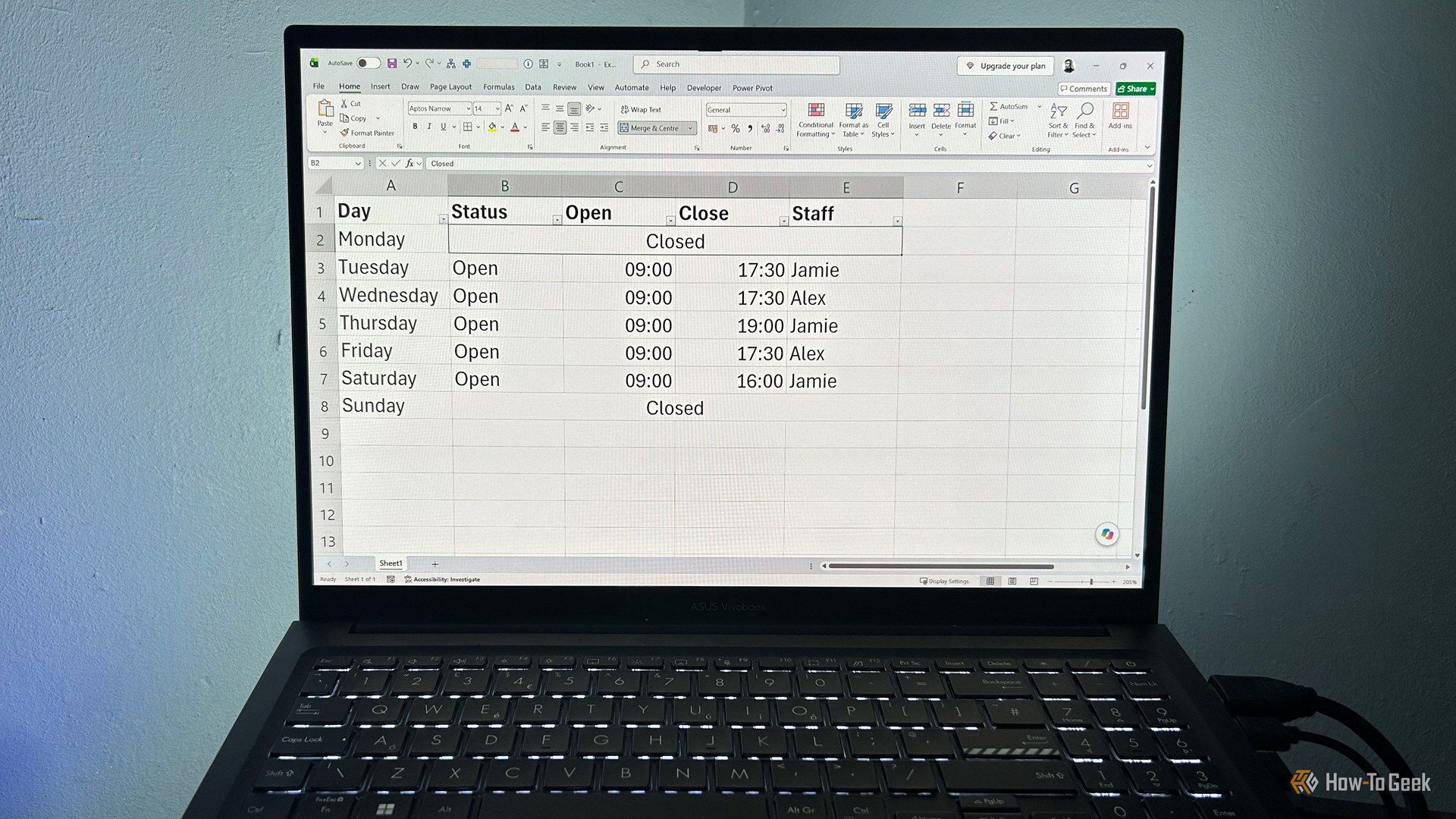
Ditch Merge & Center: The Better Way to Align Text in Excel
Learn to use Excel's "Center Across Selection" to align text across cells without merging, avoiding common data manipulation issues. This guide provides steps to utilize this newly accessible feature and add it to your Quick Access Toolbar.

Mark Wahlberg on using AI in film ‘the right way’ and being open to
Actor Mark Wahlberg believes AI has a place in filmmaking if used responsibly for enhancement, not script generation or actor replacement. At TechCrunch Disrupt, he expressed openness to an AI likeness carrying on his legacy, managed by his family, and emphasized storytelling.

Ars Technica's Rocket Report: Your Essential Space Industry Briefing
Quick Verdict Ars Technica's Rocket Report, presented by veteran space reporter Stephen Clark, offers an invaluable and meticulously organized weekly (or similar frequency, implied by "Edition 9.15") digest of the most

Tesla Unveils Thruster-Equipped Roadster, 2028 Production Targeted
Tesla has unveiled its second-generation Roadster, featuring cold-gas thrusters co-developed with SpaceX, enabling it to jump and flip. The electric sports car demonstrated 0-60mph in an astonishing 0.81 seconds, with production targeted for 2028. This highly anticipated reveal also serves as a key recruitment tool for Tesla's ambitious AI and robotics initiatives.